Free Gospel Tracts Downloads

PLEASE GO TO LOWER LEFT CORNER FOR .PDF DOWNLOAD OF IMAGE FILES FOR TRACTS, THANK YOU!

Download (PDF, 370KB)

Download (PDF, 457KB)

Some of the great features of these Gospel tracts are that they have two sides which are filled with God’s Holy Word in English and Spanish!  No nonsense with pictures or gimmicks.  Yet it uses great colors on a black background which makes it very readable even on the dark streets of America.  It also has larger paragraph headers which contain the Gospel in and of themselves for those that are elderly or don’t have their glasses with them.  Lastly, it has in very large print, “FEAR GOD”, which of course is the Gospel in Rev 14:6-7.  

Spanish Tracts are Here!

As the Latino, Muslim, Cartel, and all manners of tribes cross our borders on both the North and the South sides we can reach them with this great Spanish language tract.  Hey we no longer have to travel to them, they are coming to us by the unlawful migration courtesy of the White House.  Jesus sees what you’re doing Obama and Obiden. See Psalm 2 for details!  You can even practice and preach open air from this tract with a little practice!  

Download (PDF, 1.71MB)

Download (PDF, 1.58MB)

Hebrew Cosmos aka Flat Earth Tracts are Here!

The great thing about these controversial creation view tracts are the YT playlists attached in the Qcode. These videos are great resources readily available for research, refutation, and consideration at the leisure of the recipient.  No longer do we have to be afraid to share our creation view with atheists, Buddhists, Muslims, lukewarm and Holy Ghost filled Christians!  Why share this biblical creation view? People get saved, return to the Lord, and others are challenged in the way they think about all aspects of our faith.  God bless you as you consider downloading them for yourself!  You can even download the Qcode from the screen of your device! 

Download (PDF, 210KB)

Download (PDF, 240KB)

Download (PDF, 450KB)

Download (PDF, 466KB)

Freely we have received the Gospel and freely we offer you the opportunity to print out your own excellent and easily distributed Gospel tracts.

Follow these easy steps:  
1. Pop out the image
2.  download these two files
3.  Recommend printer below for bulk two sided print job.  We usually do 5000 at a time. We recommend 12-14 pt paper.  
4.  We recommend the 3.5″ X 5.5″ size which the image is sized for both English and Spanish. We have found this company to give the best deal online, even local printers can not match these prices!  For the FE b&w tracts you will need to use the postcard size 3 X 4″ and for the disk/ball standard business card size of 2″ X 3.5″

Cards & Banners Bulk Printer


Banner Images Free Downloads Here:

Simple Gospel Banner Construction

This involves using the following website to print your own banner design.

1. www.BannersOnTheCheap.com printed the vinyl.  The website that prints tracts charges too much for banners.  And, I used a promotion code to get free shipping and 25% off, which caused me to get it for $27.

2.  The 12×3 foot vinyl is what I used.  It is actually cheaper than the 10×3, as strange as that is.  Plus, the 12×3 give you extra space for handles and extra vinyl for the rain flap at the top.  My banner is technically 5.5×3 foot, due to the “huge” handles :-).

3.  The vinyl cement I used (HH-66) is not two part and is not epoxy.

4.  No wood used.  Vinyl, PVC pipe, PVC fittings, PVC cement, HH-66 vinyl cement, and minor hardware (one small bolt, 2 washers, 1 nut) are the only parts.
 
The vinyl print price can be as low as $18 per 5×3 if you purchase the 30×3 foot size.

We print the text vertically on it’s side along the length of a 10′ X 3′ vinyl.  We then fold it over the top to make a two sided 5′ X 3′ banner.  We use this free online drawing program to make our designs:    https://inkscape.org/en/download/

NOTE:  If you plan on using any images they must meet strict dpi requirements or your image will pixilate on your banner.  See instructions on the banner printers website or give them a call. This is very heavy duty and we use a two part vinyl epoxy to cement the edges and key areas on the banner construction.   We were able to make this banner for $27 dollars for the printed banner and about $12 worth of framing pvc and about $20 for the pole.  It takes about 4-5 hours to construct the first one, but we all should get faster after we figure out all the details.  If you decide to make your own banner please share a testimonial how God worked this out for you and we may feature any video that you may have.  Thanks and God bless you!

Multi Bullhorn Mount

What We Believe Page Download

Download (DOCX, 23KB)

Open Air Preaching Defense Download

Download (DOCX, 109KB)

The Foolishness of Preaching By Bruce Evan Murch

UW PLATTEVILLE
Radical Ryan preaching with Br. Jed and company at Univ of Wisconsin at Platteville 11/03/15

This is perhaps one of the best defenses of Biblical open air preaching I have ever read. Please study it carefully and completely.  You have been given this link because you most likely have expressed a disdain for this practice. Any objections to this thesis should be commented below with Scripture to support your claims against it.  Thank you for your patience as you examine this very important topic!  I will be doing a Gr. Word study at the end of this to show how much this important word preach is used and how.  God bless you!  

John McGlone, founder Jesus Preacher Ministries

Used with kind permission

For after that in the wisdom of God the world by wisdom knew not God, it pleased God by the foolishness of preaching to save them that believe.
-1 Corinthians 1:21

In all the world’s wisdom, it still didn’t know God…so he sent PREACHERS!

How then shall they call on him in whom they have not believed? and how shall they believe in him of whom they have not heard? and how shall they hear without a preacher? – Romans 10:14

What was God thinking? At first blush it doesn’t seem like a terribly effective method of getting the Word to people. At least not in this day and time. “Preaching” has changed a lot over the years, especially over the last 100 years. I wonder if we really know what the Scriptural model for preaching is any more. I am truly convinced that if preachers followed the Biblical model for preaching, it would be far more effective.

To start let me make a distinction between preaching and witnessing. Witnessing is how you interact with sinners on a daily basis. Jesus had many commands on how to show kindness and love to those who don’t know Him. He ate with them and showed compassion on them. He lived an example. Preaching is a specific function that God uses to warn sinners of His impending judgment and it’s results, and to offer the gift of salvation through repentance and belief in the redemptive work of Christ on the cross.

Let me also make a distinction between preaching and teaching. Preaching is primarily what is done for the benefit of the lost whom we are attempting to reach with the Gospel. Teaching is primarily the Word as it is given to those who are saved and are being edified and matured by it. While those may not be hard-and-fast definitions, they are generally accurate and will suffice for the sake of my points on preaching. I am discussing the way that God’s Word is preached to the lost.

The most popular method of preaching is the type popularized by Billy Graham. Those of us who are street preachers call it the “God Loves You and Has a Wonderful Plan For Your Life” preaching. Sinners are told that “Jesus loves you. He accepts you just the way you are. Invite him into your heart right now. That’s all you have to do. Believe and profess His name right now and you will be born again.” This of course is followed by “With every head bowed and every eye closed…Come down to the front right now. Your friends will wait. Don’t worry, the buses will not leave”. Hundreds, sometimes thousands of people stream to the front of the auditorium as “Just As I Am” plays over the sound system.

What becomes of these thousands and thousands of “converts” over the years? You might think that after all these thousands coming forward, we would have had a major revival in the U.S. by now. What gives? The answer may surprise you.

According to the Billy Graham Evangelistic Association, only about 10% of those making a profession of faith at a Billy Graham crusade are regularly attending church members one year later. That’s right. Just ten percent. What’s the problem? Is it the messenger, or is it the message? Or did the Holy Spirit goof up somehow?

The Bible has a pretty basic model for preaching. It can be summed up in two words, REPENT and BELIEVE. Now you might think that this smacks of old-timey fire and brimstone preaching that is outdated and, well, FOOLISH. Guess again.

Matt 3:2 And saying, Repent ye: for the kingdom of heaven is at hand.

Matt 4:17 From that time Jesus began to preach, and to say, Repent: for the kingdom of heaven is at hand.

Mark 1:15 And saying, The time is fulfilled, and the kingdom of God is at hand: repent ye, and believe the gospel.

Mark 6:12 And they went out, and preached that men should repent.

Luke 13:3 I tell you, Nay: but, except ye repent, ye shall all likewise perish.

Luke 13:5 I tell you, Nay: but, except ye repent, ye shall all likewise perish.

Acts 2:38 Then Peter said unto them, Repent, and be baptized every one of you in the name of Jesus Christ for the remission of sins, and ye shall receive the gift of the Holy Ghost.

Acts 3:19 Repent ye therefore, and be converted, that your sins may be blotted out, when the times of refreshing shall come from the presence of the Lord;

Acts 17:30 And the times of this ignorance God winked at; but now commandeth all men every where to repent:

Acts 26:20 But shewed first unto them of Damascus, and at Jerusalem, and throughout all the coasts of Judaea, and [then] to the Gentiles, that they should repent and turn to God, and do works meet for repentance.

But aren’t we supposed to preach the Love of Christ? Aren’t we supposed to be “non-judgmental”? Haven’t we been taught that the Holy Spirit “woos” sinners to Himself in love? Well, not according to Scripture:

John 16:8 And when he (the Holy Spirit) is come, he will reprove the world of sin, and of righteousness, and of judgment:

But, you might say, doesn’t God love everyone? That’s why He sent Jesus, to redeem the whole world. We all know that God hates the sin but loves the sinner, right? Not really.

Actually, the Word clearly says that God HATES some people. That’s right. HATES. And furthermore it is acceptable to hate the enemies of God (not YOUR enemies). This is not an emotional hatred, but a strenuous opposition. I know this sounds radical according to modern Christian teaching, but when in doubt, let’s go back to the Holy Word.

Psalm 7:11 God judgeth the righteous, and God is angry with the wicked every day.

Psalm 5:5,6 The foolish shall not stand in thy sight: thou hatest all workers of iniquity. Thou shalt destroy them that speak leasing: the LORD will abhor the bloody and deceitful man.

Proverbs 6:16-17 These six [things] doth the LORD hate: yea, seven [are] an abomination unto him A proud look, a lying tongue, and hands that shed innocent blood,

Psalm 139:21, 22 Do not I hate them, O LORD, that hate thee? and am not I grieved with those that rise up against thee? I hate them with perfect hatred: I count them mine enemies.

So we find that God loved “mankind” (His creation) so much that He wanted to redeem us, but He hates individual sinners. Preaching should reflect this. In other words, preaching should be the warning of the wicked from his way; letting him know that he is a disgusting and filthy sinner in the eyes of God. But that in spite of that, God is giving him the opportunity to REPENT and turn to God if he believes in His death, burial and resurrection-His redemptive work on the cross. But be it known that He requires holiness (be ye holy even as I am holy). He is a “jealous God that will have no other Gods before Him”. And if you continue to “willfully sin after receiving the knowledge of the truth, there is NO MORE sacrifice for sins, just a fearful looking forward to of the fiery indignation that God has reserved for his enemies” (Hebrews 10:26).

Instead of this, people are being told that they need only “believe and confess the name of Jesus”; that Jesus loves you so much He made it that simple. Folks converted under this preaching are looking for what God will do for them next, not what God REQUIRES of them. They want Jesus to be their best friend and lover, they don’t want to be His sold-out slave. It truly is a fundamental difference. In truth, He wants us to be ALL of that.

Most of the sermons in the Bible are in the Book of Acts. NOT ONCE is the love of Jesus mentioned in any of those sermons. But repentance is mentioned in virtually all of them.

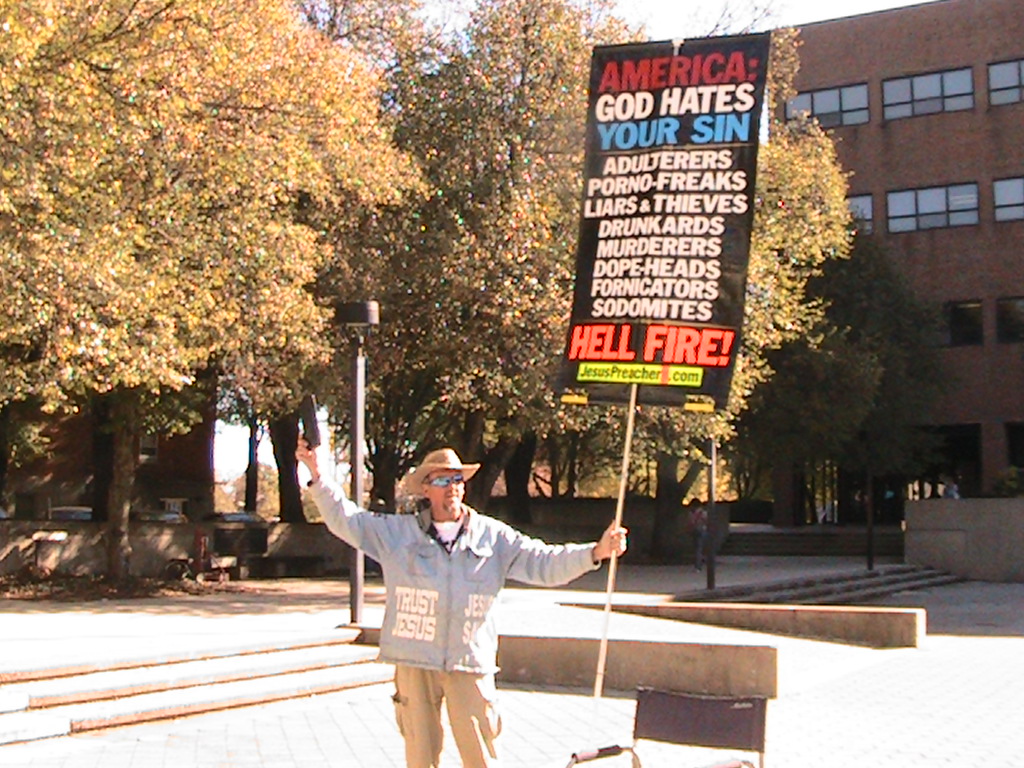
What about “name-calling?” Is it right for preachers to get on the corner and call people “wicked sinners, fornicators, sodomites, adulterers”, etc.? The apostles did. “And God added to the church such as should be saved.”

For those of you who think that the Old Testament verses I quoted are not relevant to New Testament preaching, we’ll clear that up now.

2Timothy 3:16 All scripture [is] given by inspiration of God, and [is] profitable for doctrine, for reproof, for correction, for instruction in righteousness:

The Scripture Paul is referring to of course is the Old Testament. It was the only Scripture they had.

2Timothy 4:2 Preach the word; be instant in season, out of season; reprove, rebuke, exhort with all longsuffering and doctrine.

Here, Paul goes into specifics about HOW one should preach: REPROVE, REBUKE and EXHORT. Most of us only understand in a general sense what these words mean. Let’s take a look at the word “reprove” in the Greek. It is an extremely strong word.

Strongs: #1651 elegcho

1) to convict, refute, confute

1a) generally with a suggestion of shame of the person convicted

1b) by conviction to bring to the light, to expose

2) to find fault with, correct

2a) by word

2a1) to reprehend severely, chide, admonish, reprove

2a2) to call to account, show one his fault, demand an explanation

2b) by deed

2b1) to chasten, to punish

Paul is basically saying that when you preach, “find fault with them, reprehend them severely, warn (admonish) them, chide them, show them their faults, bring shame on them”. Obviously this is done along with the message that if the sinner DOES repent and turn to God he will be saved and experience the “times of refreshing”. But there are no instructions about the “love of Jesus”. He is also saying that ALL SCRIPTURE is profitable for reproof as well.

Ephesians 5:11 And have no fellowship with the unfruitful works of darkness, but rather reprove [them].

Many modern translations say “expose” rather than reprove, but the Greek word is the same, with the same strong meaning. We should not only avoid fellowship with these works, but should warn, bring shame on, reprehend severely, chide, call them to account and show them their faults”.

Isaiah 58:1 Cry aloud, spare not, lift up thy voice like a trumpet, and shew my people their transgression, and the house of Jacob their sins.

But doesn’t that kind of preaching just bring ridicule and arguments? Sometimes. But it also gets people’s attention. Nobody thinks of himself or herself as evil. Very few think of themselves as God-haters. They will almost always stop to defend themselves against this kind of preaching. You have a captive audience for a time anyway. Is it wrong to argue with the wicked? Nah.

Prov. 28:4 They that forsake the law praise the wicked: but such as keep the law CONTEND with them.

Jude 1:3 Beloved, when I gave all diligence to write unto you of the common salvation, it was needful for me to write unto you, and exhort [you] that ye should earnestly CONTEND for the faith which was once delivered unto the saints.

Many preachers want to be “nicer than God” when they preach. I feel no such responsibility. Preaching in the open air is really the only way to reach those that will not walk into church to hear the gospel. And in 99 churches out of 100, they wouldn’t hear what they needed to hear in church anyway. The Apostles are recorded in Acts as ARGUING with people as a method of preaching.

Acts 17:17 Therefore disputed he (Paul) in the synagogue with the Jews, and with the devout persons, and in the market daily with them that met with him.

Acts 19:8 And he (Paul) went into the synagogue, and spake boldly for the space of three months, disputing and persuading the things concerning the kingdom of God.

Acts 19:9 But when divers were hardened, and believed not, but spake evil of that way before the multitude, he departed from them, and separated the disciples, disputing daily in the school of one Tyrannus.

In the first verse above, we see that Paul not only preached to the Jews this way in the synagogue, but also “in the marketplace”. This is the chief concourse, the place where the largest possible audience could be found. They used the same method of preaching in the synagogues, in the marketplace and in the schools.

I have been accused of “name-calling” when I preach. I will sometimes call people fornicators, sodomites, etc. This is not name-calling in the sense of being hateful or derogatory. It is an effective and Biblical way of making the sinner understand that they are being identified by the sins they commit. I preach on the street. I’m called a street preacher. If I were boastful, some would call me a braggart or an egomaniac. We are identified by our attributes. When I preach at the sodomite marches, I refer to those I’m preaching to as sodomites. That’s what the Bible calls them I have no problem with that.

Here is a list of some of the names that people are called in the New Testament. Some of these were spoken of religious leaders, some were spoken of ordinary folks.

* “DOGS” Matt. 7:6 Jesus said, “Give not that which is holy unto the dogs” (see also 2 Peter 2:20-22, Rev. 22:15)

* “SWINE” Matt. 7:6 “…neither cast your pearls before swine”

* “VIPERS” Matt. 3:7 “O generation of vipers…” (see also Matt. 12:34, 23:33 and Luke 3:7)

* “HYPOCRITES” Matt.6:2 “…as the hypocrites in the synagogues…” (see also Matt.6:5, 16, 15:7, 16:3, 22:18, 23:13-15, 29, 24:51, Mark 7:6, Luke 11:44, 12:56)

* “CHILDREN OF THE DEVIL” John 8:44 “You are of your father the devil…” (see also Acts 13:10)

* “PERVERSE” Mat. 17:17″…O faithless and perverse generation” (see also Luke 9:41, Acts 20:30, Phil. 2:15, 1Tim. 6:5)

* “REPROBATE” 2Cor 13:5-7 “…except ye be reprobates” (see also Rom 1:28, 2Tim. 3:8, Tit. 1:16)

* “HEATHEN” Mat. 6:7 “…as the heathen do” (see also Mat.18:17, Act 4:25, 2Cor. 11:26, Gal. 1:16, 2:9, 3:8)

* “FOOLS” Mat. 23:17 “…Ye fools and blind” (see also Luke 12:20, 1Cor.15:36, Mat.23:19, Luke 11:40, 24:25, Eph. 5:15)

* “WICKED AND ADULTEROUS” Mat. 16:4 “A wicked and adulterous generation” (see also Mat. 12:45, 13:49, 18:32, 21:41, 25:26, Luke 19:22, 1Cor. 5:13, 2Thes. 3:2, 2Pet. 2:7, 3:17)

* “O YE OF LITTLE FAITH” (Christ’s favorite name for His apostles!) Mat.6:30, 8:26, 14:31, etc., etc., etc.

* “STIFFNECKED AND UNCIRCUMCISED” Acts7:53 “…stiffnecked and uncircumcised in heart”

* “LIARS, EVIL BEASTS, SLOW BELLIES” Titus 1:12 (see also 2Peter 2:12, Jude 10)

* “ADULTERERS AND ADULTERESSES” Hebrews 13:4 “…whoremongers and adulterers God will judge” James 4:4 “Ye adulterers and adulteresses…” (see also Rom 7:3, Mat. 12:39, 16:4, Mark 8:38)

* “WHITED WALL” Acts 23:3 Paul to the high priest .

Again, the purpose for this type of approach is for the sinner’s benefit. He must be told that God requires him to REPENT and believe in Jesus Christ’s redemptive work on the cross to be saved and escape the fires of hell. In the verses in the Gospels there is a persistent theme: If you do not REPENT, you will perish. It doesn’t say you will perish if you don’t believe (although you will obviously), the emphasis is on the repentance.

Now I realize that all this goes contrary to what most of us have been taught about preaching. We all know how embarrassing it is to hear a street preacher out on the corner telling folks to “Turn or Burn”, “Get Right or Get Left”. But is that embarrassment because the method is wrong, or is it a problem with our own pride in our own hearts?

I have laid out a case for it from Scripture. But let’s also look at the witness of history. As I mentioned earlier, the Apostles NEVER preached about the “love of Jesus” or any such thing when they preached. Let’s look at the Reformers and the Revivalists.

Martin Luther preached vehemently against the notion that God “hates the sin but loves the sinner”. Of the Revivalists of the Great Awakenings, Jonathan Edwards, George Whitefield, and later Charles Finney all denounced the notion as well. They all taught that you cannot separate the sin from the sinner. God doesn’t send the sin to hell, but the sinner to heaven. God “hates the hands that shed innocent blood.” Does He just hate that part of the sinner’s anatomy? Of course not.

“So what?”, you might say. They could have gotten it wrong. After all, they’re just a bunch of dead white guys. Maybe. Except for one thing. The Holy Spirit visited their preaching with REVIVAL! Massive, widespread, nation-changing, intercontinental REVIVAL. The fact is that there has NEVER been that kind of vindication from the Holy Spirit for the “God loves you and has a wonderful plan for your life” preaching.

Jonathan Edwards’ sermons were all very much as I have described preaching as I believe it should be. He preached many of his Revival sermons in New England in 1738-1741. He is most famous for his sermon, Sinners in the Hands of an Angry God. Here is an excerpt from the sermon that the Holy Spirit visited with revival:

“The God that holds you over the pit of hell, much as one holds a spider, or some loathsome insect over the fire, abhors you, and is dreadfully provoked: his wrath towards you burns like fire; he looks upon you as worthy of nothing else, but to be cast into the fire; he is of purer eyes than to bear to have you in his sight; you are ten thousand times more abominable in his eyes, than the most hateful venomous serpent is in ours. You have offended him infinitely more than ever a stubborn rebel did his prince; and yet it is nothing but his hand that holds you from falling into the fire every moment.

It is to be ascribed to nothing else, that you did not go to hell the last night; that you were suffered to awake again in this world, after you closed your eyes to sleep. And there is no other reason to be given, why you have not dropped into hell since you arose in the morning, but that God’s hand has held you up. There is no other reason to be given why you have not gone to hell, since you have sat here in the house of God, provoking his pure eyes by your sinful wicked manner of attending his solemn worship. Yea, there is nothing else that is to be given as a reason why you do not this very moment drop down into hell. O sinner! Consider the fearful danger you are in!”

Yikes! Doesn’t sound like the “love of Christ” to me! How could you get revival from THIS? But the effect of that preaching was astonishing, and literally changed the spiritual makeup of America and ushered in sweeping reforms in law and culture.

This is a photo of me preaching in front of the Liberty Bell on July 4th. The crowd was less than enthusiastic. People didn’t want to hear about God’s Holy Word and Law on their vacation.

This sort of preaching is opposed by Christians more vehemently than anyone else. I have had Christians routinely stop to rebuke and chastise me for being “judgmental” and “un-Christlike” and “unloving.”

They listen to God being blasphemed by some of the onlookers. Instead of defending God against the heathen, they defend the heathen against me! The world (and the police) view it as “hate speech”. In America, you cannot be assured that you have the freedom to preach the unvarnished Word of God any more. But we must.

Open-air preaching is not fun. Like the U.S. Army ads used to say, “It’s not a job, it’s an adventure!” I am routinely cursed and screamed at; I have had sodomites expose themselves at me and spit in my face; I’ve been assaulted. I hear God blasphemed. Some respond with interest and some with just anger. This is a ministry of seed-planting. But the measure of the success of this preaching isn’t necessarily found on the day that it is preached.

They hear the Word from me. They have been warned. They have been offered the knowledge of His saving grace. In the quiet of the evening when they lie in bed and ponder the thoughts of the day, they will consider that what they heard about themselves and God may be true.

I don’t see a large harvest. But that’s not my responsibility. My responsibility is to show the TRUE love of God. It is not love to preach to sinners that they need only believe and come to Jesus (“for even the devils believe, and tremble”). The LOVING thing is to tell them the truth about how God actually sees them, and to show them what it takes for that to change; to show them what God expects in return for His eternal salvation. Many say that salvation is a “free gift” from God. It is free in the sense that there is nothing WE can do to obtain it; we only get it by God’s grace, His unmerited favor. But it costs us EVERYTHING. We are bought with a price and belong to Him to do His bidding and not our own. THIS IS THE LOVE OF CHRIST.

Unfortunately, there is so little church discipline and proper teaching about holiness and sin, that sin runs amok in the camp! And preachers who have hidden sins cannot effectively preach against it, because their heart condemns them as they preach. So they stay with the “grace, mercy and compassion” message instead of the “holiness, justice and judgment” message. They are both aspects of God’s nature, but those who continue to practice sin and tolerate it within the church concentrate on one to the exclusion of the other. I believe that is why the American Christian Church is in the condition it’s in.

In American churches, we are not called upon to live holy lives, we are offered “counseling” for our “problems”. We are not called to account for our sins. We offer cliches for our sin, such as “Christians aren’t perfect, just forgiven” or “Be patient, God isn’t finished with me yet”. This is Bumper Sticker Christianity. We are NOT told that if we fail to conform to God’s Holy Word and Law that we will be denied communion, or even the fellowship of other believers. This is what Paul demanded of the Corinthians, and of us as well. In failing to do so, we have let sin run rampant within the church, making her totally ineffective in calling the world to repentance.

This won’t change until we repent of our own sin, demand the same within the church and the church leadership and begin to preach boldly in the marketplace the true message of salvation.

Let me say with the Psalmist:

I have preached righteousness in the great congregation: lo, I have not refrained my lips, O LORD, thou knowest. I have not hid thy righteousness within my heart; I have declared thy faithfulness and thy salvation: I have not concealed thy lovingkindness and thy truth from the great congregation. Psalm 40:9-10

Here is another great note on this important subject! http://officialstreetpreachers.com/History/History%20of%20Street%20Preaching.pdf

The Study of the Greek Words:

The KJV translates Strong’s G2784 PREACH kēryssō in the following manner:
preach (51x), publish (5x), proclaim (2x), preached (with G2258) (2x), preacher (1x).

Note that this following definition is listed fifty one times in the NT! This makes ‘preach’, herald, etc to be the primary meaning for the activity we should be doing as Christians!

κηρύσσω kērýssō, kay-roos’-so; of uncertain affinity; to herald (as a public crier), especially divine truth (the gospel):—preacher(-er), proclaim, publish.

STRONGS NT 2099: EVANGELIST εὐαγγελιστής εὐαγγελιστής, εὐαγγελιστοῦ, ὁ (εὐαγγελίζω), a Biblical and ecclesiastical word, a bringer of good tidings, an evangelist (Vulg.evangelista). This name is given in the N. T. to those heralds of salvation through Christ who are not apostles: Acts 21:8Ephesians 4:112 Timothy 4:5. (B. D. under the word .)

The KJV translates Strong’s G3144 WITNESS in the following manner: witness (29x), martyr (3x), record (2x).

μάρτυς mártys, mar’-toos; of uncertain affinity; a witness (literally (judicially) or figuratively (genitive case)); by analogy, a “martyr”:—martyr, record, witness.

Biblical Usage a witness, think of a courtroom
1. in a legal sense
2. an historical sense
3. one who is a spectator of anything, e.g. of a contest
4. in an ethical sense
5. those who after his example have proved the strength and genuineness of their faith in Christ by undergoing a violent death

Strong’s Concordance euaggelion: good news
Original Word: εὐαγγέλιον, ου, τό
Part of Speech: Noun, Neuter
Transliteration: euaggelion
Phonetic Spelling: (yoo-ang-ghel’-ee-on)
Definition: good news
Usage: the good news of the coming of the Messiah, the gospel; the gen. after it expresses sometimes the giver (God), sometimes the subject (the Messiah, etc.), sometimes the human transmitter (an apostle).HELPS Word-studiesCognate: 2098 euaggélion – the Gospel – literally, “God’s good news.”See 2097 (euangelizō). The Gospel (2098 /euaggélion) includes the entire Bible, i.e. it is not limited to how a person becomes a Christian.NAS Exhaustive Concordance Word Origin
from the same as euaggelizó
Definition
good news
NASB Translation
good news (1), gospel (73), gospel’s (2).Thayer’s Greek Lexicon STRONGS NT 2098: εὐαγγέλιον

εὐαγγέλιον, εὐαγγελίου, τό (εὐάγγελος (cf. εὐαγγελίζω)), Hebrew בְּשׂורָה and בְּשֹׂרָה;1. a reward for good tidings (cf. τά διδασκαλία, the fees given the διδάσκαλος), Homer, Odyssey 14, 152; Cicero, ad Att. 2, 3 and 12; 13, 40; Plutarch, Demetr. 17; Ages. 33; the Sept. 2 Samuel 4:10.2. good tidings: Lucian, asin. 26; Appendix,b. civ. 4, 20; Plutarch; others; plural the Sept. 2 Samuel 18:22, 25, common text; but in each place εὐαγγελία should apparently be restored, on account of 2 Samuel 18:20 ἀνήρ εὐαγγελίας. In the N. T., specifically,a. the glad tidings of the kingdom of God soon to be set up, and subsequently also of Jesus, the Messiah, the founder of this kingdomMark 1:15Mark 8:35Mark 10:29Mark 13:10Mark 14:9Mark 16:15Matthew 26:13; with a genitive of the object added: τῆς βασιλείας, Matthew 4:23Matthew 9:35Matthew 24:14Mark 1:14 R L brackets After the death of Christ the term τό εὐαγγέλιον comprises also the preaching of (concerning) Jesus Christ as having suffered death on the cross to procure eternal salvation for men in the kingdom of God, but as restored to life and exalted to the right hand of God in heaven, thence to return in majesty to consummate the kingdom of God; so that it may be more briefly defined as “the glad tidings of salvation through Christ; the proclamation of the grace of God manifested and pledged in Christ; the gospel” (A-S. god-spell (see Skeat, Etymological Dictionary, under the word)): Acts 15:7Romans 1:16 G L T Tr WH; ; 1 Corinthians 4:151 Corinthians 9:14, 18 (G L T Tr WH), ; ; 2 Corinthians 8:18Galatians 2:2Ephesians 3:6Ephesians 6:19 (L WH brackets ἐυαγελιον); Philippians 1:5, 7, 12, 17 (); (, cf. εἰς, B. II. 2 d.); Philippians 4:3 (, cf. Clement of Rome, 1 Cor. 47, 2 [ET]); 1 Thessalonians 2:42 Timothy 1:8, 10; with a genitive of the object, the gospel concerning etc.: τοῦ Χριστοῦ (cf. Winer’s Grammar, 186f (175f)), Romans 1:16 Rec.; Rec.; 1 Corinthians 9:12, 18 (Rec.); 2 Corinthians 2:122 Corinthians 9:132 Corinthians 10:14Galatians 1:7Philippians 1:271 Thessalonians 3:2; τοῦ κυρίου ἡμῶν ἸησοῦΧριστοῦ, 2 Thessalonians 1:8 (T Tr WH omit; L brackets Χριστοῦ); τοῦ υἱοῦ τοῦ Θεοῦ, Romans 1:9 cf. Mark 1:1; τῆς σωτηρίας ὑμῶν, Ephesians 1:13; τῆς εἰρήνης, Ephesians 6:15; τῆς χάριτος τοῦ Θεοῦ, Acts 20:24; τῆς δόξης τοῦ μακαρίου Θεοῦ, 1 Timothy 1:11; τῆςδόξης τοῦ Χριστοῦ, 2 Corinthians 4:4. ἡ ἀλήθεια τοῦ εὐαγγελίου, the truth contained in the gospel (cf. Winer’s Grammar, 236 (221f)), Galatians 2:5, 14Colossians 1:5; ἡ ἐλπίς τοῦ εὐαγγελίου, the hope which the gospel awakens and strengthens, Colossians 1:23; ἡ πίστιςτοῦ εὐαγγελίου the faith given the gospel, Philippians 1:27; οἱδεσμοί τοῦ εὐαγγελίου (see δεσμός, at the end), Philemon 1:13; ἕτερον εὐαγγέλιον of another sort, i. e. different from the true doctrine concerning Christian salvation, Galatians 1:62 Corinthians 11:4; αἰώνιον εὐαγγέλιον, the contents of which were decreed by God from eternity, Revelation 14:6. with the genitive of the author; and that α. of the author of the subject-matter or facts on which the glad tidings of man’s salvation rest, and who wished these glad tidings to be conveyed to men: τό εὐαγγέλιον τοῦ Θεοῦ, Romans 15:162 Corinthians 11:71 Thessalonians 2:2, 81 Peter 4:17; more fully τοῦΘεοῦ περί τοῦ υἱοῦ αὐτοῦ, Romans 1:1-3. β. of the author of the particular mode in which the subject-matter of the gospel is understood (conception of the gospel) and taught to others; thus Paul calls his exposition of the gospel (and that of the teachers who agree with him), in opposition to that of those teaching differently, τόεὐαγγέλιον ἡμῶν: 2 Corinthians 4:3 (cf. τό εὐαγγέλιον τόεὐαγγελισθέν ὑπ’ ἐμοῦ, Galatians 1:11); κατά τό εὐαγγέλιον μου, as I expound it, Romans 2:16Romans 16:252 Timothy 2:8. γ. of him who preaches the gospel: ἡμῶν, 1 Thessalonians 1:52 Thessalonians 2:14. with the genitive of those to whom it is announced: τῆς περιτομῆς (i. e. τῶν περιτετμημενων), to be preached to the circumcised or Jews; and τό εὐαγγέλιον τῆςἀκροβυστίας, to be carried to the Gentiles, Galatians 2:7.b. As the Messianic rank of Jesus was proved by his words, his deeds, and his death, the narrative of the sayings, deeds, and death of Jesus Christ came to be called εὐαγγέλιον: so perhaps in Mark 1:1; for the passage may also mean, ‘glad tidings concerning Jesus Christ began to be proclaimed even as it is written,’ viz. by John the Baptist; cf. DeWette at the passage At length the name was given to a written narrative of the glad tidings; so in the titles of the Gospels, on which see κατά, II. 3 c. α. (On the ecclesiastical senses of the word, see Sophocles’ Lexicon, under the word.) 

Pretty Lights Music of Helloween at Descend Amphitheater

Preaching to Wicked Sinners
Nashville, TN Oct 31,2015

Praise the Lord we were able to preach at the new Ascend Amphitheater for the Pretty Lights Show on Halloween 2015.

Pretty Lights Show

We first preached this at the Old Nashville Auditorium about four years ago.  This time we had my sons Daniel and Seth, Jimmy Miller, the Heiman family, the Kowalski family, Tim the Baptist and his son.  Praise the Lord what a crew!

Outreach Photos

The weather was rainy initially but as the daylight dimmed the rain stopped!   The crowds were slow but steady for the first hour.  But, as the evening progressed we had thousands stuck in a cattle security gate which was taking lots of time for us to preach Bible truths to them, it was fantastic!

We had intended to preach for a few hours, but ended up staying until about 8:30 pm almost four hours!  The crowds of people would not let up. Praise Jesus!

Imagine having people flowing past you hundreds at a time.  They mocked, blasphemed, and hated the preaching and you.  Then 50 feet from you they fell off an invisible cliff, you hear the screams, you see the flames and smoke shoot up. Then the next group of sinners come by and do the very same thing!  Then once in a while someone steps off the broad path to destruction and asks good questions, gets prayers, and few even repent!
This is what we are called to do saints, REACH OUT!  The time is short, the night draws near, when our King will come back on very dark clouds, with lightning announcing His arrival to destroy the inhabitants of the earth!  Do you believe this???

Memorial to Nick Kowalski, Faithful Soldier of Christ Gone Home

The Gentleness and Severity of the Christian Witness

IMG_8101


I was invited by a group of godly young men from EKU who wanted to sit down and speak with me about my faith.  I met with them after three – 5 hour days of preaching on their campus.  We spoke for about two hours and one of the questions that came up was the harsh words and severity of our preaching.  This article which I have now moved from my old website gives some insight to what the Bible says our hearts should be about evangelism and how to do it.

The question has often been asked about our methods of biblical evangelism when we rebuke and reprove hard sinners is, “Shouldn’t we be gentle in our dealings with the lost?  The question begged then becomes, “How can we be gentle and rebuke as the Scriptures obviously require us to do?”  The truth is knowable if we seek it. Someone is wrong in this moral dilemma of gentleness and hardness of communication with the sinner.

2 Tim 4:2-5
Preach the word! Be ready in season and out of season. Convince, rebuke, exhort, with all longsuffering and teaching. For the time will come when they will not endure sound doctrine, but according to their own desires, because they have itching ears, they will heap up for themselves teachers; and they will turn their ears away from the truth, and be turned aside to fables. But you be watchful in all things, endure afflictions, do the work of an evangelist, fulfill your ministry.

2 Tim 2:24-26
And a servant of the Lord must not quarrel but be gentle to all, able to teach, patient, 25 in humility correcting those who are in opposition, if God perhaps will grant them repentance, so that they may know the truth, 26 and that they may come to their senses and escape the snare of the devil, having been taken captive by him to do his will.

This question arises within the same letter from Paul to Timothy. Here is the answer in simplest terms.  In regards to rebuking and gentleness of our Christian witness, it is a both/and not an either or depending on the condition of the soil of the heart of the listener/s.

James 4:5-7
5 Or do you think that the Scripture says in vain, “The Spirit who dwells in us yearns jealously”? 6 But He gives more grace. Therefore He says:“God resists the proud, But gives grace to the humble.” 7 Therefore submit to God. Resist the devil and he will flee from you.

Prov 3:33-35
The curse of the Lord is on the house of the wicked, But He blesses the home of the just. Surely He scorns the scornful, But gives grace to the humble. 35 The wise shall inherit glory, But shame shall be the legacy of fools

1 Pet 5:4-6
4 and when the Chief Shepherd appears, you will receive the crown of glory that does not fade away. Likewise you younger people, submit yourselves to your elders. Yes, all of you be submissive to one another, and be clothed with humility, for “God resists the proud,  But gives grace to the humble.” Therefore humble yourselves under the mighty hand of God, that He may exalt you in due time,

So, the Holy Spirit who dwells in us gives the law/rebukes/warnings of hell/etc to the proud sinners, but His grace is given to those who humble themselves during or after our witness of Christ to them. If you read the writeup for my Grandmother’s funeral preach video you would find out a lot of information about how long I have been witnessing to this group of people called my earthly family. One2one, small groups, tracts, emails, etc I have been witnessing to my family over sixteen years, My first witness to them was Aug 3, 1996 when I was born again I called everyone in my family and asked them if they knew of or had been saved by Jesus Christ.

Now I want to parallel my experiences of my witness to my family to the witnesses we give to strangers to see if there is any correlation between the two.  In trying to reach my family most of them were haughty and resistant from the beginning of my testimonies to them.    Only my ‘saved’ sister and my maternal grandmother were interested at all in the things I desired to say of Jesus and His great salvation offered to the world.  So, over the years as I learned that when speaking of the love of Jesus demonstrated at the cross for them, they neglected and even mocked it. To this, I would tell them they were headed to hell.  This of course, is very offensive to the carnal person still living in sin.  I learned about ten years ago that I needed to show them the law which is written upon the conscience and that it would bear witness as I did.  Well, glory hallelujah this did make some inroads with some of my family but most still hardened their hearts.  But, the law is not all we need to use as our witness.  We need to use:  1.  Creation which points to a Creator  2.  The Judgments of God which points out the horrors of dying in a sinful state.  3.  Sin which everyone is guilty of to point to the need for forgiveness.  4.  His Righteousness which means He won’t neglect what He has threatened and or promised against and for all of humanity.  5.  His love which was demonstrated on the cross in suffering and dying for all sinners and sin.  6.  His Word which is an eternal testimony of Himself to a lost and dying world.  7.  His Spirit which indwells every believer as we walk according to His directions in our communications with the lost.

If you think about it, our earthly family are just family members that are closer than the rest of our family which is the human race.  Why do we make special provision, excuses, or justifications for those that we know better or have more worldly experiences with, than the rest of our family?  I prove that point with one Scripture which I love to cite especially when people are racist in their thinking.

Acts 17:26-31
And He has made from one blood every nation of men to dwell on all the face of the earth, and has determined their preappointed times and the boundaries of their dwellings, 27 so that they should seek the Lord, in the hope that they might grope for Him and find Him, though He is not far from each one of us; 28 for in Him we live and move and have our being, as also some of your own poets have said, ‘For we are also His offspring.’ 29 Therefore, since we are the offspring of God, we ought not to think that the Divine Nature is like gold or silver or stone, something shaped by art and man’s devising. 30 Truly, these times of ignorance God overlooked, but now commands all men everywhere to repent, 31 because He has appointed a day on which He will judge the world in righteousness by the Man whom He has ordained. He has given assurance of this to all by raising Him from the dead.”

In summary, we should not treat our close family members differently than the rest of our human family in our testimony of Jesus.  We should be consistent across the board not being preferential in the way we witness to them.  If we are, we need to repent of this arbitrary thinking and behavior.  One danger we have is to lose sight of the fact that Jesus will condemn them no matter what we say or do, if they do not repent, seek forgiveness, and become born again of the Holy Spirit.  Let us comfort no sinner in sin, whether they be a stranger on the street, or the closest brother, cousin, mother or father we have many fond carnal memories with….

1 Pet 1:13-19
Therefore gird up the loins of your mind, be sober, and rest your hope fully upon the grace that is to be brought to you at the revelation of Jesus Christ; 14 as obedient children, not conforming yourselves to the former lusts, as in your ignorance; 15 but as He who called you is holy, you also be holy in all yourconduct, 16 because it is written, “Be holy, for I am holy.17 And if you call on the Father, who without partiality judges according to each one’s work, conduct yourselves throughout the time of your stay here in fear; 18 knowing that you were not redeemed with corruptible things, like silver or gold, from your aimless conduct received by tradition from your fathers, 19 but with the precious blood of Christ, as of a lamb without blemish and without spot.


We should consider both God’s goodness and severity as well!

Rom 11:22-23
Therefore consider the goodness and severity of God: on those who fell, severity; but toward you, goodness, if you continue in His goodness. Otherwise you also will be cut off. 23 And they also, if they do not continue in unbelief, will be grafted in, for God is able to graft them in again.

Friends, let us make sure we represent Him properly to a lost world which is in rebellion to Him and His Holy authority.  I had a friend of mine recently say,

A sinner asked, “Why should we fear God?” I said, “Because He is HORRIFYINGLY HOLY! He burns people! Alive! Forever!” ”


New Years


13 Comments

Filed under Teaching

13 responses to “The Gentleness and Severity of the Christian Witness

  1. Jason Harris

    Amen brother. The law is given to the proud, and grace and mercy to the humble.

    Like

  2. “Let us comfort no sinner in sin, whether they be a stranger on the street, or the closest brother, cousin, mother or father we have many fond carnal memories with….” Very well said, brother. I have recently had this experience in my immediate family as well.

    Like

  3. This is a great word, thank you Brother for sharing this, may God richly bless you, all glory to God!

    Like

  4. Amy Ribitzki

    Amen, the Lord is convicting me to push forward this year speaking to my family more. I don’t think rebuke ever comes across gentle it hurts, it breaks down the hardness of the heart.

    Like

  5. Praise Jesus dear brother John! Wisdom is certainly from above and you speak it so very well! AMEN

    Like

EKU Student Requests Proof for Open Air!

Comment: 

Hi John. My name is Brady XXXXX. I am a student atEKU where you are preaching as I type this 
actually. I didn't have time to stay and ask but Idid want to ask you a question. Do you really
think that the way you are approaching evangelism is the best way? Is the way you are sharing your faith the model that Jesus gives us in scripture?
Here is the answer I offered this seeker from EKU

The Foolishness of Preaching

By Bruce Evan Murch

Used with kind permission

For after that in the wisdom of God the world by wisdom knew not God, it pleased God by the foolishness of preaching to save them that believe. -1Corinthians 1:21

In all the world’s wisdom, it still didn’t know God…so he sent PREACHERS!

How then shall they call on him in whom they have not believed? and how shall they believe in him of whom they have not heard? and how shall they hear without a preacher? – Romans 10:14

What was God thinking? At first blush it doesn’t seem like a terribly effective method of getting the Word to people. At least not in this day and time. “Preaching” has changed a lot over the years, especially over the last 100 years. I wonder if we really know what the Scriptural model for preaching is any more. I am truly convinced that if preachers followed the Biblical model for preaching, it would be far more effective.

To start let me make a distinction between preaching and witnessing. Witnessing is how you interact with sinners on a daily basis. Jesus had many commands on how to show kindness and love to those who don’t know Him. He ate with them and showed compassion on them. He lived an example. Preaching is a specific function that God uses to warn sinners of His impending judgment and it’s results, and to offer the gift of salvation through repentance and belief in the redemptive work of Christ on the cross.

Let me also make a distinction between preaching and teaching. Preaching is primarily what is done for the benefit of the lost whom we are attempting to reach with the Gospel. Teaching is primarily the Word as it is given to those who are saved and are being edified and matured by it. While those may not be hard-and-fast definitions, they are generally accurate and will suffice for the sake of my points on preaching. I am discussing the way that God’s Word is preached to the lost.

The most popular method of preaching is the type popularized by Billy Graham. Those of us who are street preachers call it the “God Loves You and Has a Wonderful Plan For Your Life” preaching. Sinners are told that “Jesus loves you. He accepts you just the way you are. Invite him into your heart right now. That’s all you have to do. Believe and profess His name right now and you will be born again.” This of course is followed by “With every head bowed and every eye closed…Come down to the front right now. Your friends will wait. Don’t worry, the buses will not leave”. Hundreds, sometimes thousands of people stream to the front of the auditorium as “Just As I Am” plays over the sound system.

What becomes of these thousands and thousands of “converts” over the years? You might think that after all these thousands coming forward, we would have had a major revival in the U.S. by now. What gives? The answer may surprise you.

According to the Billy Graham Evangelistic Association, only about 10% of those making a profession of faith at a Billy Graham crusade are regularly attending church members one year later. That’s right. Just ten percent. What’s the problem? Is it the messenger, or is it the message? Or did the Holy Spirit goof up somehow?

The Bible has a pretty basic model for preaching. It can be summed up in two words, REPENT and BELIEVE. Now you might think that this smacks of old-timey fire and brimstone preaching that is outdated and, well, FOOLISH. Guess again.

Matt 3:2 And saying, Repent ye: for the kingdom of heaven is at hand.

Matt 4:17 From that time Jesus began to preach, and to say, Repent: for the kingdom of heaven is at hand.

Mark 1:15 And saying, The time is fulfilled, and the kingdom of God is at hand: repent ye, and believe the gospel.

Mark 6:12 And they went out, and preached that men should repent.

Luke 13:3 I tell you, Nay: but, except ye repent, ye shall all likewise perish.

Luke 13:5 I tell you, Nay: but, except ye repent, ye shall all likewise perish.

Acts 2:38 Then Peter said unto them, Repent, and be baptized every one of you in the name of Jesus Christ for the remission of sins, and ye shall receive the gift of the Holy Ghost.

Acts 3:19 Repent ye therefore, and be converted, that your sins may be blotted out, when the times of refreshing shall come from the presence of the Lord;

Acts 17:30 And the times of this ignorance God winked at; but now commandeth all men every where to repent:

Acts 26:20 But shewed first unto them of Damascus, and at Jerusalem, and throughout all the coasts of Judaea, and [then] to the Gentiles, that they should repent and turn to God, and do works meet for repentance.

But aren’t we supposed to preach the Love of Christ? Aren’t we supposed to be “non-judgmental”? Haven’t we been taught that the Holy Spirit “woos” sinners to Himself in love? Well, not according to Scripture:

John 16:8 And when he (the Holy Spirit) is come, he will reprove the world of sin, and of righteousness, and of judgment:

But, you might say, doesn’t God love everyone? That’s why He sent Jesus, to redeem the whole world. We all know that God hates the sin but loves the sinner, right? Not really.

Actually, the Word clearly says that God HATES some people. That’s right. HATES. And furthermore it is acceptable to hate the enemies of God (not YOUR enemies). This is not an emotional hatred, but a strenuous opposition. I know this sounds radical according to modern Christian teaching, but when in doubt, let’s go back to the Holy Word.

Psalm 7:11 God judgeth the righteous, and God is angry with the wicked every day.

Psalm 5:5,6 The foolish shall not stand in thy sight: thou hatest all workers of iniquity. Thou shalt destroy them that speak leasing: the LORD will abhor the bloody and deceitful man.

Proverbs 6:16-17 These six [things] doth the LORD hate: yea, seven [are] an abomination unto him A proud look, a lying tongue, and hands that shed innocent blood,

Psalm 139:21, 22 Do not I hate them, O LORD, that hate thee? and am not I grieved with those that rise up against thee? I hate them with perfect hatred: I count them mine enemies.

So we find that God loved “mankind” (His creation) so much that He wanted to redeem us, but He hates individual sinners. Preaching should reflect this. In other words, preaching should be the warning of the wicked from his way; letting him know that he is a disgusting and filthy sinner in the eyes of God. But that in spite of that, God is giving him the opportunity to REPENT and turn to God if he believes in His death, burial and resurrection-His redemptive work on the cross. But be it known that He requires holiness (be ye holy even as I am holy). He is a “jealous God that will have no other Gods before Him”. And if you continue to “willfully sin after receiving the knowledge of the truth, there is NO MORE sacrifice for sins, just a fearful looking forward to of the fiery indignation that God has reserved for his enemies” (Hebrews 10:26).

Instead of this, people are being told that they need only “believe and confess the name of Jesus”; that Jesus loves you so much He made it that simple. Folks converted under this preaching are looking for what God will do for them next, not what God REQUIRES of them. They want Jesus to be their best friend and lover, they don’t want to be His sold-out slave. It truly is a fundamental difference. In truth, He wants us to be ALL of that.

Most of the sermons in the Bible are in the Book of Acts. NOT ONCE is the love of Jesus mentioned in any of those sermons. But repentance is mentioned in virtually all of them.

What about “name-calling?” Is it right for preachers to get on the corner and call people “wicked sinners, fornicators, sodomites, adulterers”, etc.? The apostles did. “And God added to the church such as should be saved.”

For those of you who think that the Old Testament verses I quoted are not relevant to New Testament preaching, we’ll clear that up now.

2Timothy 3:16 All scripture [is] given by inspiration of God, and [is] profitable for doctrine, for reproof, for correction, for instruction in righteousness:

The Scripture Paul is referring to of course is the Old Testament. It was the only Scripture they had.

2Timothy 4:2 Preach the word; be instant in season, out of season; reprove, rebuke, exhort with all longsuffering and doctrine.

Here, Paul goes into specifics about HOW one should preach: REPROVE, REBUKE and EXHORT. Most of us only understand in a general sense what these words mean. Let’s take a look at the word “reprove” in the Greek. It is an extremely strong word.

Strongs: #1651 elegcho

1) to convict, refute, confute

1a) generally with a suggestion of shame of the person convicted

1b) by conviction to bring to the light, to expose

2) to find fault with, correct

2a) by word

2a1) to reprehend severely, chide, admonish, reprove

2a2) to call to account, show one his fault, demand an explanation

2b) by deed

2b1) to chasten, to punish

Paul is basically saying that when you preach, “find fault with them, reprehend them severely, warn (admonish) them, chide them, show them their faults, bring shame on them”. Obviously this is done along with the message that if the sinner DOES repent and turn to God he will be saved and experience the “times of refreshing”. But there are no instructions about the “love of Jesus”. He is also saying that ALL SCRIPTURE is profitable for reproof as well.

Ephesians 5:11 And have no fellowship with the unfruitful works of darkness, but rather reprove [them].

Many modern translations say “expose” rather than reprove, but the Greek word is the same, with the same strong meaning. We should not only avoid fellowship with these works, but should warn, bring shame on, reprehend severely, chide, call them to account and show them their faults”.

Isaiah 58:1 Cry aloud, spare not, lift up thy voice like a trumpet, and shew my people their transgression, and the house of Jacob their sins.

But doesn’t that kind of preaching just bring ridicule and arguments? Sometimes. But it also gets people’s attention. Nobody thinks of himself or herself as evil. Very few think of themselves as God-haters. They will almost always stop to defend themselves against this kind of preaching. You have a captive audience for a time anyway. Is it wrong to argue with the wicked? Nah.

Prov. 28:4 They that forsake the law praise the wicked: but such as keep the law CONTEND with them.

Jude 1:3 Beloved, when I gave all diligence to write unto you of the common salvation, it was needful for me to write unto you, and exhort [you] that ye should earnestly CONTEND for the faith which was once delivered unto the saints.

Many preachers want to be “nicer than God” when they preach. I feel no such responsibility. Preaching in the open air is really the only way to reach those that will not walk into church to hear the gospel. And in 99 churches out of 100, they wouldn’t hear what they needed to hear in church anyway. The Apostles are recorded in Acts as ARGUING with people as a method of preaching.

Acts 17:17 Therefore disputed he (Paul) in the synagogue with the Jews, and with the devout persons, and in the market daily with them that met with him.

Acts 19:8 And he (Paul) went into the synagogue, and spake boldly for the space of three months, disputing and persuading the things concerning the kingdom of God.

Acts 19:9 But when divers were hardened, and believed not, but spake evil of that way before the multitude, he departed from them, and separated the disciples, disputing daily in the school of one Tyrannus.

In the first verse above, we see that Paul not only preached to the Jews this way in the synagogue, but also “in the marketplace”. This is the chief concourse, the place where the largest possible audience could be found. They used the same method of preaching in the synagogues, in the marketplace and in the schools.

I have been accused of “name-calling” when I preach. I will sometimes call people fornicators, sodomites, etc. This is not name-calling in the sense of being hateful or derogatory. It is an effective and Biblical way of making the sinner understand that they are being identified by the sins they commit. I preach on the street. I’m called a street preacher. If I were boastful, some would call me a braggart or an egomaniac. We are identified by our attributes. When I preach at the sodomite marches, I refer to those I’m preaching to as sodomites. That’s what the Bible calls them I have no problem with that.

Here is a list of some of the names that people are called in the New Testament. Some of these were spoken of religious leaders, some were spoken of ordinary folks.

* “DOGS” Matt. 7:6 Jesus said, “Give not that which is holy unto the dogs” (see also 2 Peter 2:20-22, Rev. 22:15)

* “SWINE” Matt. 7:6 “…neither cast your pearls before swine”

* “VIPERS” Matt. 3:7 “O generation of vipers…” (see also Matt. 12:34, 23:33 and Luke 3:7)

* “HYPOCRITES” Matt.6:2 “…as the hypocrites in the synagogues…” (see also Matt.6:5, 16, 15:7, 16:3, 22:18, 23:13-15, 29, 24:51, Mark 7:6, Luke 11:44, 12:56)

* “CHILDREN OF THE DEVIL” John 8:44 “You are of your father the devil…” (see also Acts 13:10)

* “PERVERSE” Mat. 17:17″…O faithless and perverse generation” (see also Luke 9:41, Acts 20:30, Phil. 2:15, 1Tim. 6:5)

* “REPROBATE” 2Cor 13:5-7 “…except ye be reprobates” (see also Rom 1:28, 2Tim. 3:8, Tit. 1:16)

* “HEATHEN” Mat. 6:7 “…as the heathen do” (see also Mat.18:17, Act 4:25, 2Cor. 11:26, Gal. 1:16, 2:9, 3:8)

* “FOOLS” Mat. 23:17 “…Ye fools and blind” (see also Luke 12:20, 1Cor.15:36, Mat.23:19, Luke 11:40, 24:25, Eph. 5:15)

* “WICKED AND ADULTEROUS” Mat. 16:4 “A wicked and adulterous generation” (see also Mat. 12:45, 13:49, 18:32, 21:41, 25:26, Luke 19:22, 1Cor. 5:13, 2Thes. 3:2, 2Pet. 2:7, 3:17)

* “O YE OF LITTLE FAITH” (Christ’s favorite name for His apostles!) Mat.6:30, 8:26, 14:31, etc., etc., etc.

* “STIFFNECKED AND UNCIRCUMCISED” Acts7:53 “…stiffnecked and uncircumcised in heart”

* “LIARS, EVIL BEASTS, SLOW BELLIES” Titus 1:12 (see also 2Peter 2:12, Jude 10)

* “ADULTERERS AND ADULTERESSES” Hebrews 13:4 “…whoremongers and adulterers God will judge” James 4:4 “Ye adulterers and adulteresses…” (see also Rom 7:3, Mat. 12:39, 16:4, Mark 8:38)

* “WHITED WALL” Acts 23:3 Paul to the high priest .

Again, the purpose for this type of approach is for the sinner’s benefit. He must be told that God requires him to REPENT and believe in Jesus Christ’s redemptive work on the cross to be saved and escape the fires of hell. In the verses in the Gospels there is a persistent theme: If you do not REPENT, you will perish. It doesn’t say you will perish if you don’t believe (although you will obviously), the emphasis is on the repentance.

Now I realize that all this goes contrary to what most of us have been taught about preaching. We all know how embarrassing it is to hear a street preacher out on the corner telling folks to “Turn or Burn”, “Get Right or Get Left”. But is that embarrassment because the method is wrong, or is it a problem with our own pride in our own hearts?

I have laid out a case for it from Scripture. But let’s also look at the witness of history. As I mentioned earlier, the Apostles NEVER preached about the “love of Jesus” or any such thing when they preached. Let’s look at the Reformers and the Revivalists.

Martin Luther preached vehemently against the notion that God “hates the sin but loves the sinner”. Of the Revivalists of the Great Awakenings, Jonathan Edwards, George Whitefield, and later Charles Finney all denounced the notion as well. They all taught that you cannot separate the sin from the sinner. God doesn’t send the sin to hell, but the sinner to heaven. God “hates the hands that shed innocent blood.” Does He just hate that part of the sinner’s anatomy? Of course not.

“So what?”, you might say. They could have gotten it wrong. After all, they’re just a bunch of dead white guys. Maybe. Except for one thing. The Holy Spirit visited their preaching with REVIVAL! Massive, widespread, nation-changing, intercontinental REVIVAL. The fact is that there has NEVER been that kind of vindication from the Holy Spirit for the “God loves you and has a wonderful plan for your life” preaching.

Jonathan Edwards’ sermons were all very much as I have described preaching as I believe it should be. He preached many of his Revival sermons in New England in 1738-1741. He is most famous for his sermon, Sinners in the Hands of an Angry God. Here is an excerpt from the sermon that the Holy Spirit visited with revival:

“The God that holds you over the pit of hell, much as one holds a spider, or some loathsome insect over the fire, abhors you, and is dreadfully provoked: his wrath towards you burns like fire; he looks upon you as worthy of nothing else, but to be cast into the fire; he is of purer eyes than to bear to have you in his sight; you are ten thousand times more abominable in his eyes, than the most hateful venomous serpent is in ours. You have offended him infinitely more than ever a stubborn rebel did his prince; and yet it is nothing but his hand that holds you from falling into the fire every moment.

It is to be ascribed to nothing else, that you did not go to hell the last night; that you were suffered to awake again in this world, after you closed your eyes to sleep. And there is no other reason to be given, why you have not dropped into hell since you arose in the morning, but that God’s hand has held you up. There is no other reason to be given why you have not gone to hell, since you have sat here in the house of God, provoking his pure eyes by your sinful wicked manner of attending his solemn worship. Yea, there is nothing else that is to be given as a reason why you do not this very moment drop down into hell. O sinner! Consider the fearful danger you are in!”

Yikes! Doesn’t sound like the “love of Christ” to me! How could you get revival from THIS? But the effect of that preaching was astonishing, and literally changed the spiritual makeup of America and ushered in sweeping reforms in law and culture.

This is a photo of me preaching in front of the Liberty Bell on July 4th. The crowd was less than enthusiastic. People didn’t want to hear about God’s Holy Word and Law on their vacation.

This sort of preaching is opposed by Christians more vehemently than anyone else. I have had Christians routinely stop to rebuke and chastise me for being “judgmental” and “un-Christlike” and “unloving.”

They listen to God being blasphemed by some of the onlookers. Instead of defending God against the heathen, they defend the heathen against me! The world (and the police) view it as “hate speech”. In America, you cannot be assured that you have the freedom to preach the unvarnished Word of God any more. But we must.

Open-air preaching is not fun. Like the U.S. Army ads used to say, “It’s not a job, it’s an adventure!” I am routinely cursed and screamed at; I have had sodomites expose themselves at me and spit in my face; I’ve been assaulted. I hear God blasphemed. Some respond with interest and some with just anger. This is a ministry of seed-planting. But the measure of the success of this preaching isn’t necessarily found on the day that it is preached.

They hear the Word from me. They have been warned. They have been offered the knowledge of His saving grace. In the quiet of the evening when they lie in bed and ponder the thoughts of the day, they will consider that what they heard about themselves and God may be true.

I don’t see a large harvest. But that’s not my responsibility. My responsibility is to show the TRUE love of God. It is not love to preach to sinners that they need only believe and come to Jesus (“for even the devils believe, and tremble”). The LOVING thing is to tell them the truth about how God actually sees them, and to show them what it takes for that to change; to show them what God expects in return for His eternal salvation. Many say that salvation is a “free gift” from God. It is free in the sense that there is nothing WE can do to obtain it; we only get it by God’s grace, His unmerited favor. But it costs us EVERYTHING. We are bought with a price and belong to Him to do His bidding and not our own. THIS IS THE LOVE OF CHRIST.

Unfortunately, there is so little church discipline and proper teaching about holiness and sin, that sin runs amok in the camp! And preachers who have hidden sins cannot effectively preach against it, because their heart condemns them as they preach. So they stay with the “grace, mercy and compassion” message instead of the “holiness, justice and judgment” message. They are both aspects of God’s nature, but those who continue to practice sin and tolerate it within the church concentrate on one to the exclusion of the other. I believe that is why the American Christian Church is in the condition it’s in.

In American churches, we are not called upon to live holy lives, we are offered “counseling” for our “problems”. We are not called to account for our sins. We offer cliches for our sin, such as “Christians aren’t perfect, just forgiven” or “Be patient, God isn’t finished with me yet”. This is Bumper Sticker Christianity. We are NOT told that if we fail to conform to God’s Holy Word and Law that we will be denied communion, or even the fellowship of other believers. This is what Paul demanded of the Corinthians, and of us as well. In failing to do so, we have let sin run rampant within the church, making her totally ineffective in calling the world to repentance.

This won’t change until we repent of our own sin, demand the same within the church and the church leadership and begin to preach boldly in the marketplace the true message of salvation.

Let me say with the Psalmist:

I have preached righteousness in the great congregation: lo, I have not refrained my lips, O LORD, thou knowest. I have not hid thy righteousness within my heart; I have declared thy faithfulness and thy salvation: I have not concealed thy lovingkindness and thy truth from the great congregation. Psalm 40:9-10

Here is another great note on this important subject! http://officialstreetpreachers.com/History/History%20of%20Street%20Preaching.pdf

Tenn Tech Has Some Ears to Hear!

DSCF0221


….However, not all students believe his motives are bad. Patrick Kent, a graduate student at Tech studying chemical engineering, said he’s been able to talk to McGlone before, and that McGlone doesn’t really seem to be doing anything wrong.
“I really like that he is actually trying to tell people about the gospel of Christ,” said Kent. “The way he is doing it is actually an effective way of getting the message out. I think sometimes people just hear what they want to hear as they walk away from him. If nothing else, it at least makes people think about Christ.”
Kent also said that McGlone’s presence on campus makes it easier for Christians to generate conversation about Christ.
McGlone also brought a new preacher with him to speak on campus. Ross Jackson, founder of Revival Mission Ministries, was with McGlone for this visit to Tech. Jackson was primarily the preacher who preached in the circle on Centennial Plaza, while McGlone spoke to students on the outside of the circle.

Student Paper Article

Rejected, Yet Rejoicing Vol 7 – Evidences Examined

magglass

Spiritual, Logical, Judicial, and Forensic Evidences

Revealed and Examined Part 1

Disclaimer:  I expect this page will be dynamic in the short term as I am still adding some evidences soon.  For example, I hope to have the Franklin’s testimony within a few weeks.  Thank you for your patience.  10/05/15

I audio recorded the Titus 3:9-11 rejection of me by my former elders in front of my home in an unscheduled visit about 9 pm on Jun 11, 2015.  Kerrigan drove past to his home, and Kevin’s truck pulled into my driveway and he and Tracy got out.  Then Kerrigan joined them and began to walk toward me on my front patio.  I had told my children go inside and asked my wife to get my audio recorder.  This was the first time I ever recorded anyone in our fellowship.  The conclusion of this short visit was a Titus 3:9-11 rebuke for me from Tracy Bays, Kerrigan Skelly, and Kevin Lovell.  This audio includes my conversation with my wife and my calls to the two witnesses afterwards; Josh G and Dan R. .  It should be noted that in the short inquiry Tracy Bays did, he immediately went to Titus 3:9-11 without discussion or agreement from the other elders. The logical conclusion was that the elders preplanned this rebuke of me, if I failed to come into submission to their ideas.

The audio link  for the elders Titus 3 rebuke of me is HERE. 

In this audio you will hear Kerrigan state at time 4:48, “I have audio recordings of us telling you this, and explaining to you over and over and over again, now you are lying about us.”   What audio recordings Kerrigan?  Have you ever asked to make audio recordings of me? The answer is no, you haven’t.   Now, I do not mind audio recordings I do it all the time in the open air.  I know God has a book of remembrance.   He has recorded everything perfectly, words, intentions, feelings, etc.  However, if you the elders do it covertly what are your intentions with that recording?  Well now, you have used these as evidence against me to accuse without my presence.  Do you consider this to be just or an unjust scale or weights?

Prov 21:3 To do justice and judgment is more acceptable to the LORD than sacrifice.

You will notice probably the most direct point on the whole audio at time 5:26, “Why do you think you can conduct the meeting[Matt18] like that.  To wit he responds with a deflection of, “I thought we weren’t having a meeting.”  You can hear the elders proclaim as I walked away from them that night, What sin are we in?  You agreed with us three years ago, etc.  Actually, I didn’t agree with them which is why I asked them to sit down with the fellowship and discuss the Matt 18 process so we would all be in agreement in the first place.  Why couldn’t we have spoken of this as men in the fellowship and come to complete agreement or not?  How much pain and destruction could have been avoided?  Part of the problem here is the wrong thinking that when someone hears a particular view on something and comes to agreement, that their thinking is now stagnant and stops there.  When we learn something especially from the Bible, we should continue to examine, test, etc  under the instruction of the Holy Spirit.

Going back to Kerrigan’s statement, “…now you are lying about us.”  What lies Kerrigan?  The lie that by faith, I gave a testimony to two of the men in the fellowship about the decisions that you and Kevin made regarding this Matt 18 church function three years ago?  The lie that you all have clearly added to Scripture by modifying the church process outlined in Matt 18?  The ‘lie’ that you had outside counselors about a primary church function that you and Kevin would not reveal to the fellowship?  The lie that you all had told me the issue was not salvational, but that I couldn’t discuss it with anyone in the fellowship because this would cause discord according to you?  The lie that you all had set legalistic boundaries with other preachers that I believed violated the spirit of Rom 14:1-15?  What lies did I tell in the email that I transparently sent to you three elders requesting a meeting of inquiry with the two witnesses to whom I had testified?

When Brother Pat and the preachers from NC came to visit the next weekend,  Pat visited with Kerrigan for several hours.  He told Pat that the elders would not meet with me and them unless I first confessed my sin of  bringing this issue to the attention of other men in the fellowship, thus causing division according to their view.  What I was trying to do was to arrange a meeting for the witnesses to inquire of the elders concerning these matters.  What was this sin?  They revealed they think my sin is in the spiritual division by me trying to bring a possible Matt 18 through Joshua G. and Dan R..  That I was disobeying their order not to bring this issue to anyone in the fellowship that would cause division.  In the elders berating of these witnesses they brought up the points of:  1.  John is trying to bring a Matt 18 against us  2.  If this is the case, how can he and you do so when the Bible says in 1 Tim 5 that accusations must be from 2 or 3 witnesses?  3.  What sin are we doing by conducting Matt 18 the way the Lord has led us to after months of prayer ?  4.  Were you [the witnesses] bringing a Matt 18 against us?  5.  We conclude that John is trying to bring division over these issues by testifying to you about his discussions with us, thus John is in sin.

KJV vs NJKV Translation Differences Led to Confusion

Accusing Elders of Sin?
A major dilemma for me was according to the NKJV Bible that to bring an accusation against an elder, this must come from two or more witnesses.  From my perception, everyone seemed agreeable to the Matt 18 church function as the elders taught it.  The men of the fellowship did not even question it.  During any teaching or discussion I would try to reveal this concept, without directly causing schisms and division over the matter.  Here is the NKJV passage to which I am referring:

NKJV 1 Tim 5:19-21  Do not receive an accusation against an elder except from two or three witnesses. 20 Those who are sinning rebuke in the presence of all, that the rest also may fear. 21 I charge you before God and the Lord Jesus Christ and the elect angels that you observe these things without prejudice, doing nothing with partiality. 

KJV 1 Tim 5:19-21 Against an elder receive not an accusation, but before two or three witnesses. 20 Them that sin rebuke before all, that others also may fear. 21 I charge thee before God, and the Lord Jesus Christ, and the elect angels, that thou observe these things without preferring one before another, doing nothing by partiality. KJV

Do you pick up any important differences?  Boy howdy, I do!  But, unfortunately, not until after trying to arrange these things the way that I did with the witnesses and elders according to the NKJV translation.  Still don’t see it?  Go back and carefully read it again especially the part before and after the ‘witnesses’.    For me, by faith, I was trying to arrange a meeting whereby the situation could be explained in an environment of inquiry vs. accusation.  Then the witnesses, as I explained to them, would have to decide for themselves which side was right or wrong, or that both were wrong.  But, they couldn’t both be right.

The NKJV says that any accusation against an elder must be ‘from’ two or three witnesses.  But, the KJV says, “….receive not an accusation, but ‘before’ two or three witnesses…”  So, with that clarity in hindsight, I would have asked Josh and Dan to a meeting with the elders without any prior testimony of what was happening.  Then I would have rebuked the elders according to my understanding in front of them that every word might be established.  I would have then resigned our membership in the fellowship if they did not change their mind.   From then there would be information within the members of the fellowship that the word about this Matt 18 step three process would be realized.  Keep in mind my constrained understandings were not allowed to be discussed within the fellowship at all for three years.

Another issue about the witnesses described heretofore was that with myself as the only ‘witness’ against them I could not bring a lawful accusation.  They held that no one could bring a charge against an elder even if it was as dramatic as sexual immorality, etc. unless there were two or more eye witnesses to the situation.  This could have led to an elder being found out on a particular sin by many individuals, without rebuke. No exposure brought within the fellowship  because the individuals wouldn’t know of the other/s testimony.  Imagine the pitfalls of such a philosophy?  The pedophiliacs rampant in the Roman Catholic church comes to mind.  In studying the aforementioned passage, I focused on the word ‘witness’ and found some surprising definitions!

Strong’s G3144  martus pronounced mar’-toos
Of uncertain affinity; a witness (literally [judicially] or figuratively [generally]); by analogy a “martyr”: – martyr, record, witness.

Notice the last definition, ‘record’.  I wondered on that in regards to our legal system and realized that often letters, emails, videos, audios, birth death certificates, medical/forensic records, historical records are all ‘witnesses’ in a court of law.   How much more would these things be applicable in God’s court?  He has a ‘record’ of every word we speak!  So, in regards to my case with the RFF elders I had at least four clear and concise emails with which I could call the elders to account regarding this extrabiblical system they had put into place with the unlawful shunning of the Franklin family.  Lastly, they had audios they recorded unbeknownst to me which were a record of what happened from the beginning of my concern about the way they instituted Matt 18 step three.  They were unwilling to give me copies of the recordings after they unwittingly revealed them during my Titus 3 rebuke.

In the matter of our dispute over Matt 18 the elders had from the beginning told me that I could hold my view on this matter as they did not consider it a salvation issue.   Logically, the way I viewed it then could not be considered ‘heresy’.  Therefore I could not be a heretic.  This shows the inconsistency of their understanding of this, especially considering they viewed the KJV as a good translation and Tracy promoted it and taught from it.  Ironically, he rebuked me with the NKJV translation of Titus 3.

NKJV  Tit 3:9-11 But avoid foolish disputes, genealogies, contentions, and strivings about the law; for they are unprofitable and useless.10  Reject a divisive man after the first and second admonition,11  knowing that such a person is warped and sinning, being self-condemned.

KJV Tit 3:9-11  But avoid foolish questions, and genealogies, and contentions, and strivings about the law; for they are unprofitable and vain. 10  A man that is an heretick after the first and second admonition reject; 11  Knowing that he that is such is subverted, and sinneth, being condemned of himself.

Who’s to Judge?  
From the very beginning of this problem with the Franklin’s four years ago Kerrigan had stated that he and Kevin believed the way they were led to handle a Matt 18 third step issue was because they were more mature, prayed about these things more, more experience, etc.  But, this flies in the face of 1 Cor 6:1-5 where the saints are called to judge matters among each other vs. taking it to an unbeliever.  In this comparison of the two translations you will notice, I hope  subtle but important differences.

NKJV  1Co 6:1-5  Dare any of you, having a matter against another, go to law before the unrighteous, and not before the saints? 2  Do you not know that the saints will judge the world? And if the world will be judged by you, are you unworthy to judge the smallest matters? 3  Do you not know that we shall judge angels? How much more, things that pertain to this life? 4  If then you have judgments concerning things pertaining to this life, do you appoint those who are least esteemed by the church to judge? 5  I say this to your shame. Is it so, that there is not a wise man among you, not even one, who will be able to judge between his brethren?

KJV 1Co 6:1-5  Dare any of you, having a matter against another, go to law before the unjust, and not before the saints? 2  Do ye not know that the saints shall judge the world? and if the world shall be judged by you, are ye unworthy to judge the smallest matters? 3  Know ye not that we shall judge angels? how much more things that pertain to this life? 4  If then ye have judgments of things pertaining to this life, set them to judge who are least esteemed in the church. 5  I speak to your shame. Is it so, that there is not a wise man among you? no, not one that shall be able to judge between his brethren?

Do you note the differences?  How about the main point?  The main point is that we will judge matters of dispute among ourselves not just among the elders who will then conduct Matt 18 step three by themselves.   The major difference I see is in vs. four.  In the NKJV it seems to ask a rhetorical question which would lead you not to appoint the least esteemed among the brethren.  Whereas, the KJV clearly commands the least esteemed to be appointed to judge the matter!  If this is the case, then certainly the elders would be disqualified from presiding over a Matt 18 step three situation though they certainly could participate and offer the obvious wisdom they have.

Call to Release Historical Audios of our Meetings   

I now call the elders of Refining Fire Fellowship to post publicly any and all secret recordings you have of our meetings so the transparency of the truth may speak in this situation.  Have you allowed the members of RFF to hear the recordings of our ‘private’ meetings?  According to Reggie W’s testimony of 09/05/15, the men of the fellowship had not heard any of the audios or seen any emails up to that point. This was almost three months after the cataclysm in our former fellowship.  Doesn’t anyone there care at all to hear the whole matter?  I remember one time Kerrigan and I were going to have a talk in my home a few years ago.  My audio recorder was sitting on top of my printer.  He got very defensive saying, “Are your recording this?”  I was surprised and replied that I wasn’t and showed him the recorder.  It was just where I happened to set it after getting home from preaching. Some of the accusations made in the final secret meeting held with the men of the fellowship without my attendance were from these secret historical recordings.  I stand by what I said, though I may not agree with some of my conclusions or theirs now.

My Testimonies to the First Witness, Joshua G.

Other Witness’  Audio Testimonies


Historical Emails

The historical emails are good evidences as they relay the truths of these matters.

RYR, Historic Email – My Email and Response From Elders About Matt 18 Aug 16, 2012

RYR, Historic Email – Elders Direction to Avoid a Brother 04/29/15

RYR, Historic Email – Informal Meeting Request and Response 05/30/15

RYR, Historic Email – Formal Meeting Request To Elders 06/11/15

Historical Narrative Documents
The historical and narrative documents are good evidences as they relay more of the truths of these matters.

Transcript of Tracy Bays Teaching on Doctrines of the Church#4

Sean Holbrook Audio Testimony 102415

Sean Holbrook’s Journey to “Biblical Unitarianism” 10/25/15 

Final Vol VIII Conclusions and Summary


Rejected, Yet Rejoicing Vol 6 – Answering Accusations

False-Accusation-by-Anonymous-Accuser-2

Answering the Accusations Levied Against Me 

After my Titus 3 rebuke by the elders in front of my home on Thursday night, they arranged a  meeting with all the men of the fellowship except for me and Dan R. [second witness].  Ironically, this meeting was held on the same day as originally requested by me for the formal meeting of inquiry.   Joshua G. attended the accusation meeting at the invitation of the elders, took notes and audio recorded that meeting.  He testified to me later as to why he attended the meeting, he replied that he still had not heard the entire matter and was willing to give the elders the benefit of the doubt even though they put him through a difficult meeting on Thursday.    These are responses to the major points they make in the defamation of my character.  I would encourage you to listen to the recording as you read through my chronological, time stamped responses.   Lastly, if you find something you would like to question me on, please take notes, time stamp them and email me!  I don’t mind if you put them in the comments of this post.  It may help others who may have the same question/s.  Thank you for your prudence to judge these matters very carefully.  1 Cor 6:4  Some of my questions are rhetorical, but I hope the elders will actually answer them. Also, I have hope that the church, the body of Christ, will be able to put together from the evidence for themselves the answers in reality.

Listen here the  to the three parts of this unedited accusation meeting against me.

061315 SlanderMtg pt1

061315 Slander Mtg pt 2

061315 Slander Mtg pt 3


THIS IS A TRANSCRIPT OF THE ACCUSATION MEETING HELD 6/13/15 BY THE ELDERS WITH THE MEN OF RFF AGAINST JOHN MCGLONE WITHOUT HIS PRESENCE.  I HAVE INCLUDED MY RESPONSES AND QUESTIONS I HAVE AGAINST THEIR CHARGES HEREIN

[The elders statements are in bold black lettering.  My notes as A1, A2, Q1, Q2, etc. are my answers or questions to/for the elders.  I have highlighted my answers in blue italics]

  1. TIME 2:36 In Aug ’12, Kerrigan states that the Franklin’s were in error on many different things. A1: I agreed the Franklins were in error on the issue of fashion control. My wife shared it was about food as well with some of the Lovell youth telling the Franklin children that eating meat causes cancer and so that’s sin.   Q1:   Were there any other issues with the Franklins that were not discussed during the rebuke in front of the church?     Q2:  Were the elders the first accusers/witnesses of Angela Franklin’s behaviors?   Q3:  Which elder approached them firstly?
  2. TIME 3:46 Kerrigan asserts I agreed with their Matt 18 positions in teachings.   A1: Just because I may not have understood what they meant during a teaching or counseling does not mean I agree with it.  Kerrigan has admitted I have not agreed with them from the beginning of this.
  3. TIME 4:23 Kerrigan asserts they did the teaching on the day of the rebuke as a ‘reminder’ to the fellowship of what we believed on Matt 18. A1: During this Matt 18 scenario played out before me, I finally understood completely what they meant and it did not agree with my understanding.
  4. TIME 4:35 Kerrigan asserts they explained to the fellowship that there was a Matt 18 situation going on and they called the Franklin’s to repentance. A1: I do not remember it that way.  Q1: Do we have an audio recording of that meeting?  I remember being confused asking if we could table the conflict to a meeting of the men of the fellowship, to which the elders responded we have already dealt with them about this and now we [the elders] were calling them to repentance or they would be rejected.
  5. TIME 4:48 Kerrigan asserts he stated to the Franklins and the fellowship, “We are not having a discussion about this, we have called you to repent, etc.”  A1:  This is where I began to understand what they meant about their view of Matt 18.  Kerrigan states, “They wouldn’t repent, so they left.”  A2:  Actually Kerrigan and Kevin ordered them to leave to which James turned to me and asked if they had to leave.  I agreed with the elders and escorted them out of our home even though I certainly wasn’t understanding what was happening.
  6. Time 5:06 Kerrigan asserts that I emailed them about a week later desiring to meet with them concerning these issues. He states, “Keep in mind, John heard the teachings on this and he had no problems with their teachings at these points prior to the Franklin shunning.”  A1:   Again, I respond that it may take several teachings and time to come to agreement on a particular issue or doctrine.  Secondly, I may change my mind as well. Q1: The Matt 18:15-35 teaching seems to be missing from the Matt series playlist on Kerrigan’s channel, Click Here
  7. Time 5:17 Kerrigan agrees with me that I had no problem with their view of Matt 18, until the Franklins were rejected. But, he then asserts that because I didn’t know that was going to happen that morning, I was offended.  A1:  Wrong, this is a bald assertion and ignorant conjecture, I was not offended but confused by the whole thing.  I will repeat that I don’t believe that the elders started the rebuke with, “We have a Matt 18 situation with the Franklins…” .  I wouldn’t have to know what happened. But, I would expect the whole church to hear the other side of the story, after the accusations. You can clearly see my understanding of that position in the historical email.
    Q1:  Do you have an audio of the Franklin shunning?  Q2:  If that was my understanding, then why did they respond to my email like I didn’t understand, with explanations of their view?
  8. Time 05:41 Kerrigan asserts, “We humbled ourselves, studied, and doing things the right way.”
    Q1:  According to what verse?  Kerrigan states, “We sought godly counsel from other men of God concerning a matter.”  Q2: Who are these men of God?  Q3: How is it that a specific church function can be, at least, partially determined by an unknown outside source that is in contradiction to plain public interpretation of the same?  This is why I had asked where you all got this view from, because if a determination is made how we will conduct church business, then we should all, not just me, be aware of the sources.   That information was given at the first meeting we had after the Franklin shunning.  Would you make the audio recording of the meeting public so everyone can hear and judge it for themselves?
  9. Time 5:43 Kerrigan asserts, “We sought counsel from other godly Pastors…”  They wouldn’t have gone as far as we did.[from RFF elder view]  This group of outside men would talk to the offender in Matt 18 situation privately, reject them if the there was no repentance, then tell the fellowship about it.  A1:  The RFF elders disagreed with that view, as it did not go far enough in the spirit of Matt 18.  They disagreed with the very people they got counsel from.  But then took part of their counsel on Matt 18 which has caused all this confusion and doubt.  Again, the elders believe they are to just tell the church about it, rebuke the sinner, call them to repentance.  If they don’t repent, then they are rejected by the elders.  This does not allow the simple hearing process in front of the church, according to Scripture.  ERRATA:  11/23/16  I have learned and verified it was Britt Williams the head Pastor of Consuming Fire Fellowship in Centreville, MS that counseled them on Matt 18 with their erroneous view.  They have an even stricter view holding that I would hate.  He refused to discuss it openly and in depth though his counsel was part of the source of this problem which he termed a spiritual tarbaby that he would have nothing to do with . I hate traditions of men that usurp God’s Word that they may rule over men instead of over see the saints of God according to God’s instruction.  I have come to believe this is a primary root of the apostate church.  When men rule over the laity this way it turns them to spiritual zombies that esteem the teachings of men more than the instruction of the Holy Spirit.   
  10. Time 6:18 Kerrigan asserts that I am supposing that I believe they are submitting to some other authority etc, is nonsense. >> A1: I agree if that if that is all I am saying then it would be nonsense.  My objection is that they are getting counsel from people about church functions and that we the fellowship can’t know who those persons are.  Not because I/we wouldn’t be willing to submit to that/them, but because every man in the fellowship is a watchman. But, if we can’t know whom to watch for, couldn’t an error come in even to the elders?  Kerrigan states this is the only time we have sought counsel from other Pastors everQ1:  Shouldn’t these issues be discussed among the members who are affected by these outside influences?  Q2:  Are the elders beyond corrections from the body of believers? A1:  Not true, he sought counsel from Pastor Tim Warner from a fellowship in Tampa, I witnessed go into his office for a time as he asked questions about end times information. 
  11. Time 6:30 Kerrigan states what the elders believe. “Trusting the elders decisions, trusting that we have done ‘our’ steps, we have done what we are supposed to do, we are living holy lives, as one voice calling these people to repentance.  Q1:  Doesn’t all of these assertions suppose things about the elder’s ‘process’, that the church may not know?  Q2:  Isn’t this adding to God’s Word in the simple public understanding of this passage?  Q3:  Would the elders please support everything Kerrigan is saying here, from the Bible?
  12. Time 6:49, Kerrigan states, “We met with John a week after…John was not on the ‘in’ on this informationQ1:  This seems to imply that Kerrigan thinks I think I need to be ‘in’ on everything?  That is simply not true, I think all the men of the fellowship should be ‘in’ on this situation and have as much transparency from the elders to the congregation as possible.
  13. Time 7:06 Kerrigan states that I stated, “Why didn’t you ask me for godly counsel?”  A1:  I don’t remember that I asked this question at this time. I may have because I certainly at least thought to myself why couldn’t they trust me and the men in the fellowship, to discuss these things openly among ourselves. In fact, isn’t this my whole point from the beginning of this controversy?  This is part of what made RFF an excellent fellowship in the past is that we could be Bereans and talk about anything openly.  The way Kerrigan is representing me here is like I am challenging them and lifting myself up to a place of authority.  That is not the case from my perspective.  I certainly think that at some time, maybe in later meetings that I did ask this question.  Q1:  May we hear the audio recordings of this meeting?  Q2:  Weren’t these meetings recorded, according to your own testimony, without John’s knowledge?  Q3:  Why wasn’t I allowed to speak to others in the fellowship regarding a non salvation issue like this.  [See historical email Aug ’12 and historical email Informal Meeting Request]
  14. Time 7:13 Kerrigan explains Kevin’s analogy to John of someone going to someone for advice on blueberries if the person has never grown blueberries?  He states you never have been an elder/pastor before so we wouldn’t go to you for advice on this situation.  By this time, Aug ’12 Kerrigan and Kevin had sought me twice for eldership.  Q1: Why wouldn’t they consider seeking my advice about it?  Q2:  Was John asking you to speak to him or the whole fellowship on this matter of the church function? [See historical email, Aug ’12]  In that I stated that we needed to sit down as a fellowship and discuss this. Q3:  Isn’t it a category error then to assert that John was seeking this information for himself instead of bringing this before the fellowship for agreement and unity?  A1: I may not have dealt with these meetings as properly as I could, but that doesn’t mean I agreed with everything they were/are saying. Dealing with two or three godly people is difficult to say the least if you are in disagreement. I disagree with the way the elders did the original shunning with the two of you calling them to repentance with no testimony from their point of view of the Franklins.  I have never believed that I had to be the one who heard or decide these Matt 18  matters but that the whole ekklesia would hear it, judge for themselves, and it would be an agreement from all and confirmation that the accusing witnesses have told the truth and the accused needed to be separated. However, if the two witnesses or the elders in this situation were wrong about their accusations, then they would be corrected by the congregation during their discussions on the matter.  Is there anything too hard for the Lord?  Q4: Aren’t these souls you/we are/were correcting worth the extra spiritual effort even if you [the elders] didn’t agree with it?
  15. Time 7:33 Kerrigan admits they spoke to these secret counselors/elders after the shunning had been done. [point of chronological confusion] Q1:  So if this was done between the time you did the shunning and the time you spoke to John, why wouldn’t you consider what he originally requested that the elders speak to the whole fellowship about it?  Q2:  Do you believe that the two of you have added to Scripture by inserting, “…then the elders take over…” for the third step of the Matt 18 church function process?  Q3: [Point of chronological confusion]:  When you all answered John that your source for this doctrine was an outside counselor, obviously and logically this must have happened before the Franklin meeting as you presented it in our meeting, is that true or not?  Q4: If you did this shunning on your own, then got my email/questions, then got their answer, then met with me, how is is that you were following godly men’s counsel regarding Matt 18 in regard to the Franklin shunning as you asserted in your first meeting with me?  It seems you followed your own imaginations, were challenged by my email, then sought counsel, then had a meeting with me.
  16. Time 7:47 Kerrigan asserts what they think my position is that I think they think they are replacing the church with the elders. A1:  Yes, I agree this is what I thought and still think.  Kerrigan then states, “That [my assertion] is not true, and that I understood their position.”  A2: Yet, they are clearly contradicting themselves here.  I understood their position as they have taught it.  They continue to fail to recognize it is faulted and contradictory to the plain reading of this passage.  Q1:  Are John’s assertions about your view that elders = ecclesia really a straw man?   Check what is taught at these time frames about the accusation John is straw manning the positions of the elders. Kerrigan claims they have NEVER said that, but in this historical teaching video alone Tracy states it at least three times.  First time- 43:44 Elders=ecclesia?  Second Time  44:44 Elders=ecclesia? Third Time 45:10 2 or 3 that came with you (total of 3 or 4 people plus accused)  Fourth time:  1:42:05 Elders=ecclesia   Look at Kerrigan’s historical email about the Franklins.  John has used bold text to show where there was concerning ideas.  Also, the Matt series that Kerrigan taught through is conspicuously missing the Matt 18:15-34 section which addressed this church function.  Q2:  Would Kerrigan make that teaching available for public viewing so we all can judge what was taught?
  17. ” Now Kerrigan asserts to the men concerning my admission that I can be too controlling.  A1: I readily admit with my military background that I have done that at times, though I believe I have this under subjection to the Holy Ghost.   Q1:  Can we hear this audio and all audios that you have recorded of John or anyone else?  Q2:  Is it wrong of John to “control” or ask about natural or spiritual things in the fellowship if he believes he needs to do so especially if for example, the elders or a member are in error?  Q3:  When has John ever stated he wants or has rights to ‘power’?  A2:  There are two categories of “control” John was dealing with spiritual and natural.
  18. Time 8:21 Kerrigan asserts that concerning these controlling issues, you [the brethren], PROBABLY have dealt with yourself. A1:  This is called leading the conclusion of a group.  Non sequitur argumentation of the disconnect between the truth of the premise and conclusion.   Now, admittedly I have talked with brothers about differing issues regarding their families/children concerning natural things very regularly so they could easily relate this category error/accusation to their experience thus gaining momentum against me and my views on these things as the elders sought to discredit/slander me to the fellowship.  However, whether it be a natural or spiritual issue with anyone in the fellowship, I practiced Matt 18 according to my view and in 8 years never brought anyone to the second or third step.
  19. Time 8:27 Kerrigan asserts, “We have dealt with him, [on controlling issues] dozens of times on these things.Q1: To clarify what you mean here.  Dozens of times I have confessed these things or dozens of times you have reproved/rebuked me on these issues? When you say dozens, how many do you think?  Q2:  If the former is true, then do I get 70 X 7 in regards to forgiveness?  Do I get forgiveness 7 times in a day, if I am regretted the transgression?  Q3:  If the latter is true, then why wouldn’t you do a Matt 18 with me according to your view these dozens of times?  I suppose over eight years of fellowship it may be a dozen and a half times I have needed to check myself on some issue or behavior and apologize to someone.
  20. Time 8:38 Kerrigan asserts, ”Recently added to Statement of Faith” If there is something you don’t agree with on the SOF, then you can’t be a member of our fellowship.  Matt 18 is not on our statement of faith, so there is no problem with John disagreeing.  As long as John doesn’t cause division or impose his ‘opinion’ of Matt 18.  Q1:  Why was John originally prohibited about discussing this with anyone?  Q2:  Why is it presumed that speaking to others about non salvation issues that disagree with the elders can be viewed as being divisive?  Q3:  Does this idea quench any growth of members, ideas, discussions, and even the Holy Spirit among us?  Q4:  Why is it presumed that John would bring people against the elders?
  21. Time 9:18 Kerrigan states, “Tracy taught on Matt 18 in a church doctrine video and Brother John began to be very contentious in the meeting…in the midst of everybody else he is being divisive.     A1:  This was not  contentions in the sense of the original Matt 18 issue.  But about Tracy being able to speak to a young lady who was in sin, “just the two of us” [Time 59:20 in the video]….”I could come to that person alone, without other people knowing what was said, but at the same time people being able to see…” [I think that usually it would be sisters that are aware of sisters coming into sinful thinking/behaviors]  Q1:  Should whoever saw/realized the sin first, be the first to speak to the sister?  Tracy recommends as the second step to: 1. Get some sisters    [Time 1:01:20] Tracy now recommends the people you go to might be her parental headship. [Time 1:01:26]  Tracy uses Jenna as the example of someone in sin.  He states he would, ‘possibly’ go to brother John and sister Nida to let them know what is going on.   If it’s someone’s wife, ‘maybe’ they should go to the husband. At [Time 1:02:02] he does clarify only when there is no headship at all would I choose someone else.  My disagreement here was not Step 3 of Matt 18[In answer to Kerrigan’s assertion I was being contentious on that issue], but was steps 1 and 2 according to this teaching which I now objected to.  At [Time 1:03:07]At [Time 01:06:44]  Tracy states in response to my question about doing it publicly or privately, that there may be times he would have to do it privately…time 01:06:59 I confirm that he is saying he could do it privately.  [Time 01:08:11] in response to my question are you saying there are times you could privately speak to my children.  He states, “If you are looking for me to give you an answer for every situation, I’m not going to be able to do that.”  I then state, “I think, if you are going to be talk to my children you are.  If you are going to talk to my children you are going to give me an answer for all these situations.”  Tracy replies, “Every situation?  Even though I can’t know…”  You will notice as I am seeking clarification about these things that Tracy is interrupting regularly.    I state, “I am not going to allow any private counseling for our children.”  Kevin then interjects this may not just be brother Tracy, to which I replied for any man including the other elders, I would have an issue with private counseling for any of my children.  During the Q&A time Kerrigan brings up the dispute may be between Eph 4  and Matt 5.  He goes on to say:  a.  get the husband involved in a problem  b. get parents for children  Yet, Tracy continues down this road now appealing to the spirit of the law not the letter,  saying what Kerrigan just reiterated was not iron clad.  It seemed no one else minded this inconsistency.  Kerrigan asks before the end of the meeting, ‘Why are we talking about this again?”  To which I reply, “I want to talk about it again.”  I meant to have this discussed in the fellowship to resolve this over 2 year old issue in our midst that I had originally requested.  After the teaching ended, I went to seek the Lord in prayer for about an hour.  Upon my return, Kevin asked me to join the elders at Kerrigan’s home.  I still did not agree with Tracy’s original position on this but I was apologetic about the tension during the teaching. Though at this point I think it was very appropriate, respectful and not sin as I believe I was being accused of by them.  As I have stated before this was NOT the same issue as the original Matt 18 issue so it could not be a continued original dispute of contentiousness as Kerrigan originally accused from audio Time 09:18. What I mean by that is, this had to do with appearances in what could have been a Matt 18, but with minor or major children who are under the authority of the parent.   After this apology, I went before the entire fellowship on my own will to confess that I was out of order in the teaching.  Video Time 1:37:15 Tracy states if someone sinned against you, then you need to deal with it.  Q1:  For the elders, has there ever been times that people[including wives] have come to you about situations they have not first dealt with themselves and expected you to handle it for them outside the Matt 18 model?[Time 1:38:00] It sure seemed any ‘contentions’ I had during the teaching were resolved.   I also clarified my Matt 18 view which I believe.  I asked Tracy, “Would you agree with [asking questions] on every level of the Matt 18 process?”  He stated, “ Not only it is it allowed, but is encouraged to ask questions.”  This would be in contradiction to their view as evidenced by what has happened with the Franklins, other families and our shunning.    [Video Time 1:42:10]  Tracy speaking, “Step 3, get the entire eldership involved….[42:22]  ….Elders have to make a judgment call.”  Q1:  Where is this idea in Scriptures regarding the Matt 18 process exactly?
  22. [Audio Time 9:50] Kerrigan says, “To do what he is doing now, John has to repent of his repentance at the [original or follow on] meeting/s afterward.  A1:  This idea propagates that thinking and understanding by both the elders, myself,  and the membership is and will be continually stagnant.  This of course is ridiculous and not well reasoned at all.
  23. [Time 10:51] Kerrigan states, “That the new belief that if we [the elders] don’t believe something that is not in agreement with that, we are not to go and spread the disagreement among the fellowship.”  He references the earlier meeting that where they state they haven’t changed their mind, and don’t perceive that they will ever change their mind.. Q1:  Isn’t this a contradiction to what you all stated to John about being prideful when he stated he would not change his mind on these disputed issues during his call to repentance and Titus 3 rebuke in front of his home?  Q2:  Where does the Bible teach this legalistic hindrance of theological searching and study?
  24. Time 11:15 Kerrigan states, “ John emailed us concerning these things again requesting a meeting.” See email response from Kevin to me dtd 5/30.   Kerrigan states we have already discussed this with you[Matt 18], we’re not meeting with you again.  A1:  If you look carefully in the email there are many issues I brought up not just Matt 18.  Kerrigan presumes, “John didn’t like that, he didn’t even reply to the email.”  A2: Wrong presumption, I was praying seeking the Lord as this had come to a spiritual head in my heart and mind and how to proceed.
  25. Time 12:13 Kerrigan states, “John did not need clarification of what we meant by Matt 18. He knows what we believe. Doesn’t he have to know what we believe in order to disagree with it?  It’s not a matter of him misunderstanding.  It’s a matter of John wanting power and control where he has no business of power and control.[bald assertion]  It’s a matter of him wanting to act like an elder, when he is not an elder.  We had already told John we were not having a meeting about this, so we went to talk to Josh and Dan. Q1:  Why do you think that the thought of you telling me that you would not meet with me in previous discussions/correspondence, allows you to disregard the spirit and letter of my formal request for a meeting?  To go and talk to the witnesses I testified to without my presence, violating the spirit of my LETTER OF FORMAL REQUEST  is rude and disrespectful to the very transparency by which I was trying to reconcile these issues with the three of you.   A1:  Your labor with me on these matters has been two meetings which did not total two hours, three teachings, and a continual rejection to discuss these matters with me or with the whole church which was my original request by email in Aug ’12.[see historical email]  All the while telling me I could not talk about it with anyone in the fellowship which would bring discord according to your view.  Q2:  Do elders have business in power and control in discussions of all the members?  Q3:  If I wanted power and control why did I keep refusing the very vehicle by which I might gain it, ie your requests for my eldership?  Q4:  Are Christians allowed to ask elders questions until they are satisfied with the answers?  Q5:  In your assertion that I wanted to ‘act like an elder’, isn’t that illogical in the sense that I am already older than all of you naturally, and have at least the same amount of time in the faith spiritually, though I may not have the title/position in the RFF fellowship?    Q6:  Do you all think you have treated me as a father in all these matters?  1 Tim 5:1  Do not rebuke an older man, but exhort him as a father, younger men as brothers,  NKJV  This is the primary translation you promote for study.
  26. Time 13:22 Kerrigan stated in regards to the meeting with Joshua, “John was trying to have a Matt 18 with us.” A1:  What I was trying to do was avoid a Matt 18/1 Tim 5 with you all by bringing these impartial witnesses of inquiry in what I see could lead to the second step in that process to bring the three of you to repentance on these issues.  In this accusation, the elders reveal another misunderstanding about Matt 18 in that, it seems they think the second or third witness must be accusatory vs. seeking clarification/reconciliation of matters.  This is why they asserted to the two witnesses that this meeting I was desiring with the impartial witnesses on Saturday was extrabiblical.  Actually, the contrary is true.  Remember, neither of them had accepted what I was saying was true.   IF:  the elders didn’t repent  AND: one or more witnesses agreed the elders were wrong.  Then of course I/we would have our duty to conduct Matt 18/1 Tim 5.   IF: the witnesses agreed with the elders then obviously they would remain in fellowship I would be rebuked by them all.  I would then part company with RFF my conscience cleared as much as possible with me in these issues.  I would hope they would would give full disclosure to the fellowship from the elders/witnesses why that happened.   Q1: Do you have an audio recording of your meeting with Josh G. from 6/11/15?  Q2:   Do you believe that elders could be subjected to a Matt 18/1Tim 5 rebuke in front of the ekklesia/church ever?  If so, what does that look like?  Q3:  Could a member of RFF, after discussing a point of disagreement with the elders, bring a witness to hear the dispute between the lot of you?
  27. Time 13:28 Kerrigan states, “Josh G. [ 1st witness] knew we weren’t in sin. …John was lying to him about what we did believe about Matt 18.  Dan didn’t know it would be a Matt 18. A1:  As I gave my testimony to both of them, I clearly explained several times:   a. I didn’t believe that the elders think they are in sin  b. To me what the elders were doing was adding to God’s Word, thus it is sin to me[see Rom 14, Rev 22:18-19].  c. that hearing both sides of the matter might bring clarity to the situation that I may remain in fellowship with RFF d. My conscience was bearing witness against all three of the elders.  e.  I was asking them to hear my testimony, yet it could end up that they would disagree with the elders which could lead to a Matt 18/1 Tim 5 to the elders.  Q1: Which is it, Dan knew it would be a Matt 18 or not?
  28. Time 14:33 Tracy asserts, “Dan stated he would be a witness, but didn’t understand why in a Matt 18 model against us.” Q1:  Do you have an audio of the phone call with Dan from 6/11/15?  The elders called Dan after he had been sleeping for a period of time getting ready for to go to work at 2am.  He stated to me he couldn’t refute anything they were saying.  Q2:  Why were the impartial witnesses I had testified to, subjected to this unbiblical inquisition imposed by the elders?   Q3:  Were either of the witnesses afforded the opportunity to ask any questions about these matters that I had brought before their hearing?  Kevin asserts what I was doing was an unlawful, unbiblical Matt 18.  Q4: Kevin, why was it unlawful according to your view?  If you all knew I was possibly trying to arrange a Matt 18 with you all, why wasn’t that the question for me the night you all rebuked me in front of my home and rejected me as divisive?
  29. Time 14:53 Kerrigan asserts, “He[John] was trying to get them to be the two or three witnesses.  A1:  Not my desire to have to rebuke you in front of the whole fellowship as you all seem to be implying.  But, according to my view, it was necessary to do so as you were/are overreaching your authority if you did not repent.1Tim 5:19 Against an elder receive not an accusation, but before two or three witnesses.
    A2:  The word receive in the G3858 paradechomai par-ad-ekh’-om-ahee From G3844 and G1209; to accept near, that is, admit or (by implication) delight in: – receive.The two witnesses that heard my testimony were warned multiple times in my original testimony not to accept or admit what I was telling them was true.  But, to seek the truth from the elders for themselves and decide or ‘accept’ at that time whichever view they believed to be true.
    Q1:  Why wouldn’t I act as my brother/s keeper, if I believed you all were in error?
  30. Time 15:00 Kerrigan stated that Dan was flabbergasted, saying, “I didn’t come here for this.”  A1:  Context is everything.  I believe Dan was not understanding the interrogation by the three elders.  Dan Ruchinski has made his testimony on these matters available to others,  CLICK HERE:   Kerrigan states , “John has succeeded in bringing some division…Dan was originally supposed to be at John’s house right now, he’s not there… Dan’s not coming back to our fellowship because of what John did.”   Q1:  Are you sure those statements are true?  Q2: Why do you suppose it is what John did vs. how the elders reacted to John’s testimonies about you that has separated Dan and Joshua for that matter?
  31. General Answers Commentary:  The accusation that I ‘setup’ Joshua and Dan to try and do a Matt 18 on the elders is false in the sense that I was not desiring that at all.  I was struggling over this and sought the Lord how to bring it to light for the fellowship so that their blood would not be on my hands. From my point of view I had spoken to the elders many times about this and obviously they were not willing to change.  So, it makes sense in a Matt 18, 1 Tim 5 sense that I gather a witness or two to explain my testimony.  I asked God and he pointed me firstly to Joshua, then to Dan to share my testimonies of what I had been going through for the last three years.  After some days of prayer and listening to my audio testimonies Joshua and Dan stated they were ready to set a meeting. From their point of view [Joshua and Dan’s], this was a meeting of inquiry to establish the facts of this case.  Joshua and Dan have not received an accusation against the elders, as I have clearly outlined which is why they wanted to meet with the elders to hear their point of view.    I had arranged the formal meeting that the elders might repent of their private interpretation views on Matt 18, secret elders/counselors, and Rom 14.  If the elders did not repent then I would have submitted my resignation of membership in RFF.  It would have been semi-private, there would have been a clearing of my conscience on these matters toward the elders and RFF.  Joshua and Dan were told that if they agreed with the elders positions after the meeting I would understand and they obviously would remain in fellowship with RFF. I have no problem with that as I believe in free discourse/thinking/conduct in the Christian walk.  If either Joshua and/or Dan had agreed that you all needed to change your mind/repent after hearing your views, then we would have been forced to do our duty of initiating a Matt 18/1 Tim 5 rebuke of all three of you in front of the fellowship.
  32. Time 15:35 Kerrigan reads from Titus 3:10-11, stating, “To tell you where we are at now…Titus 3:10-11 Reject a divisive man after the first and second admonition,  knowing that such a person is warped and sinning, being self-condemned.  Time 16:04  Kerrigan states, “…John has been warned four or five times.  We’ve gone above and beyond with him….  Q1:  When did you warn me four or five times about being divisive exactly?  Q2:  Did you ever use those words or types of words to warn me of my coming Titus 3?  
  33. Time 16:09.. trying to get him to stop doing….potentially doing going down this path.. That John has chosen to go down the road of divisiveness… in calling us sinners…We have rejected John, and that rejection is not temporary, this rejection is final.  …If he[John] repents…he will not be allowed back in our fellowship.  …We could call him a brother at that point but he would not be allowed back in our fellowship and neither would his family. Because of this divisiveness…this is not a Matt 18 situation with John.   Matt 18 could be a general sin against an individual, but [Q1: where does the Bible say this?]  ….John is being divisive…he is trying to cause division.  He’s being successful…sowing discord among the brethren.  God hates those that sow discord among the brethren.  He’s warped, shown that he is warped..in the things he is saying and doing showing he is self condemned.  That’s where we are at in this point in time…calling John to repentance on these issues, praying he will come back to the knowledge of the truth.  We’re glad Joshua G.  [1st witness] was not ignorant of what was going on, that John was being deceptive. [Joshua G. even attended this accusation meeting, as he had not completely settled the matter from his view]    [Q2:  Joshua said that John was being deceptive to the elders?] So was Dan, of course Dan is not coming back as of right now.  He [John] has been warned over and over again not to be divisive, indirectly through teachings, directly by private meetings with him, and him repent of it, through emails a few times.  It has been four or five times.  Titus 3:10 You don’t even have to wait for someone to be divisive to reject him. We could have rejected him three times ago.  John was saying he was going to be divisive…A first and second admonition we could have rejected him… A2.  I am at awe and wonder of all these times they have met with me to warn me about my divisiveness.  Why did they not just do a Matt 18 with me at any of these points?  Why not just bring me before the fellowship with the accusations of divisiveness at any time?
  34. Time 18:45 Kerrigan states, “Of course, about John bringing accusations against us, he has no foundation…not one email, one audio recording, not video recording..that will prove to anybody that he believes what he says we believe.” So, he doesn’t have a witness, all he has is himself. So to bring accusations against the elders to even bring an accusation…John’s word against the audio recordings, video recordings we have, emails we have…We’ve been completely blameless when it comes to John.  Q1:  Have you shared these audios and videos with the fellowship?  Since you constantly refer to these recordings to accuse and blame me would you now publicly share all audios/videos of me to let the truth stand for itself among you?  A1:  I have many other witnesses; 1.  God’s Holy Word  2.  the Holy Ghost  3.  I now have many more witnesses now who agree with my positions as I have explained them.  I now ask the elders of RFF to openly discuss these issues and evidences you have against me to any and every born again believer who is interested in judging the matters for themselves.  Q1:  Why have the elders told local believers about the shunning and when asked how I have sinned, Kevin Lovell has replied, “It’s none or your concern as it is a ‘private local church matter’. ”  Q2:  Kerrigan you have told me you don’t have recordings of me, is that true or not?  [In our first property meeting call you claim that was a lie when I asked if you have been recording me for three years.]  Q3:  As of 09/07/15 it is reported by Reggie Wade in a discussion with Dan that the men of the fellowship have still not heard the audios or seen the emails.  This is after three months of me asking them to release them for review by the men of the assembly.
  35. ….[We] Finished talking to Dan, went to talk to John, .. his wife and children went inside.  John had his audio recorder in his hand.  He wasn’t having it…[hear audio recording of elder rebuke to John CLICK HERE].  Elders stated,”We’re not coming to the meeting”  Then John was rebuking us calling us sinners, kicking us off his propertyA1: Elders left out quite a few things, like;  1.  the presumption that they could come to my home for an unscheduled meeting at 9pm at night and rebuke me as divisive man and shun me.  2.  They could destroy the possibility of a hearing of the matter with two impartial witnesses of inquiry that every word might be established the next Saturday morning as I formally requested. 3.  They could call me a sinner in this meeting, but I couldn’t call them a sinner for:  a. false accusations b. extrabiblical reactions to my meeting arrangement c. stating I was straw manning their position which I have proven is a lie  d.  Kerrigan revealing they have audio recordings of me which I didn’t know about, telling the men about those recordings, accusing me from those recordings, then denying to me later he has ever recorded me, then not allowing the men of the fellowship to hear said recordings.  [Can the pontification get any better than this?]
  36. At time 20:19 Tracy states, “….there is a history behind these things, history of divisiveness, being divisive twice during Tracy’s Matt 18 teaching and then again being divisive by getting Joshua and Dan involved, not telling them the whole story. [Bald assertion] Using them against us, at the same time he was saying, “I’m doing this to bring unity to the church… there is already unity in the church[Q1:  Was John united in these things?]  This view on Matt 18 is not something that would keep him out of the church [Q2:  Was John allowed to talk about it to elders or discuss among the church members?  Q3:  If not, then isn’t that keeping ‘me’ or unity out of the church?]  It’s not something that would cause division in the church…there is no disunity in the church of this issue.  Kerrigan states, “No one else even disagrees with us on this.”  [A1:  If the men of the fellowship understood this biblical position they would very likely reject your overreaching authoritarianism] Tracy continues, …Kevin interrupts …he’s coming to ensure that we all remain unified as RFF, to bring all of us to agreement according to the plain reading of Scripture. [A2:  Truth! this was my intention three years ago at the original meeting] Kerrigan:  So, he wanted agreement with his position  Tracy:  We went to him to let him know that he is divisive…and he needs to repent. Then John rebuked us by telling us to repent, where else do we see this happening?  [A3: Tracy compares this interchange to preaching on streets implying I am in sin by rebuking them from my position. Category error and red herring strategy]
  37. Time 22:50 Tracy brings up Kerrigan’s straw man accusation which has already been shown to be in error earlier in this paper.  John stated he has been trying to correct you[the elders] for three years.  So his real motive is now revealed, it is not that he doesn’t understand but that he has been trying to teach the elders. [A1:  do you mean it is a sin to try and correct brothers and/or elders?] Kerrigan states, “Don’t fall for the lies that he doesn’t understand.”   The only way he doesn’t understand is if he has dementia.  He’s just lying about it.  John has a history of having problems with authority over him, how do I know that?…. A2:  I[John} was a man of authority and a man under authority for 21 years in the US Navy and then 6 years in the U.S. Postal service. Then I have served almost 8 years under the founder of Pinpoint Evangelism and his church.  My problem has been that you all are unlawfully adding to God’s Word in these matters which are the standards of the Christian walk.
  38. 24:15 Kerrigan states, “He thinks he’s more qualified.”  [A1: Kevin uses my past confessions to discredit me, then states I am double minded unstable in all my ways. ] That has a lot to do with this asA2:  You all accuse me of being double minded for disagreeing with you on Matt 18.  The two times that I got to speak to you on these matters in any depth, the two/three of you persuaded me to your position.  Then afterward, the Holy Spirit would convict me that what you are teaching is wrong.  Then I would return to clear it up. Yes, I was double minded in the sense that I kept changing my mind after speaking to you because of your confusing stance of inserting information into the Bible with Matt 18, splitting brethren ignoring Rom 14, and secrecy.
  39. 25:50 Kevin states:  Total unbiblical scenario of putting Joshua and Dan in front of us to question us on something while he answers their questions.  [Q1:  The elders are above questions from the men of the fellowship when seeking an inquiry of clarification of views?]  …to involve them in such a thing…clear cut scheme of the devil, why wouldn’t he go to you two(Reggie&Von)[appeal to authority from their view]  [A1:  Because the Lord led me to Joshua (ten years as a Christian) and then Dan (ten years as a Christian).]  Kevin states, “He brings the new guys into it because they weren’t there for the Franklin shunning. ” [bald assertion, ignorant conjecture]  Reggie states, ” We came right after this situation, so we know[according to what the elders have told you so you really don’t have eyewitness testimony.  But, I, my wife, and children do have that eyewitness testimony concerning the Franklins]
  40. 27:15  Kerrigan asserts that I went to the two guys who knew the least about his[John’s] past and try to bring them into it, trying to make them into witnesses. [more character attacks]
  41. 28:05 Von asked, “What exactly was the disagreement about?”  [A1: Even at this point Von doesn’t get what the dispute is about.]  28:16  Kerrigan finally starts to explain the dispute in some open terms.  He states that John:  1. ..wants all the details.  2.  He can decide whether he thinks they [the accused] should be rejected.  A1.  No sir, I didn’t want these things for myself but for the whole church body, per the original email Aug ’12.    A2.  In properly conducting this church function the assembly is empowered to good judgment, while the elders would continue to act as members equally in these matters being servant leaders to the whole.
  42. 29:02 Von states that would bring division, nothing but division among the whole church because some would side with them, some with the other, etc.  Elders confirm this understanding.  Q1: How do you know that would happen?   Q2:  Even if it did result in a split would that be a bad thing if members could or would not come to agreement?  Suppose they were already under conviction to a different view?  Q3:  If there are doctrines which can’t be reconciled among members, why couldn’t it be amiable to split in this fashion without all of this drama, shunning, family breaking, and nonsense?
  43. Joshua Lovell. states, “especially if one family is really close to another family…Kerrigan interrupts, That’s the issue, that’s the issue with John! He was close to them, his children were close to theirs… He didn’t like the Franklins being shunned.  A1: I didn’t like the Franklins being shunned in the manner they were treated.  A2: I don’t deny they were closer to us than others, but my actions were clear in responding to the immediate and future situations in that I respected the elder’s direction concerning them though I did not understand what was happening initially.  Q1:  Why do you presume I or the members of the fellowship wouldn’t stand on the Word of God regarding the Franklins once I/we understood that they were in sin?  Q2:  What other sins were they or anyone else involved in with the Franklins?  Was all the information presented to the church?  Q3:  Did the elders ever tell Angela Franklin that should had the freedom to speak with the ladies about fashions?
  44. 29:38  Kerrigan states, a week later we met with John.  Kevin gave him a scenario that if the church had thousands, how would this work out?  Where do you see people taking a vote?  I conceded at the time that this would be impractical.  A1:  Practicality or pragmatism is not the standard of truth, God’s Word is..
  45. 30:00 Kerrigan states, “If it is not practical in every situation it is not absolute, we prayed about this for months.” Kevin states Matt 18 is a framework… A1:  if that’s true, then, they violated the framework by changing the frame from bring it before the church, to …3rd step, now the elders take over.”
  46. 31:29  Kerrigan states, “John still did not come to agreement with our position, obviously he still hasn’t.”  He was willing to go forward.  He was understanding of that and we haven’t been????
    A1:  I accepted your premises at the time, but this issue was never stagnant  for me.
  47. 32:00  Kerrigan states, “We haven’t been through a Matt 18 since then, not once.”  A1:  Here is a list, since the initial Matt 18, of families or individuals who have ‘left’ the fellowship for various reasons:   1.  Franklins family of eight, in KY still having fashion/theological issues with other Christians  2.  Holbrooks family of four, returned to OH, believing ‘biblical unitarianism’.  This after Sean was attempting for a year to discuss this with all the elders. 3. Vromans family of nine, in Ky in another small fellowship. They departed over a strict interpretation of Divorce and Remarriage which Kerrigan would not deal with them about.  4. Yates family of four in known sin, left the fellowship, just contacted. 5. Isaiah Lovell left the faith, and went to CA where he has been in continual spiritual and natural problems.  5. Rices family of two (not local) cleared their reputation with RFF after 7 hours of interrogatory phone calls from the elders.  6.  McGlone family of eight  7.  Josh G. family of six in fellowship w/us  They left due to the partiality of the elders  8.  Ruchinskis family of four was in fellowship w/us and has departed to TX for family reasons.  They left over partiality of the elders as well.  So, including children of these saints or former saints, RFF has lost, shunned away, or neglected 46 souls.  When I rebuked Kerrigan about this number in a recent phone call, he was speechless.  He and all the elders should be terrified of what has and is happening among their membership.  As I have almost continually stated throughout this dissertation, I believe the Matt 18 model misapplied is a primary reason for this disparaging problem.  A2:  They pronounce they have not had one Matt 18 since the first one three years ago. What they have done is replaced Matt 18 which is to seek transparency and reconciliation on matters with Titus 3:9-11 and apply it to anyone who disagrees with their legalistic wranglings.
  48. 32:13 Tracy brings up disagreement about associations [Rom 14].   He asserts, “John had a problem about being separated from certain preachers, Ruben, Jed, etc. “  He doesn’t like the idea of not preaching with them.  A1:  Though I agreed with them on this issue in the short term, my conscience has borne witness in regards to Rom 14.  I reject those ideas because they are legalistic.  I still personally wouldn’t preach with certain preachers, but that doesn’t change the matter of being able to decide individually concerning these types of doubtful matters. I would not tell Kerrigan, Jesse, or anyone else who they couldn’t preach with as I believe that is a matter of preference according to the Spirit’s leading and not regulation.  Paul may not have preached or approved of every preacher, but that the Gospel was preached he rejoiced!  Php 1:15-18 , Some indeed preach Christ even from envy and strife, and some also from goodwill: 16 The former preach Christ from selfish ambition, not sincerely, supposing to add affliction to my chains; 17 but the latter out of love, knowing that I am appointed for the defense of the gospel. 18 What then? Only that in every way, whether in pretense or in truth, Christ is preached; and in this I rejoice, yes, and will rejoice. Luke 9:49-50 Now John answered and said, “Master, we saw someone casting out demons in Your name, and we forbade him because he does not follow with us.” 50 But Jesus said to him, “Do not forbid him, for he who is not against us is on our side.”
  49. 34:09  Kerrigan states we did not tell him as a fellowship that he couldn’t preach with other preachers, but that was a Pinpoint policy.   Q1:   IF that is the case, why were the other elders involved in counseling me and directing me otherwise?  It was months later that I was told this was a Pinpoint policy not a RFF one.  Q2:  Why did Tracy continue to make comments like, “You shouldn’t like what he[Jesse] does on FB, Jesse Morrell Is a sinner, etc”  Did Tracy rebuke him personally?
  50. 34:27  Kerrigan states, “I told him that he[John] wasn’t preaching with Jed Smock, Ruben Isreal, Jim Gilles, and even Jesse Morrell.  These are issues, I told him.”  Q1:  Who gave you the authority to do that according to Scripture?  Q2:  If you saw it as a stumbling block to John, why not get the block out of his way? Q3: Have you spoken to each of these men individually calling them to repentance as you understand their sin at that time?  Q4:  Have you brought an impartial witness to them as the second step of Matt 18?  Q5:  Have you brought any of them before a group of believers to rebuke them that every word may be established that you may care for their souls and they would repent of the ‘sin’ according to your view?
  51. 35:01  Josh Lovell states, “Does he disagree with what you actually believe or the strawman he has made up in my own mind about what you believe?”  A1:  Already disproven previously in this paper with Tracy’s video. It is not a straw man to assert the elders believe and teach the elders = church for Matt 18. It is exactly the concept put forth in, “…third step, the elders take over.”
  52. 35:13  Kerrigan states, “He’s not deceived about this, he knows he is making it up, he’s lying”      A1:  More accusations without foundation.
  53. 35:32  Kerrigan falsely asserts that they have never taught ekklesia = elders.  Tracy confirms the men’s understanding of what they have taught.  Von repeats what the elders have taught.  He stated, “We’re trusting the elders have done all the work…”  Q1:  Why aren’t the men of the fellowship required to do some spiritual work here in Matt 18 judging according to Scripture?    Q2:  What verse supports what is put forth in these ideas?
  54. 36:32  Kerrigan asserts that I have good understanding of many complex things and that I disagree with their positions so how could it be I don’t understand it?  A1:  I offered the simple understanding of elders = church.  They deny they have ever taught that, but that is exactly what we see in Tracy’s teaching above in all practicality.  A2:  My greatest lack of understanding is how three men of God could be so fooled to think they can add anything to God’s Word even if they think it’s practical or best for this scenario.  Who cares what any man thinks which is obviously and logically contrary to the Words of Jesus Christ regarding a very sober and important function of the church?
  55. 35:46  Kerrigan asserts ekklesia = elders idea I have come up with is a bold faced lie.  Tracy states, “It’s not in any of our teachings, nor videos, not in any of our dialogue with him.”
    A1:  video link from above HERE.   A2:  In my simple response of ‘elders = ekklesia’, I revealed the problem with the concept they were putting forth and they did not like me drawing that conclusion because it amplified the error.
  56. 37:03  Kevin starts assertions about me being warped.
  57. 37:20  Kevin asserts, “Flat out disobedience to clear instructions [from the elders]”    Q1:  Why wasn’t Matt 18 conducted on all these dozens of problems you have had with John?  Q2:  Did any of you ever approach John with a Matt 18 issue? Do you have any Matt 18 meeting audio recordings of John?  Q3:  Where does the Bible instruct elders to force doctrines or beliefs which are contrary to the simple public interpretation and understanding of the same?  Q4:  Where does the Bible instruct the elders to forbid any discussions between members on any issue?          1 Tim 4:16  Take heed to yourself and to the doctrine. Continue in them, for in doing this you will save both yourself and those who hear you.
  58. 37:53  Isaiah’s fall into sin paralleled to John but not to the same degree.  Q1:  Why wasn’t Isaiah the son of an elder and a worship leader for over a year, brought before the fellowship?  Q2:  If Isaiah would not come, why wouldn’t all the men of the fellowship go to him?  Q3:  How do you compare these two things in good conscience? Q4: Maybe we could get testimony from him now that he is in majority.
  59. 38:35  Von asks the question about Tracy teachings…was John attacking toward Tracy.  Kerrigan affirms the attacks and issues John had with Tracy.  Tracy states John never submitted to me…[dogpile!!!]  Reggie states, “I noticed he talked to you different…etc”  A1:  Look at the video for yourself to decide, whether I was attacking Tracy or simply trying to bring clarifications to my understandings in any of the dozens of fellowship teaching videos which he did are on RFF’s website.
  60. 39:29  Kerrigan gives a testimony of John ‘yelling’ at Tracy that he didn’t even think he should be an elder.  He states it got resolved to some degree, but not really because it happened several other times. Q1:  What other times?   Tracy states John was being overly critical, over and over and over again…we are just going to be blind to them. Q1:  Why wasn’t I brought before a Matt 18 in these over and over and over again offenses against you Tracy?
  61. 41:16  Kerrigan asserts, “Rejecting him completely is for his own good.  It’s obvious the temptation is not going to go away. “  A1:  If this is true what you are saying, how do you prove that?  A2:  Who gave you elders the authority to do make this decision without a fair hearing?
  62. 42:16  Kerrigan, “If you can’t submit to God’s leadership, you can’t submit to God.”  Q1: Where does the Bible state that we should submit when the leadership is in error according to our own individual understanding?”
  63. 42:50 Tracy, “Not coming back to this fellowship is good for him as well as protecting the fellowship.”  A1:  Where does the Bible say this about not reconciling a brother according to your view?  Jam 5:19-20  A2:  Doesn’t all of this suppose that John wouldn’t repent according to your view?
  64. 43:15  Von brings up the concern of, “What if John goes down there and fools the brothers there in NC?”  To wit Kerrigan brings up, “The brothers have had enough experience with him down there they know the issues that John has had.”  If John were to make a public spectacle of his lies…we’re not doing any video responses to that. A1:  The brothers from NC, came up here at my request the weekend after you rejected me to try and bring resolution.  Why didn’t you meet with them? A2:  That’s too bad that you won’t defend your positions publicly if you have the truth in these matters.  A3:  I welcome an open public hearing of the local, regional, and worldwide church on these matters in order to:  1.  clarify your positions  2.  reconcile the saints  3. edify other home churches  4. to see the Lord glorified in all things.  5.  To see our son in law and daughter restored to a relationship to us.
  65. 44:06  Tracy states the NC brothers, also know us…Kerrigan states that he has known the brothers for years before JohnA1:  speechless at this delusion.  Kerrigan met them about a month before I did, though I am unsure why Kerrigan needs to get some relationship bling with the NC crew.
  66. 44:49 Kerrigan feels emotions and weeps over Nida and the children.
    A1: This was pathetic.
  67. 46:25  Joshua Lovell asks if it is okay for Daniel or the other children to come to RFF when they are 18?  Kerrigan states, “Sure that is not a problem.”  Q1.  If these children decided to come and John had still not repented according to your view, wouldn’t they have to shun their father and mother as Jenna and Joshua have been influenced/required to do?  Q2:  Would this be honoring to their mother and father as God requires them to do?  Q3:  If this is solely Joshua Lovell’s decision to shun their mother and father, why aren’t the elders stepping into the situation to guide Joshua in a right understanding according to the Bible?  Q4:  Even if John were in sin,  how should Joshua relate to his new family of eight especially in regards to his wife’s earthly/spiritual family?
  68. 47:18  Kerrigan asserts John’s wife and children are oblivious to these things as far as we know.  A1:  Nida knew about two weeks before I released the formal request for the meeting.  She also had knowledge of all these spiritual conflicts the elders were creating with their traditions going back three years.
  69. 49:00 Tracy states, “…If there is true repentance he would never bring this up again…”     A1:  This would make life much easier for the elders of course.  But, the conflict in my conscience was from the Holy Ghost and the Word of God.  This is exactly how traditions of men, which Jesus preached against get started in assemblies.
  70. 49:21  Kevin explained these things to Joshua the night before…there’s a possibility…the only relationship that Joshua could have is to call his father in law to repentance.  If there was any relationship would only be to call him to repentance.  Only for that purpose and nothing else…I don’t know how that would work that out.  [Q1: Kevin, why are you so obviously influencing your son, when you all claim this is Joshua and Jenna’s decision alone?  Q2: Where does the Bible say these things?  Q2:  Why wouldn’t Kevin allow his grown son come to the meeting ‘cold’ to hear the matter in front of the other men before priming the pump so to speak?  Q3:  Did John involve his son in law, Joshua Lovell in these matters before the meeting he was requesting with the witnesses of inquiry with the elders?  Q4:  Kevin, do you realize the long term effects you have cultivated between two families that were just joined in marriage? Shame on you Kevin Lovell, I hope you repent and bring the others with you.
  71. 56:00  Kerrigan asserts, “We all know that John has an issue with temper.”  A1:  If this is really a problem as you all have described, why wasn’t John Matt 18’d or Titus 3’d years ago?  Also, is speaking sternly or correcting someone considered an issue of ‘temper’?  A2:  If John was recognizing these occasional issues, confessing them, and turning from them, why are they continually brought up to discredit John in this situation?  A3:  Is righteous anger is allowed in the Christian walk? A4: We’ve never seen Kerrigan get angry have we?
  72. 58:40  Kevin asserts John would not have a meeting.  A1:  I repeatedly stated in the Titus 3 accusation audio that I would meet with them the next Saturday morning and they were not willing.  …He wanted us to have a meeting with Joshua and Dan, and we refused to have it.  A2:  So, here was an occasion the elders could have met with John as he initiated this whole process and could have resolved this simply by humbling themselves and meeting for inquiry.  A3:  By this point, why wouldn’t I want someone else to hear the matter as I believed it to be sin?
  73. 58:54  Kerrigan states, “Because he wanted to have two witnesses to bring false accusation against us.”  A1: No, this was a meeting of inquiry plain and simple. The question is, are the things that I have testified of false according to the history of this and the plain reading of God’s Word?  A2:  To answer the elders objection that where is this type of meeting seen in the Bible, it is in Matt 18, second step.
  74. 59:19  Kerrigan asserts, “There is sufficient evidence that Jimmy and Marvin are involved…they have been liking his posts[on FB].. It wouldn’t surprise me if he went down there and became an elder of their fellowship.  A1:  Your presumptions are incredible, wrong, and fallacious.  I have prayed about going down there to be an elder as you had advised in a casual talk we had one day at your fence some six months or so ago.  Q1:  How is liking posts about church servant leadership ‘evidence’ that they are involved?  In fact, I worked to ensure they did not become involved as they saw you inexplicably remove me from Pinpoint Evangelism, etc…  Q2:  Do you deny advising me I should go down there and be an elder?  If you admit that, then you must have believed I was qualified to act as an elder just a short time ago.  Now, all of a sudden John is trying to act like an elder when he is not qualified to be an elder when he is not qualified according to you.
  75. 59:46  Joshua L.  brings up the wedding planning meeting:  Kevin’s and Joshua’s accusation is that John said, “He wasn’t an elder because he didn’t want to be.”  To wit, John was brought outside and rebuked.  A1: This assertion is true.  However, what is the context of John’s statement?  Kevin was trying to force all three elders into the wedding ceremony.  I adamantly did not want Tracy to be a part of this as a personal and spiritual matter.   Kevin made this situation an ‘elder’ issue thus lording the decision about a personal matter over the situation.  In speaking to Kevin outside, I corrected what I misstated, which was that I didn’t want the eldership because God constrained me as I had explained in the elder nomination meeting.  Nothing was ever said by them at that time that they believed I was not qualified for the position.
  76. 1:00:27  Kevin begins to speak of the spiritual cloud over our home and the source of that was from John for a year.  Q1:  Why wasn’t John dealt with in a Matt 18 manner here?  How could you come and have fellowship, worship, prayer, give smiley hugs, say you love me, and have intimate time together for a year all the while believing I was the source of a spiritual cloud over our home and fellowship?  Q2:  Wouldn’t this qualify as a personal sin which should bring a Matt 18 process upon John?
  77. 1:01:12  Kerrigan blames John for him becoming so discouraged that he thought he would resign his eldership just because of John.  Totally opposite of Heb 13:17.  [A1: Why didn’t Kerrigan have the courage to come and confront John on his continual discouragement that almost led him to resign?  A2:  Why not do a Matt 18 with him during that season?  A3:  Wouldn’t this qualify as a personal sin?]
  78. 1:02:18  Kerrigan asserts concerning my becoming an elder this last time was because I was not qualified.  I was told by them that no one else would be needed because three elders was enoughA1: They did not tell me that I was not qualified, only that they were in agreement with what the Lord had told me in constraining me from accepting this nomination.                                     Answers in Historical Narrative:There were three opportunities and perhaps a fourth for me to become an elder at RFF according to the requests of Kerrigan and Kevin.  Each time it was offered to me I refused for various reasons except the last two.  First time I refused when the church govt was established about 4-5 years ago because I didn’t believe I was apt to teach.  Second time, maybe 8-10 months later, I refused because I didn’t believe I was being moderate/temperate enough with my family during that time.  Third time I was asked, my conscience was clear and I considered it for a month or two.  Tracy was seeking to be considered for that as well at that time.  Tracy was selected and I was not informed of my ‘status’ either way at that time.  This did bring a temptation to be jealous for me initially as I thought he is/was a novice, with so few years as a believer and not being a man with a family.  To his commendation, he studies very diligently to show himself approved, yet he has several disqualifications according to the Bible and my view. His selection was announced and they laid hands upon him for the anointing of the office.  There was no explanation as to why I was not selected at the same time.  I accepted that the Lord was leading Kerrigan and Kevin on these issues.  I was praying about my own nomination/selection and the elders asked to meet with me.  The Lord had led me to deny the nomination again, though as I explained to them I believed my conscience was clear on the matter but for reasons I didn’t clearly understand the Lord constrained me.  The elders were overjoyed that the Holy Spirit had spoken to me, because they believed that three elders were enough though they thought I would be considered again in the future.  I agreed with that because I realized that our fellowship did not spiritually need a fourth elder. They did not at any time tell me they believed I was NOT qualified as they accused in the accusation meeting.  The fourth opportunity came just some 6 months ago when I had joined Jimmy Miller in the ministry of Global Mission for Children and Global Mission Telecom.  Kerrigan and I spoke at his fence.  Without prompting, he discussed with me about being patient for future eldership, which might include the new group that had formed in Tampa.  In conclusion, all the elder’s assertions that I was not and am not qualified to be an elder is very confusing in light of their continued and repeated requests for me to do so.
  79. Time 1:02:32  Kerrigan asserts, “He still had issues with temperance.”  …Think about the mess we’d have if he was an elder?  A1:  Why wasn’t I informed of that inhibiting issue or Matt 18’d according to the elders view?    Tracy then states, “He would try and rip this fellowship apart.  He would say he is in authority, him against us, can you imagine being in a fellowship where you have elders against each other?  A2:  Are imaginations how we are supposed to judge and think of situations and each other?    A3:  From this view no elder could or would be in conflict with another, is that what the Bible records?
  80. 01:03:00  Kevin states, Praise God the Lord is the head of the church.  A1:  Amen!  Kerrigan then states, “… amongst us[elders], we’ve never had a problem, not once.  A2: This is exactly why you may have a problem bigger than you think, it’s called ‘yes man syndrome’ or sychophatic grouping.
  81. Kerrigan states only a week ago coming home from the Blue Plum festival, John was confessing his intemperance.  A1:  Kerrigan misunderstood what I was saying.  I was speaking about my studying of the word temperate which means moderate and that in examining myself that I was in agreement with my past confession.  Q1:  Why do these admissions/confessions by John seem to be used as a bludgeon to humiliate/discredit in a continual personal attack against him at this meeting?
  82. More thoughts on these matters>>>>Assuming I didn’t have a problem with your teachings because I didn’t ask questions is an error.  Thinking sometimes develops over time.  Also, I was under orders not to speak about these things, particularly Matt 18.  It seems to me, that you all seem to think a voice of dissension about a matter is a problem when it actually can be a help.
  83. >The accusation that I was trying to sow discord among the brethren is false. This can be heard from the beginning of my audio recorded testimonies to Joshua on 5/30/15, for part 1 CLICK HERE  for Part 2 CLICK HERE   I explained to both Joshua and Dan in my testimonies that I was not trying to sow discord or division, but sow the truth about these matters. If I was trying to sow discord, I would have gone to each individual member of the assembly planting seeds of division almost three years ago. The elder’s spiritual overreaction to my email requesting a formal meeting is a major point of interest in and of itself .  I believe this is the actual divisiveness.  Calling a meeting of all the heads of household the next Saturday to accuse me without me there to defend myself is divisive, deceitful, and discordant.
  84. >Ironically, if the elders had attended the meeting I tried to arrange, this may have been discussed, my conscience would be clean in regards to all the members, and the elders would have been reproved publicly at least with two impartial people observing the event. I would have resigned my family’s membership if the elders did not repent of these views.  Lastly, if were able to have free discussions on , these non salvation issues had been allowed in our fellowship in the first place, I believe, none of this would have happened.
  85. >I couldn’t ask questions from my point of view during Q&A time of teachings due to directions from elders to not talk about Matt 18 around people in fellowship.
  86. >Number of people involved increases in each step of Matt 18 process.
  87. Thoughts  not talked about:>>> In God’s wisdom, perhaps God thought it best to have a certain number of rebukes before the church rebuke. By adding a rebuke from the elders before the church rebuke, or giving more opportunities than the 3 step process, we are going against God’s wisdom.
  88. >Thought not talked about: In God’s wisdom, perhaps God thought it best to have a certain number of people 2 or 3 at the most, involved in Matt 18 system before it comes before the whole church/ecclesia.
  89. >Thought not talked about: In God’s wisdom, perhaps God thought it best to have the ecclesia do the judging of the accused to give every ‘level’ of believers the opportunity to exercise good discernment/judgment, thus building the members of the body.  1 Cor 6:2-5.
  90. >Thought not talked about: In God’s wisdom, perhaps God thought it best to have the accused face the spiritual and natural pressure of the whole group [ekklesia] come upon the accused vs. just the two witnesses or the three elders of RFF [in our case].
  91. >Thought not talked about: In God’s wisdom, perhaps God thought it best to have a hearing of this sort, that even the accused might be able to share his testimony before all that he might be cleared of false charges if he were being set up for a spiritual ambush.  Then the false accusers are now standing in the light of the ekklesia’s judgment.
  92. >Thought not talked about: In God’s wisdom, perhaps God thought it best to have the power of this issue in the hands of all, that the ‘leadership’ may not be tempted to think they can rule or lord over the sheep like the Gentiles.
  93. >Tracy states in his video that, “Lower level brothers (could be immature) are encouraged and preferred to be involved in step 2. Q1:  If they can handle step 2, why not step 3 also?
  94. >Who would do Matt 18 with elders if all elders or even one were under accusation? What would that look like?  Is this why John tried to convene a semi private meeting with neutral witnesses seeking to have both sides of these issues heard after he had done step one of Matt 18 many times?  In his testimony to Josh and Dan, he communicated that if the elders did not repent he and his family would have to leave the fellowship he believed it to be so serious.
  95. >Did John communicate in those testimonies that he did not desire to see anyone divided off the fellowship but that the whole fellowship would at least have a chance to hear the truths of these three issues that he had been constrained from speaking to anyone about for three years?
  96. >Due to other mysterious departures by people from the fellowship without the fellowship’s first hand knowledge [Franklins, Holbrooks, Vromans, Isaiah Lovell, Rices(not local)], would it make sense that John would desire to ensure someone knew the circumstances of their departure if the elders did not change their mind about their views?
  97. >If John was trying to clear his conscience on important issues that he believed would help to ensure that the fellowship remained united why did the elders seek to subvert the formally requested meeting and the manner in which John requested the same?
  98. >To answer the group accusation that John has a temperance problem.
    There are two main issues related to my occasional intemperance with the fellowship, though I accept full responsibility for them at the times they happened and made apologies. One was the spiritual frustration of being denied resolution on the Matt18/Rom14 issues with the elders for three years.  The second issue was natural issues related to problems of how people and their families were conducting themselves at fellowship in our home.  With the pressures of the home fellowship meetings and the pressures of this situation I was on edge at times.  I think the elders do say one thing toward the end of the meeting that I completely agree with.  Hosting the fellowship had become a burden or stumbling block to me personally.  I think this was due to: 1. lack of parental oversight of children.  So much so that I asked to have all the families sign release of liabilities for accidental deaths or injuries.   2. Lack of consisternt care in cleaning up after themselves and their children.  3.  Lack of care for our home.  4.  Lack of interest in making repairs to things that were broken or worn out over the years.   5.  Lack of care by the elders in meeting promised monthly monies which would help offset the costs of septic cleaning, electrical. paint, etc.    We have hosted the fellowship since Jan ’08, starting with two families.  No one has ever volunteered their home that I am aware of or remember to give us a break except a few times in the beginning with the Skelly’s. Practically, it would have been difficult because of the size of most of the homes of our fellowship members.  Interesting to me that Kevin stated during the accusation meeting that there was a ‘dark spiritual cloud’ over our home and that the source was John.  Why not start meeting somewhere else then?  If Kevin was so oppressed why did you continue to come, give me hugs, smile at me, etc like everything is fine?  Why not do a Matt 18 on me and my family for all the sin that was causing this cloud that he imagined?  Is it possible that you did not have a place to meet and that’s why you didn’t confront me properly?
  99. >In response to the ‘dozens’ of times I have been corrected on this issue. I want to make sure that it is clear, are we talking about intemperance or the Matt 18 issue or both?  I have possibly tried to talk to you about these Matt 18 things dozens of times. But, mostly you all have stated, “We have already talked to you already about this, we’re not talking about it anymore.”  These were non answers to my sincere convictions and corrections about what I consider a very important church function. On top of that, you all tell me I can’t talk about it to anyone in the fellowship even though you all claim it is non salvation issue.  This creates a spiritual conflict within anyone who may be faced with it. As I understand you all didn’t have this Matt 18 premise on the ‘What we Believe” page because it’s not a salvation issue.  If that is so, then by deduction then you must be saying everything on the, “What We Believe” page IS salvation dependent.  How does it make sense that we can’t talk about an issue in the fellowship that is in this non salvation category or any category for that matter?  Do you deny you have prohibited me from talking these things out with the brethren?  Why couldn’t brethren talk about any issue including salvation dependent issues without the oversight/approval of the elders? [See Informal Meeting Request Email]
  100. Perhaps the most grieving horrific atrocity of this whole spiritual mess is the direction and/or influence by the elders for our newly wedded children to shun our family. Joshua Lovell is easily influenced by his dad and Kerrigan Skelly.  This is understandable but he needs to mature into manhood in this situation.  Kevin’s maneuverings in regards to his son are obvious and painful.  Tracy is not even qualified to direct them in any matters, but especially when it comes to family relations.  Has anyone considered the stress that is being placed upon them as a couple torn from one set of parents which live a mile down the road?    Has anyone considered the consequence of this stress upon our daughter Jenna as she has been divided from her mother, siblings, and myself?  How about the stress, resentment, hurt put upon my wife and children?   Josh have you considered how this will affect your relationship with her, really and honestly?  What if the other elders directed you to shun your parents?  Would you be so quick and willing?  With the recent announcement of their pregnancy, has anyone considered how this stress may affect her and the baby?    May God help us! CLICK HERE FOR VOL VII

Did Jesus Correct Moses? by Mark Bullen Chps 12-21

everlastinggospel12

The Everlasting Gospel
Re 14:6  And I saw another angel fly in the midst of heaven, having the everlasting gospel to preach unto them that dwell on the earth, and to every nation, and kindred, and tongue, and people, 
 
Just how many Gospels are there?  Some teach that there are different Gospels for different people and for different dispensations.  The careful student of Scripture without an ax to grind will find there is but one Gospel for all time, and for all people.  Being that the Bible is a progressive revelation, man’s ability to understand the mechanics of the Gospel has expanded with added revelation; but the mechanics have never changed.  Because man fell, God devised means so that his banished would not have to be eternally expelled from Him (2Sa 14:14).  When man fell, God had a choice:  He could execute the full penalty of the Law and destroy man; or He could graciously devise a plan to satisfy the Law, and provide a path of pardon and reconciliation.  God chose to provide a just and righteous program whereby man could be offered salvation — a narrow way that leads to eternal life – reconciled to God’s favor — restored to God’s family. 
 
This good news is the Gospel!  The one and only Gospel.  Nobody has been saved by any other Gospel.  This good news was first preached to Adam and Eve in Gen. 3:15 and demonstrated in Gen. 3:21.  The seed of the woman was promised to bruise the serpent’s head, and in order to cover the nakedness brought on by sin, God killed an innocent animal, and made coats for them.  This was a type of the atonement, a word which simply means “to cover”.
We have seen already that Cain and Abel understood the need for blood sacrifices in order to maintain a relationship with God and cover transgressions.   From the very beginning those who sought God did so with a blood sacrifice to atone (in type) for their sins.   God pardoning repentant sinners on the basis of Christ’s atonement has always been the Gospel, and always will be.
Did Adam and Eve or Cain and Abel understand how Jesus would die on the cross and rise again, etc. etc.?  Of course they didn’t; but they could still have faith in God’s gracious offer of pardon.  They could still repent and seek God with hope and assurance of complete future reconciliation.  This very point is what Paul is communicating in Hebrews 11 — that salvation by grace through faith, and not due to our own perfect record, has been the only way; and there has been no other Gospel.  Why do you think every illustration of salvation used by the writers of the New Testament is from Old Testament saints?  When the Apostle Paul wanted to illustrate saving faith to NT believers, he did so with people who were both under the Law of Moses and before the Law of Moses (Heb. 11).  When He wanted to illustrate “faith imputed for righteousness” to NT believers he wrote about Abraham’s faith being imputed to him for righteousness (before the Law), and David’s rejoicing in the same principle (under the Law) in Romans chapter four.   Did you know the New Testament declares that THE Gospel was preached to Abraham?
Ga 3:8 And the scripture, foreseeing that God would justify the heathen through faith, preached before the gospel unto Abraham, saying, In thee shall all nations be blessed. 
 
Did you know the Gospel was preached to the Children of Israel in the wilderness?  And that it was essentially the same Gospel preached to first century saints?
Heb 4:2 For unto us was the gospel preached, as well as unto them: but the word preached did not profit them, not being mixed with faith in them that heard it. 
Did you know the gospel was preached to the people who died in the flood of Noah’s day?  These two passages are speaking of the same people.
1 Pet. 3:18 For Christ also hath once suffered for sins, the just for the unjust, that he might bring us to God, being put to death in the flesh, but quickened by the Spirit: 
19 By which also he went and preached unto the spirits in prison; 
20 Which sometime were disobedient, when once the longsuffering of God waited in the days of Noah, while the ark was a preparing, wherein few, that is, eight souls were saved by water. 
1Pet. 4:6 For for this cause was the gospel preached also to them that are dead, that they might be judged according to men in the flesh, but live according to God in the spirit. 
The Spirit of Christ was preaching through Noah (2 Pet. 2:5) as it had through Enoch (Jude 14).  These men, as with all the OT saints, were preaching the same message that Paul preached.
Ac 26:20 But shewed first unto them of Damascus, and at Jerusalem, and throughout all the coasts of Judaea, and then to the Gentiles, that they shouldrepent and turn to God, and do works meet for repentance. 
Why should they repent and turn to God, and do works meet for repentance?  So they could be eligible for God’s gracious pardon based on Christ’s atonement.  This is the same message Isaiah preached:
Isa 55:7 Let the wicked forsake his way, and the unrighteous man his thoughts: and let him return unto the LORD, and he will have mercy upon him; and to our God, for he will abundantly pardon. See also (Isaiah 1:16-20) 
Every time you see or hear of God’s gracious offer of pardon and reconciliation to the repentant sinner you are hearing the everlasting glad tidings or good news (Gospel) that we are not hopelessly condemned; but have hope in a merciful God’s amazing plan of redemption.  This message is offered to all mankind.
Col 1:23 If ye continue in the faith grounded and settled, and be not moved away from the hope of the gospel, which ye have heard, and which was preached to every creature which is under heaven; whereof I Paul am made a minister; 
 
Adam Clarke To every creature which is under heaven]  A Hebraism for the whole human race, and particularly referring to the two grand divisions of mankind, the Jews and Gentiles; to both of these the Gospel had been preached, and to each, salvation by Christ had been equally offered.  And as none had been excluded from the offers of mercy, and Jesus Christ had tasted death for every man, and the Jews and Gentiles, in their great corporate capacity, had all been invited to believe the Gospel; therefore, the apostle concludes that the Gospel was preached to every creature under heaven, as being offered without restrictions or limitations to these two grand divisions of mankind, including the whole human race.
Titus 2:11 For the grace of God that bringeth salvation hath appeared to all men,  
12 Teaching us that, denying ungodliness and worldly lusts, we should live soberly, righteously, and godly, in this present world; 
13 Looking for that blessed hope, and the glorious appearing of the great God and our Saviour Jesus Christ; 
Rom 10:15 And how shall they preach, except they be sent? as it is written (Isa 52:7), How beautiful are the feet of them that preach the gospel of peace, and bring glad tidings of good things! 
16 But they have not all obeyed the gospel. For Esaias saith, Lord, who hath believed our report (of the Gospel)
17 So then faith cometh by hearing (the Gospel), and hearing by the word of God. 
18 But I say, Have they not heard (the Gospel)? Yes verily, their sound (the Gospel) went into all the earth, and their words unto the ends of the world. (Ps 19:4) 
 
These two passages of Scripture prove that Paul considered the Gospel as being the message of God’s salvation to all men from the beginning to the end.  Just because you’ve figured out another aspect of this amazing Gospel; or just because you’ve lived in a time where more of the program was manifest; the great plan of God to offer salvation to mankind has not changed.
You say, well the Jews had to obey the ceremonies, etc.  Yes, because they lived during that part of God’s great unfolding plan; but the plan didn’t change.  They had to obey God to find grace in His sight just as Abel, Enoch, Noah, Abraham …….and you!  They had a different test for their faith just as you have a unique race of faith to run (Heb.12); but were still saved by grace through faith.  Those who try to say Paul preached a different Gospel than Peter and Jesus are confused.   Paul and Peter both preached the Gospel of Christ to Jews first, and also to Gentiles.
Rom. 1:16 For I am not ashamed of the gospel of Christ: for it is the power of God unto salvation to every one that believeth; to the Jew first, and also to the Greek
1Pet. 1:25 But the word of the Lord endureth for ever. And this is the word which by the gospel is preached unto you
 
The “you” that Peter is writing to are both Jews and Gentiles to whom Paul had also written.  They preached the same salvation through the longsuffering (grace) of God.
2Pet. 3:15 And account that the longsuffering of our Lord is salvation; even as our beloved brother Paul also according to the wisdom given unto him hath written unto you
 
The everlasting Gospel is the good news that God isn’t just sending us all hopelessly to Hell; but has offered us a way to find mercy and pardon.  The way is simple on our end — “repent and turn to God, and do works meet for repentance.”  On God’s end, the way is complex and multi-faceted.  Jesus made it all legal through His atoning death, and makes it applicable to us through His present Priesthood.  Everyone who has repented and put faith in God’s offered salvation has put faith in the Gospel of Jesus Christ.  Those who have not repented and gratefully made use of God’s provision have not obeyed the Gospel of Jesus Christ.
2Th 1:8 In flaming fire taking vengeance on them that know not God, and that obey not the gospel of our Lord Jesus Christ:  
 
1Pe 4:17 For the time is come that judgment must begin at the house of God: and if it first begin at us, what shall the end be of them that obey not the gospel of God? 
 
Matt 7:13 Enter ye in at the strait gate: for wide is the gate, and broad is the way, that leadeth to destruction, and many there be which go in thereat:  
14 Because strait is the gate, and narrow is the way, which leadeth unto life, and few there be that find it. 
 
There is a strait gate to enter; and there is a narrow way to walk.  You must walk all the way to the end to find life.  Most won’t want or appreciate it — BUT IT IS WONDERFUL NEWS!  There is a way!  It is possible to be reconciled to God and saved from sin!  Don’t believe the false gospels which offer unrealistic unconditional security without any striving or sacrifice of your own.  Don’t complain that the true way is narrow; but thank God you are not hopelessly headed  for Hell, and that there is a narrow path that leads to eternal life!  Take it! 
 
 
13
Did Jesus correct or change Moses’ Law in the Sermon on the Mount?
Matt 5:17 Think not that I am come to destroy the law, or the prophets: I am not come to destroy, but to fulfil. 
18 For verily I say unto you, Till heaven and earth pass, one jot or one tittle shall in no wise pass from the law, till all be fulfilled. 
19 Whosoever therefore shall break one of these least commandments, and shall teach men so, he shall be called the least in the kingdom of heaven: but whosoever shall do and teach them, the same shall be called great in the kingdom of heaven. 
20 For I say unto you, That except your righteousness shall exceed the righteousness of the scribes and Pharisees, ye shall in no case enter into the kingdom of heaven. 
The word “fulfill” in Matt 5:17 is the same as in Romans 8:4 — “That the righteousness of the law might be fulfilled in us, who walk not after the flesh, but after the Spirit.”  When you fulfill a type and shadow it loses relevance — Jesus fulfilled the role of the sacrificial Lamb — the natural lamb for sacrifice is now unnecessary.  However, when you fulfill a moral precept it remains relevant through eternity.  “Thou shalt not steal” will never lose its relevance, but must be fulfilled continually.
“Least” means disregarded.  If you call God’s commandment “least” and disregard it, so shall it happen to you on Judgment Day.  You cast God’s commandments behind your back, and you will be cast out of God’s kingdom.  Vs. 20 proves this to be the proper interpretation of Jesus’ words.
 
Look up “Kingdom of Heaven” in the New Testament Scriptures, and you will find it is synonymous with the “Kingdom of God” and refers to the realm of God’s rule from heaven.  You are either voluntarily in this realm under his Lordship or you are in the realm of Satan’s kingdom.   The Kingdom of Christ is the same as the kingdom of heaven and of God; and if you disregard God’s moral laws given through Moses, you will not enter Christ’s kingdom.  “Kingdom of heaven” is used in Matthew, but elsewhere it is “Kingdom of God”.  Compare Luke’s Gospel where “kingdom of God” is used instead of “kingdom of heaven” in parallel passages.
The point you cannot miss is this:  If you disregard one of the least commandments of God’s Law, and teach men so, you will be disregarded by God, and not enter His kingdom.  This proves that Jesus is only correcting men’s view of God’s Law; but not correcting God’s Law.  He compares the “righteousness” of the scribes and Pharisees with the true righteousness of the Law of God, which exceeded the interpretations and practices common among the Jews.
After vss. 17-20, Jesus proceeds to show the differences between what the Jews were living; and what the Law actually meant.  He is showing them what it means to exceed the righteousness of the scribes and Pharisees.  Let’s look at the times Jesus compared the Jews teachings with His own interpretation of God’s Laws.
Vss. 21-26: Thou shalt not kill – The 6th commandment
Mt 5:21 ¶ Ye have heard that it was said by them of old time, Thou shalt not kill; and whosoever shall kill shall be in danger of the judgment:  
22 But I say unto you, That whosoever is angry with his brother without a cause shall be in danger of the judgment: and whosoever shall say to his brother, Raca, shall be in danger of the council: but whosoever shall say, Thou fool, shall be in danger of hell fire.  
23 Therefore if thou bring thy gift to the altar, and there rememberest that thy brother hath ought against thee; 
24 Leave there thy gift before the altar, and go thy way; first be reconciled to thy brother, and then come and offer thy gift. 
25 Agree with thine adversary quickly, whiles thou art in the way with him; lest at any time the adversary deliver thee to the judge, and the judge deliver thee to the officer, and thou be cast into prison. 
26 Verily I say unto thee, Thou shalt by no means come out thence, till thou hast paid the uttermost farthing. 
 
This means “thou shalt not murder or shed innocent blood.”  God commanded killing, but only by those who had proper jurisdiction and only upon principles of justice.  If the Jews thought that their interpersonal relationships were alright as long as they didn’t kill, they were greatly mistaken. Jesus gives them the spirit of God’s commandments, which includes “murder” in the heart.
When Jesus said, “By them of old time” He wasn’t seeking to correct Moses.   Even if Jesus said something that the law had also said, His correction has to do with the context and usage of that statement, which came from the interpreters, not from Moses. He was dealing with the common misconceptions about the Law.  Remember how God through Malachi rebuked them for being “partial” in the Law and causing many to stumble 400 years previous to this?
Jamieson, Fausset, and Brown Commentary: “Nearly all who would translate “to the ancients” take the speaker of the words quoted to be Moses in the law; “the ancients” to be the people to whom Moses gave the law; and the intention of our Lord here to be to contrast His own teaching, more or less, with that of Moses; either as opposed to it–as some go the length of affirming–or at least as modifying, enlarging, elevating it. But who can reasonably imagine such a thing, just after the most solemn and emphatic proclamation of the perpetuity of the law, and the honor and glory in which it was to be held under the new economy? To us it seems as plain as possible that our Lord’s one object is to contrast the traditional perversions of the law with the true sense of it as expounded by Himself.” 
When Jesus says, “…but I say”, He is saying, “But The Word of God says…”.  He is preaching the spirit or “original intent” of the Law — if you don’t have the right spirit or intent, then you are not fulfilling the righteousness of the law.  If you just rest in the “letter” and ignore the spirit or intent of any law, you are missing the point. Obviously anyone who obeys the spirit of the Law will also be obeying the letter of that law.  The spirit of the law says, “If you don’t have a right relationship with your fellow man, don’t even come and offer a gift to God until you have made it right”.  God will not have a relationship with you, nor accept your gift until you have a right relationship with your brother.  Keep your heart and life right, and then God will accept your gift.
Vs. 27-28 Thou shalt not commit adultery — the Seventh Commandment
Matt 5:27 ¶ Ye have heard that it was said by them of old time, Thou shalt not commit adultery: 
28 But I say unto you, That whosoever looketh on a woman to lust after her hath committed adultery with her already in his heart. 
29 And if thy right eye offend thee, pluck it out, and cast it from thee: for it is profitable for thee that one of thy members should perish, and not that thy whole body should be cast into hell.  
30 And if thy right hand offend thee, cut it off, and cast it from thee: for it is profitable for thee that one of thy members should perish, and not that thy whole body should be cast into hell. 
31  It hath been said, Whosoever shall put away his wife, let him give her a writing of divorcement: 
32 But I say unto you, That whosoever shall put away his wife, saving for the cause of fornication, causeth her to commit adultery: and whosoever shall marry her that is divorced committeth adultery. 
Not just the outward act, but the attitude and spirit are prohibited.  Living by the spirit and righteousness of the Law prohibits adultery in the heart, and the abuse of Deut. 24:1-4.  What God commanded Moses in Deut. 24 was to protect the purity of the home and marriage, not destroy it.  What God commanded Moses was the very best thing to do under the circumstances.  Under the same circumstances it is still the best thing to do.
Unjust divorce and evil desires both violate the spirit of the seventh commandment.  The exception clause that Jesus gives in Matt. 5:32 and 19:9 is a clarification of Moses’ exception given for “some uncleanness” (Deut. 24:1-4) which means a “matter of nakedness”. The word “uncleanness” is the Hebrew term `Ervah (#6172 – Strong’s); and literally means, “nakedness”, or “something shameful or repulsive”.  `Ervah is translated 51 times as “nakedness” in the Old Covenant, once as “shame”, and once as “uncleanness”.
Jesus, opposing the Jew’s abuse in making divorce lawful for “every cause”, brings back the original intent of the Law — divorce and remarriage only when the marriage covenant has been duly violated by some type of immorality.  Jesus did not say, “from now on it will be this way”; but is telling them the crime committed when they abuse what God and Moses intended.  The Jews were abusing Deut. 24:1-4 in a terrible way according to Josephus, their own historian:
Clarke: That the Jewish priesthood was exceedingly corrupt in the time of the apostle, and that they were so long before, is fully evident from the sacred writings and from Josephus.  The high-priesthood was a matter of commerce, and was bought and sold like other commodities.  Of this Josephus gives many instances. …They were guilty of adultery by unjust divorces, Mt 19:9.  Their polygamy was scandalous: even their rabbins, when they came to any place, would exclaim, Who will be my wife for a day?
They assumed that as long as they went through the proper paper-work of marriage and divorce it was all lawful.
Remember what Malachi said?
Malachi 2:16  — God hates men putting away their wives unjustly so they can marry another one.
Malachi 3:1-6 — Messiah will preach against adulterers & “I am the Lord, I change not” 
Malachi 4:4 “Remember ye the law of Moses my servant, which I commanded unto him in Horeb for all Israel, with the statutes and judgments.” 
Do you believe God is consistent?
Have you ever asked yourself the reason God inserted, “I am the Lord, I change not”?  It relates back to the statement, “And I will come near to you to judgment” at the beginning of the same verse.  The Jews were acting as though God was far off, and not really involved — listen to Malachi 2:17,
Mal. 2:17 Ye have wearied the LORD with your words. Yet ye say, Wherein have we wearied him? When ye say, Every one that doeth evil is good in the sight of the LORD, and he delighteth in them; or, Where is the God of judgment? 
 
God, through Malachi, is rebuking them for questioning whether God really means what He says and whether He is truly a God of judgment.  His answer to them is that He will come near to them in judgment in the person of the Messiah and they will find that He means what He has said, andHAS NOT CHANGED! 
 
Jesus was to preach against adulterers — not just what the Jews thought was adultery, but what the true spirit of the Law called adultery.  Jesus’ teaching was not contrary to the Law. The God, who never changes, commanded them to keep it in the same message where he tells of the Messiah preaching against adulterers!  What the Law taught could not have been called adultery by the Messiah — the Word in the flesh.  The Jews never accused Jesus of contradicting Moses’ Law; and Jesus expressly declared that He was not seeking to destroy Moses’ Law, but fulfill or confirm it.
Ps. 19:7 The law of the LORD is perfect, converting the soul: the testimony of the LORD is sure, making wise the simple.  
8 The statutes of the LORD are right, rejoicing the heart: the commandment of the LORD is pure, enlightening the eyes. 
9 The fear of the LORD is clean, enduring for ever: the judgments of the LORD are true and righteous altogether.  
10 More to be desired are they than gold, yea, than much fine gold: sweeter also than honey and the honeycomb.  
11 Moreover by them is thy servant warned: and in keeping of them there is great reward. 
Jesus uses the word “porneia”, as the only legitimate reason for allowing divorce.  This includes immorality of many sorts: Moral perversion, incest, homosexuality, prostitution, adultery, bestiality, etc.   He seems to say that the only “matter of nakedness” that God accepts as a sufficient ground for divorce is moral or sexual impurity which would fall under the classification of fornication and therefore be a breach of the marriage covenant.   God definitely would not accept “every cause” like the Jews settled for as their interpretation of the “matter of nakedness”.   Thus Jesus is giving the original intent of God’s Law, and vindicating Moses.   In our day we use the same Greek word to speak of matters of nakedness when we speak of “pornography” — from the Greek “porneia”.
 
The early Christians did not believe that Jesus was correcting Moses; but early Gnostic heretics did believe and teach this.  Listen to Tertullian as he argues this point against Marcion (a heretic).  Tertullian (160-230 AD), a Gentile Christian, who is faulted with being radically strict in the area of marriage, said this of the words of Christ when contending with Marcion (a heretic who taught the creator was an evil God, and not the Father of Jesus):
“But, observe, if this Christ be yours when he teaches contrary to Moses and the Creator, on the same principle must He be mine if I can show that His teaching is not contrary to them.  I maintain, then, that there was a condition in the prohibition which he now made of divorce; the case supposed being, that a man put away his wife for the express purpose of marrying another.  His words are: “Whosoever putteth away his wife, and marrieth another, committeth adultery; and whosoever marrieth her that is put away from her husband, also committeth adultery,” — “put away,” that is, for the reason wherefore a woman ought not to be dismissed, that another wife may be obtained.  For he who marries a woman who is unlawfully put away is as much of an adulterer as the man who marries one who is undivorced.  Permanent is the marriage which is not rightly dissolved; to marry, therefore, whilst matrimony is undissolved, is to commit adultery.  Since, therefore, His prohibition of divorce was a conditional one, He did not prohibit absolutely; and what He did not absolutely forbid, that He permitted on some occasions, when there is an absence of the cause why He gave the prohibition.  In very deed His teaching is not contrary to Moses, whose precept he partially defends, I will not say confirms.  If, however, you deny that divorce is in any way permitted by Christ, how is it that you on your side destroy marriage, not uniting man and woman, nor admitting to the sacrament of baptism and of the eucharist those who have been united in marriage anywhere else, unless they should agree together to repudiate the fruit of their marriage, and so the very Creator Himself? Well, then, what is a husband to do in your sect, if his wife commit adultery? Shall he keep her? But your own apostle, you know, does not permit “the members of Christ to be joined to a harlot.” Divorce, therefore, when justly deserved, has even in Christ a defender.  So that Moses for the future must be considered as being confirmed by Him, since he allows divorce in the same sense as Christ does, if any unchastity should occur in the wife.  For in the Gospel of Matthew he says, “Whosoever shall put away his wife, saving for the cause of fornication, causeth her to commit adultery.” …The Creator, however, except on account of adultery, does not put asunder what He Himself joined together….He prohibits divorce when He will have the marriage inviolable; he permits divorce when the marriage is spotted with unfaithfulness.” Tertullian 3.404,405
Neither Jesus nor the apostles taught anything about marriage that was contrary to Moses’ Law.  When noble Bereans searched the scripture, they didn’t find Jesus a heretic, but found him consistent with God’s Holy Inspired Word.
See our book “What The Bible Really Teaches On Divorce And Remarriage” for a fuller discussion of this important issue. 
Vss. 33-37 – This is a clarification of the 3rd commandment — the reverent use of God’s name.
Matt. 5:33 Again, ye have heard that it hath been said by them of old time, Thou shalt not forswear thyself, but shalt perform unto the Lord thine oaths: 
34 But I say unto you, Swear not at all; neither by heaven; for it is God’s throne: 
35 Nor by the earth; for it is his footstool: neither by Jerusalem; for it is the city of the great King. 
36 Neither shalt thou swear by thy head, because thou canst not make one hair white or black. 
37 But let your communication be, Yea, yea; Nay, nay: for whatsoever is more than these cometh of evil. 
 
At this point some people really think they can prove that Jesus is correcting and changing the commandments of God in the Old Covenant; but it can be shown that this is again, not the case; but that Jesus is clarifying the Law.
Remember Malachi?   
Malachi 3:1 Behold, I will send my messenger, and he shall prepare the way before me: and the Lord, whom ye seek, shall suddenly come to his temple, even the messenger of the covenant, whom ye delight in: behold, he shall come, saith the LORD of hosts. 2 But who may abide the day of his coming? and who shall stand when he appeareth? for he is like a refiner’s fire, and like fullers’ soap: 3 And he shall sit as a refiner and purifier of silver: and he shall purify the sons of Levi, and purge them as gold and silver, that they may offer unto the LORD an offering in righteousness. 4 Then shall the offering of Judah and Jerusalem be pleasant unto the LORD, as in the days of old, and as in former years.  5 And I will come near to you to judgment; and I will be a swift witness against the sorcerers, and against the adulterers, and against false swearers, and against those that oppress the hireling in his wages, the widow, and the fatherless, and that turn aside the stranger from his right, and fear not me, saith the LORD of hosts.  6 For I am the LORD, I change not; therefore ye sons of Jacob are not consumed. 
Jesus came to preach against false swearers — the Sermon on the Mount is vindicating the Moral Law — preaching the Spirit and righteousness of the Law against the abuse of the letter of the Law.  Jesus never taught against lawful swearing; but against man’s innovations.
Mt.23:16 Woe unto you, ye blind guides, which say, Whosoever shall swear by the temple, it is nothing; but whosoever shall swear by the gold of the temple, he is a debtor! 
17 Ye fools and blind: for whether is greater, the gold, or the temple that sanctifieth the gold? 
18 And, Whosoever shall swear by the altar, it is nothing; but whosoever sweareth by the gift that is upon it, he is guilty.  
19 Ye fools and blind: for whether is greater, the gift, or the altar that sanctifieth the gift? 
20 Whoso therefore shall swear by the altar, sweareth by it, and by all things thereon. 
21 And whoso shall swear by the temple, sweareth by it, and by him that dwelleth therein. 
22 And he that shall swear by heaven, sweareth by the throne of God, and by him that sitteth thereon.  
Malachi says Jesus would preach against those who swore contrary to the Law — false swearers or unlawful swearers.  Did Jesus then come to preach against lawful swearers or unlawful swearers?  It seems clear to me that Jesus is saying, “Ye have heard that it hath been said by them of old time, Thou shalt not forswear thyself (Don’t take God’s name in vain by perjuring yourself), but shalt perform unto the Lord thine oaths; but I say unto you beyond this to not use any vain or man-made oaths, such as swearing by heaven; for it is God’s throne: nor by the earth; for it is his footstool: neither by Jerusalem; for it is the city of the great King.  Neither shalt thou swear by thy head, because thou canst make one hair white or black…etc.”   Or more simply, “Ye have heard by them of old time not to perjure yourself; but I say beyond that don’t use any common oaths such as swearing by heaven…etc.”
He declares that simply performing the promise of man-made oaths was not enough, but that we should not use them at all — “Swear not at all with man-made oaths”.  This is consistent with Malachi and the immutability of God.  The interpretation that says Jesus corrected the Law makes Malachi a liar, and destroys God’s immutability.  Jesus says, “let your communication be…” — He is speaking about their common conversations, and not about the special and sacred use of lawful swearing as used in the New Testament inspired Scriptures several times as we will demonstrate.  Malachi’s prophecy demands that Jesus was not rebuking lawful oaths, but unlawful ones.
Do you understand that if Jesus is speaking against lawful swearing commanded by God, that He is also calling God or Himself evil?  Jesus said,But let your communication be, Yea, yea; Nay, nay: for whatsoever is more than these cometh of evil.” If Jesus is including lawful swearing as commanded by God, which is more than “Yea, yea” and “Nay, nay”, then He is calling Himself evil, because He inspired the OT Law, and that is where lawful swearing came from!
The Jews were notorious for their swearing in common conversation with many different oaths which they saw as more or less binding.  It was a system of “lawful lying” depending upon what oath they used.  We can see this in Peter’s life when he became angry.
Example of Jewish Swearing:  
Matthew 26:72 And again he denied with an oath, I do not know the man.
Matthew 26:74 Then began he to curse and to swear, saying, I know not the man. And immediately the cock crew.
Obviously Peter at this time had slipped back into his old ways, and wasn’t calling GOD to witness, but some other common Jewish oath — the kind Jesus is forbidding.  What oath do you suppose Peter used to convince them that he was telling the truth and didn’t know Jesus?
What the Law commanded can be seen in the following verses:
Ex 22:11 Then shall an oath of the LORD be between them both, that he hath not put his hand unto his neighbour’s goods; and the owner of it shall accept thereof, and he shall not make it good. 
Le 19:12 And ye shall not swear by my name falsely, neither shalt thou profane the name of thy God: I am the LORD.  
De 6:13 Thou shalt fear the LORD thy God, and serve him, and shalt swear by his name. 
De 10:20 Thou shalt fear the LORD thy God; him shalt thou serve, and to him shalt thou cleave, and swear by his name. 
De 23:23 That which is gone out of thy lips thou shalt keep and perform; even a freewill offering, according as thou hast vowed unto the LORD thy God, which thou hast promised with thy mouth. 
Albert Barnes on Matt 5:33-37:  “An oath is a solemn affirmation, or declaration, made with an appeal to God for the truth of what is affirmed, and imprecating his vengeance, and renouncing his favour, if what is affirmed is false. A false oath is called perjury; or, as in this place, forswearing.
It appears, however, from this passage, as well as from the ancient writings of the Jewish Rabbins, that while they professedly adhered to the law, they had introduced a number of oaths in common conversation, and oaths which they by no means considered as binding. For example, they would swear by the temple, by the head, by heaven, by the earth. So long as they kept from swearing by the name Jehovah, and so long as they observed the oaths publicly taken, they seemed to consider all others as allowable, and allowedly broken. This is the abuse which Christ wished to correct. It was the practice of swearing in common conversation, and especially swearing by created things. To do this, he said that they were mistaken in their views of the sacredness of such oaths. They were very closely connected with God; and to trifle with them was a species of trifling with God. Heaven is his throne; the earth his footstool; Jerusalem his peculiar abode; the head was made by him, and was so much under his control, that we could not make one hair white or black. To swear by these things, therefore, was to treat irreverently objects created by God; and could not be without guilt
Our Saviour here evidently had no reference to judicial oaths, or oaths taken in a court of justice. It was merely the foolish and wicked habit of swearing in private conversation; of swearing on every occasion, and by everything, that he condemned. This he does condemn in a most unqualified manner. He himself, however, did not refuse to take an oath in a court of law, Mt 26:63,64. So Paul often called God to witness his sincerity, which is all that is meant by an oath. See Ro 1:9; 9:1; Ga 1:20; Heb 6:16. Oaths were, moreover, prescribed in the law of Moses, and Christ did not come to repeal those laws. See Ex 22:11; Le 5:1; Nu 5:19 De 29:12,14.”
William Burkitt:  “Here our Lord prescribes a proper mean and remedy for shunning the occasion and danger of rash swearing; and that is, by using and accustoming ourselves in conversation to a true simplicity and constant plainness of speech; either affirming or denying, according to the nature of the thing; letting oaths alone till we are called to them upon great occasions, for ending strife between man and man.”
Heb 3:11 So I sware in my wrath, They shall not enter into my rest.)  
Heb 3:18 And to whom sware he that they should not enter into his rest, but to them that believed not? 
Heb 6:13 For when God made promise to Abraham, because he could swear by no greater, he sware by himself, 
Heb 6:16 For men verily swear by the greater: and an oath for confirmation is to them an end of all strife. 
 
Adam  Clarke  Men verily swear by the greater]  “One who has greater authority; who can take cognizance of the obligation, and punish the breach of it.    
An oath for confirmation]  “This observation teaches us,” says Dr. Macknight, “that both promissory oaths concerning things lawful and in our power, and oaths for the confirmation of things doubtful, when required by proper authority, and taken religiously, are allowable under the Gospel.”
 
John Wesley on Vs. 16.  “Men generally swear by him who is infinitely greater than themselves, and an oath for confirmation, to confirm what is promised or asserted, usually puts an end to all contradiction. This shows that an oath taken in a religious manner is lawful even under the gospel: otherwise the apostle would never have mentioned it with so much honour, as a proper means to confirm the truth.”
Jas 5:12 But above all things, my brethren, swear not, neither by heaven, neither by the earth, neither by any other oath: but let your yea be yea; and your nay, nay; lest ye fall into condemnation. 
 
James qualifies his prohibition to mean man-made oaths, and does not include God ordained swearing.  He was a Jew and surely would have named that which was commanded under the law had he meant to include it. 
John Wesley V. 12.  ‘Swear not-However provoked. The Jews were notoriously guilty of common swearing, though not so much by God himself as by some of his creatures.  The apostle here particularly forbids these oaths, as well as all swearing in common conversation. It is very observable, how solemnly the apostle introduces this command:
n above all things, swear not-As if he had said, Whatever you forget, do not forget this.  This abundantly demonstrates the horrible iniquity of the crime.  But he does not forbid the taking a solemn oath before a magistrate.
n Let your yea be yea; and your nay, nay-Use no higher asseverations in common discourse; and let your word stand firm.  Whatever ye say, take care to make it good.”
JFB Com: But above all– “as swearing is utterly alien to the Christian meek “endurance” just recommended.    swear not–through impatience, to which trials may tempt you (Jas 5:10,11). In contrast to this stands the proper use of the tongue, Jas 5:13. James here refers to Mt 5:34, &c.
n let your yea be yea “Do not use oaths in your everyday conversation, but let a simple affirmative or denial be deemed enough to establish your word.”
God Swearing:  You can be sure that Jesus isn’t condemning that which God not only commanded, but exemplified.
Luke 1:73 The oath which he sware to our father Abraham, 
Acts 2:30 Therefore being a prophet, and knowing that God had sworn with an oath to him, that of the fruit of his loins, according to the flesh, he would raise up Christ to sit on his throne; 
Heb 6:17 Wherein God, willing more abundantly to shew unto the heirs of promise the immutability of his counsel, confirmed it by an oath: 
Jesus was made priest by God swearing an oath:
Heb 7:20 And inasmuch as not without an oath he was made priest: 
Heb 7:21 (For those priests were made without an oath; but this with an oath by him that said unto him, The Lord sware and will not repent, Thou art a priest for ever after the order of Melchisedec:) 
Heb 7:28 For the law maketh men high priests which have infirmity; but the word of the oath, which was since the law, maketh the Son, who is consecrated for evermore. 
 
Jesus was made High Priest of the New Covenant by an oath — the very oath of God himself, and therefore you can be sure Jesus was not teaching that this type of an oath was evil.
Jesus answered under oath when on trial
Mt 26:63 But Jesus held his peace. And the high priest answered and said unto him, I adjure thee by the living God, that thou tell us whether thou be the Christ, the Son of God. 64 Jesus saith unto him, Thou hast said: 
Burkitt: “Yea, farther observe, That as Christ answered directly and plainly at his trial, so he did not refuse to answer upon oath; I adjure thee by the living God, says the judge of the court, that thou tell us whether thou art the Christ; that is, I require thee to answer this question upon oath; for adjuring a person, or requiring him to answer upon oath, was the manner of swearing among the Jews. Now to this adjuration our Saviour answered plainly and directly, I am,
Hence learn, That swearing before a magistrate, upon a just and great occasion, is lawful; if Christ in the fifth of St. Matthew forbid all oaths, then here his practice was contrary to his own doctrine; but it is evident that Christ answered the magistrate upon oath, and so may we.”
Clarke: I adjure thee by the living God]  “I put thee to thy oath.  To this solemn adjuration Christ immediately replies, because he is now called on, in the name of God, to bear another testimony to the truth.”
A. T. Robertson: “So Caiaphas put Jesus on oath in order to make him incriminate himself, a thing unlawful in Jewish jurisprudence. He had failed to secure any accusation against Jesus that would stand at all. But Jesus did not refuse to answer under solemn oath, clearly showing that he was not thinking of oaths in courts of justice when he prohibited profanity.”
Paul’s Swearing:  You can be sure that Paul understood Jesus better than you or anyone today.   If Paul was in the practice of swearing according to the Law of God, then we can know this is not what Jesus or James was condemning.  Here are nine examples of Paul’s swearing.
1. Gal. 1:20 Now the things which I write unto you, behold, before God, I lie not. 
Barnes: Verse 20.  Behold, before God, I lie not. “This is an oath, or a solemn appeal to God. See Note, Ro 9:1. The design of this oath here is to prevent all suspicion of falsehood.
2. Rom. 9:1  I say the truth in Christ, I lie not, my conscience also bearing me witness in the Holy Ghost,  
Clarke:  Verse 1.  I say the truth in Christ, I lie not]  “This is one of the most solemn oaths any man can possibly take.  He appeals to Christ as the searcher of hearts that he tells the truth; asserts that his conscience was free from all guile in this matter, and that the Holy Ghost bore him testimony that what he said was true. Hence we find that the testimony of a man’s own conscience, and the testimony of the Holy Ghost, are two distinct things, and that the apostle had both at the same time.”
3. 2 Cor. 1:23 Moreover I call God for a record upon my soul, that to spare you I came not as yet unto Corinth.  
Barnes: The phrase, “I call God for a record upon my soul,” is, in the Greek, “I call God for a witness against my soul.” It is a solemn oath, or appeal to God; and implies, that if he did not in that case declare the truth, he desired that God would be a witness against him, and would punish him accordingly. The reason why he made this solemn appeal to God, was the importance of his vindicating his own character before the church, from the charges which had been brought against him.”
Wesley:  V. 23.  I call God for a record upon my soul-“Was not St. Paul now speaking by the Spirit?  And can a more solemn oath be conceived?  Who then can imagine that Christ ever designed to forbid all swearing?”
Burkitt:  “Here observe the apostle’s manner of speech, it is by way of adjuration:  I call God to record upon my soul, &c. The words are an assertory and execratory oath, wherein God is called to witness the truth of what he said.
Learn hence, That it is lawful for Christians under the gospel to swear upon a necessary and great occasion.”
4. Php 1:8 For God is my record, how greatly I long after you all in the bowels of Jesus Christ. 
Barnes  Verse 8.  For God is my record. “My witness; I can solemnly appeal to him.”
5. Romans 1:9 For God is my witness, whom I serve with my spirit in the gospel of his Son, that without ceasing I make mention of you always in my prayers; 
Burkitt:  “Observe, 2. That because the apostle was yet a stranger to them, had never seen them, and it was impossible for them to know the outgoings of his heart toward them, he solemnly appeals to the heart-searching God, calls him to witness how affectionately he loved them, and how frequently he prayed for them; God is my witness.  The words have the force, if not the form of an oath, and teach us, that it is unquestionably lawful in important affairs to swear, to appeal to God, and call him to be a witness of what we either say or do.  We find St. Paul did it often, and our Saviour himself did not refuse to answer upon oath, when solemnly adjured.
Observe, 3. How the apostle swears by God, not by the creatures, which is the swearing condemned by our Saviour and by St. James, Mt 5:1-48 and Jas 5:1-20.”
6. 1 Thess. 2:5   For neither at any time used we flattering words, as ye know, nor a cloke of covetousness; God is witness: 
Barnes: God is witness. “This is a solemn appeal to God for the truth of what he had said. He refers not only to their own observation, but he calls God himself to witness his sincerity. God knew the truth in the case. There could have been no imposing on him; and the appeal, therefore, is to one who was intimately acquainted with the truth. Learn hence,
(1.) that it is right, on important occasions, to appeal to God for the truth of what we say.
(2.) We should always so live that we can properly make such an appeal to him.”
Robertson:  “Paul feels so strongly his innocence of this charge that he calls God as witness as in 2Co 1:23; Ro 9:1; Php 1:8, a solemn oath for his own veracity.”
7. 2 Cor. 11:10 As the truth of Christ is in me, no man shall stop me of this boasting in the regions of Achaia. 
Clarke:  Verse 10.   “As the truth of Christ is in me]  estin alhyeia cristou en emoi.  The truth of Christ is in me.  That is: I speak as becomes a Christian man, and as influenced by the Gospel of Christ.  It is a solemn form of asseveration, if not to be considered in the sense of an oath.”
Barnes:  Verse 10.  As the truth of Christ is in me. “That is, I solemnly declare this as in the presence of Christ. As I am a Christian man; as I feel bound to declare the truth; and as I must answer to Christ. It is a solemn form of asseveration, equal to an oath. See Barnes for Ro 9:1. Comp. 1Ti 2:7.”
8. 2 Cor. 11:31 The God and Father of our Lord Jesus Christ, which is blessed for evermore, knoweth that I lie not. 
Clarke:  Verse 31.   The God and Father of our Lord]  “Here is a very solemn asseveration; an appeal to the ever blessed God for the truth of what he asserts.  It is something similar to his asseveration or oath in ver. 10 of this chapter; {2Co 11:10} see also Ro 9:5, and Ga 1:20.  And from these and several other places we learn that the apostle thought it right thus to confirm his assertions on these particular occasions.  But here is nothing to countenance profane swearing, or taking the name of God in vain, as many do in exclamations, when surprised, or on hearing something unexpected, &c.; and as others do who, conscious of their own falsity, endeavour to gain credit by appeals to God for the truth of what they say.  St. Paul’s appeal to God is in the same spirit as his most earnest prayer.  This solemn appeal the apostle makes in reference to what he mentions in the following verses.  This was a fact not yet generally known.”
Barnes:   Verse 31.  The God and Father, etc. “Paul was accustomed to make solemn appeals to God for the truth of what he said, especially when it was likely to be called in question. See 2Co 11:10. Comp. Ro 9:1.
…This passage proves that an appeal to God on great occasions is not improper; it proves also that it should be done with profound veneration.”
A.T. Robertson  I am not lying (ou pseudomai). The list seems so absurd and foolish that Paul takes solemn oath about it (cf. 2Co 1:23). For the doxology see Ro 1:25; 9:5.”
9.  1 Tim. 2:7  Whereunto I am ordained a preacher, and an apostle, (I speak the truth in Christ, and lie not;) a teacher of the Gentiles in faith and verity.  
Barnes:  I speak the truth in Christ, and lie not. “That is, by Christ; or I solemnly appeal to Christ–a form of an oath. See Barnes for Ro 9:1. Paul makes a solemn declaration similar to this in regard to his call to the apostleship, in Ga 1:20. For the reasons why he did it, See Barnes for Ga 1:20. It is probable that there were those in Ephesus who denied that he could be an apostle, and hence his solemn declaration affirming it.”
Holy angels swearing in Revelation:
Rev. 10:5 And the angel which I saw stand upon the sea and upon the earth lifted up his hand to heaven,  6 And sware by him that liveth for ever and ever, who created heaven, and the things that therein are, and the earth, and the things that therein are, and the sea, and the things which are therein, that there should be time no longer: 
Barnes:   Verse 5.  And the angel which I saw stand, etc. Re 10:2. “That is, John saw him standing in this posture when he made the oath which he proceeds to record.
 Lifted up his hand to heaven. The usual attitude in taking an oath, as if one called heaven to witness. See Ge 14:22; De 32:40 Eze 20:5-6. Compare Barnes on “Da 12:7”.
I am sure the apostles understood Jesus’ words better than any today; and what is righteous for angels, apostles, and God, cannot be sin for saints if used in the same sense.
If you understand the style or method of Jesus’ speaking, you can see that “Swear not at all” would be equal to “Take no thought for your life”,which obviously needs qualifying statements; “Take no thought for the morrow”, which needs qualifying statements; “Judge not,” which must be taken in context with the qualifying statements; and “Resist not evil” which needs qualifying statements.   Jesus always gave those qualifying statements, so the people who were listening to Him were not confused. 
In what Jesus said of swearing, neither by heaven; for it is God’s throne: 35 Nor by the earth; for it is his footstool: neither by Jerusalem; for it is the city of the great King. 36 Neither shalt thou swear by thy head, because thou canst not make one hair white or black” are the qualifying statements used by Jesus and James; and they do not forbid what the Law of God commands — swearing by God in a holy and reverent way.  Consider the following:
Ro 14:11 For it is written, As I live, saith the Lord, every knee shall bow to me, and every tongue shall confess to God. 
 
Where is it written?
Isa. 45:23 I have sworn by myself, the word is gone out of my mouth in righteousness, and shall not return, That unto me every knee shall bow, every tongue shall swear. 
 
This will yet be fulfilled.  So, again we see that everything must be understood in the context of Jesus’ purpose of clearing misconceptions about God’s Law and showing its purity and excellence.  Interpreting the Bible in a way that produces a contradiction or sets God against himself is error and misinterpretation!  This is what the Gnostics did, and as it was then called heresy, it is still heresy now.
Matt. 5:38  “eye for an eye…” 
Matt. 5:38 Ye have heard that it hath been said, An eye for an eye, and a tooth for a tooth: 
39 But I say unto you, That ye resist not evil: but whosoever shall smite thee on thy right cheek, turn to him the other also. 
40 And if any man will sue thee at the law, and take away thy coat, let him have thy cloke also. 
41 And whosoever shall compel thee to go a mile, go with him twain. 
42 Give to him that asketh thee, and from him that would borrow of thee turn not thou away. 
In the matter of an “eye for an eye” Jesus is correcting a misconception that arose due to a wrong application of God’s Law.  This command was given to the magistrates and judges as part of the just process of law.  It was never intended to be a principle for interpersonal relationships as the Jews were using it!  How do we know this is the case Jesus is dealing with?
1.      The command is given in Moses’ Law as part of the civil law to judges in the course of their duty.
2.      Jesus is speaking about interpersonal relationships, because His words, “But I say unto you, That ye resist not evil: but whosoever shall smite thee on thy right cheek, turn to him the other also.” has never applied to the magistrates on duty who “bear not the sword in vain”.  Rulers are commanded to punish the evil and reward the good.  If they resist not evil men, they are violating God’s design expressed by Paul in Romans 13.  Jesus is therefore showing that “eye for an eye” was being misapplied.
Ex. 21:22  If men strive, and hurt a woman with child, so that her fruit depart from her, and yet no mischief follow: he shall be surely punished, according as the woman’s husband will lay upon him; and he shall pay as the judges determine. 23 And if any mischief follow, then thou shalt give life for life, 24 Eye for eye, tooth for tooth, hand for hand, foot for foot, 25 Burning for burning, wound for wound, stripe for stripe.    
 
Lev. 24:20 Breach for breach, eye for eye, tooth for tooth: as he hath caused a blemish in a man, so shall it be done to him again. 
Clarke on Ex. 21:22  “This is the earliest account we have of the lex talionis, or law of like for like, which afterwards prevailed among the Greeks and Romans.  Among the latter, it constituted a part of the twelve tables, so famous in antiquity; but the punishment was afterwards changed to a pecuniary fine, to be levied at the discretion of the praetor.  It prevails less or more in most civilized countries, and is fully acted upon in the canon law, in reference to all calumniators: Calumniator, si in accusatione defecerit, talionem recipiat.  “If the calumniator fail in the proof of his accusation, let him suffer the same punishment which he wished to have inflicted upon the man whom he falsely accused.” Nothing, however, of this kind was left to private revenge; the magistrate awarded the punishment when the fact was proved, otherwise the lex talionis would have utterly destroyed the peace of society, and have sown the seeds of hatred, revenge, and all uncharitableness.”
Clarke on Matt 5:38   “It seems that the Jews had made this law (the execution of which belonged to the civil magistrate) a ground for authorizing private resentments, and all the excesses committed by a vindictive spirit. Revenge was often carried to the utmost extremity, and more evil returned than what had been received.  This is often the case among those who are called Christians.”
Jesus’ examples had to do with personal insult, not an attack on one’s life.  This does not forbid self-defense or defending the weak when life is at stake.  This is the spirit of the Law, and self defense or defending the weak was never condemned in the O.T.; it was actually expected.
Deut. 22:24 Then ye shall bring them both out unto the gate of that city, and ye shall stone them with stones that they die; the damsel, because she cried not, being in the city; and the man, because he hath humbled his neighbour’s wife: so thou shalt put away evil from among you. 
25 But if a man find a betrothed damsel in the field, and the man force her, and lie with her: then the man only that lay with her shall die:  
26 But unto the damsel thou shalt do nothing; there is in the damsel no sin worthy of death: for as when a man riseth against his neighbour, and slayeth him, even so is this matter: 
27 For he found her in the field, and the betrothed damsel cried, and there was none to save her. 
It is clear that the damsel was expected to “resist evil” and defend herself; and if she cried, God expected the person who heard her to deliver her.   Has this changed?  No, of course not.  This has not changed, and Jesus is not condemning this type of resisting evil.  He is not speaking contrary to God’s perfect Law.  If Jesus or the apostles had heard a damsel cry, they would have delivered her or they would have been sinning against the “righteousness of the Law of God”.  See Proverbs 24:11:
Proverbs 24:11 If thou forbear to deliver them that are drawn unto death, and those that are ready to be slain; 12 If thou sayest, Behold, we knew it not; doth not he that pondereth the heart consider it? and he that keepeth thy soul, doth not he know it? and shall not he render to every man according to his works? 
For Jesus to be the perfect Lamb of God without sin, He would have had to fulfill this part of God’s righteousness as well, and NEVER taught anything contrary to it.
What was Jesus teaching?
n KEEP RANK: Stay within the bounds of jurisdiction and righteousness — no matter how unjust the situation.  Every police officer and soldier knows they cannot avenge themselves with their own hand or retaliate against personal insult; but must keep rank, and only do what is within the realms of their duty and jurisdiction.  Christians are ambassadors on duty at all times, and we must respond according to our vocation, not our personal feelings.
n Don’t stoop to the level of those opposing you!  Seek only righteousness even in conflict or litigation.  Show that you are not motivated by selfish and evil motives.  If you have trespassed, and the judge awards the other person your coat as payment, give him also your cloke to show you are truly sorry and truly want to make it right — “Pay more than you are required by law” to show your desire to heal the breach you caused.
n Be prepared to help, serve, and give with an unselfish spirit when it can be done to the glory of God.  Don’t keep score; but serve and help willingly.  This is opposite the Jewish misconception of using “eye for eye” as a guide to personal relationships.
Matt 5:41 “And whosoever shall compel thee to go a mile, go with him twain.” 
The Word “compel” refers to the government’s practice of “commandeering” service for government’s causes. This is referring to government and military service.  There are those who take the “resist not evil” teaching to an extreme which says a Christian can never serve in the government or military; but this verse could be taken to the opposite extreme to show they can and must serve when asked in whatever the military does — even to the second mile!  Extremes are dangerous things, and Christians cannot afford to be so rash with Jesus’ words.  The following commentary sums it up nicely.
Liberty Bible Commentary:  “In ancient times government agents were in a position to compel forced service upon a subjugated people.  A Roman soldier, for example, could compel a Jewish native to carry his armor or materials for one mile, in order to relieve the soldier.  Jesus now states that if someone compels you to walk a mile, go with him twain.  The believer is to be willing to “go the extra mile”.  Doing double our duty not only proves the loyalty and faithfulness of our cooperation to human authority, but likewise proves the spiritual intention of our heart.  It also provides an opportunity of conviction in order to witness effectively out of our life message.  It would have been foolish for the believer of Jesus’ day to reluctantly go only a mile with a Roman official and then attempt to share the gospel with him.  By going the second mile he proved the innermost intention of his heart.”
Jesus had no problem with military and government service as a principle.  Was it serving two masters?   No!  Was it compromising with evil?  No!  Jesus was telling his disciples that if a Roman soldier commandeered their service for the extent the law allowed, they should render more service than required for a testimony.  Jesus would have done what He was teaching others to do.
This subject is dealt with more in our book, “Vengeance is Mine, Saith the Lord”. 
Matt 5:43 — “Love thy neighbor & hate thine enemy”   
Matt 5:43 ¶ Ye have heard that it hath been said, Thou shalt love thy neighbour, and hate thine enemy. 
44 But I say unto you, Love your enemies, bless them that curse you, do good to them that hate you, and pray for them which despitefully use you, and persecute you; 
45 That ye may be the children of your Father which is in heaven: for he maketh his sun to rise on the evil and on the good, and sendeth rain on the just and on the unjust. 
46 For if ye love them which love you, what reward have ye? do not even the publicans the same? 
47 And if ye salute your brethren only, what do ye more than others? do not even the publicans so? 
48 Be ye therefore perfect, even as your Father which is in heaven is perfect. 
 
Did the Law of God teach the Jews this hateful attitude?
 
Clarke: “The Jews thought themselves authorized to kill any Jew who apostatized; and, though they could not do injury to the Gentiles, in whose country they sojourned, yet they were bound to suffer them to perish, if they saw them in danger of death.  Hear their own words: “A Jew sees a Gentile fall into the sea, let him by no means lift him out; for it is written, Thou shalt not rise up against the blood of thy neighbour:-but this is not thy neighbour.”  Maimon.  This shows that by neighbour they understood a Jew; one who was of the same blood and religion with themselves.”
God had told them not to make a league with any of the nations of Canaan, but destroy them. This was an act of God’s judicial decree, not a command for personal hate; and did not include all non-Jews.
God had commanded them to keep themselves separate from sinners — This He also commands us.  This is not hate of the person, but hate of their sinful way; and while trying to reach them, keeping your own self clean.
II Cor. 6:14 Be ye not unequally yoked together with unbelievers: for what fellowship hath righteousness with unrighteousness? and what communion hath light with darkness? 15 And what concord hath Christ with Belial? or what part hath he that believeth with an infidel? 16 And what agreement hath the temple of God with idols? for ye are the temple of the living God; as God hath said, I will dwell in them, and walk in them; and I will be their God, and they shall be my people. 17 Wherefore come out from among them, and be ye separate, saith the Lord, and touch not the unclean thing; and I will receive you, 18 And will be a Father unto you, and ye shall be my sons and daughters, saith the Lord Almighty. 
Does this justify a haughty, hateful spirit??   Of course it doesn’t.  God expected the nation of Israel to be a light to the World and keep themselves clean; but not to be hateful to the lost or heathen man.  Had they obeyed God’s Laws they would have been representing God to the world around them; instead, God says they profaned His name among the heathen (Ezekiel 36).
Did the O.T. teach the principle of loving our fellow man, even when he was an enemy to us?  Yes, God hasn’t changed, evolved, or improved.
 
Exodus 23:4 If thou meet thine enemy’s ox or his ass going astray, thou shalt surely bring it back to him again. 
 
Exodus 23:5 If thou see the ass of him that hateth thee lying under his burden, and wouldest forbear to help him, thou shalt surely help with him.  
 
Leviticus 19:18 Thou shalt not avenge, nor bear any grudge against the children of thy people, but thou shalt love thy neighbour as thyself: I am the LORD. 
 
Leviticus. 19:34 But the stranger that dwelleth with you shall be unto you as one born among you, and thou shalt love him as thyself; for ye were strangers in the land of Egypt: I am the LORD your God. 
 
Deuteronomy 10:17 For the LORD your God is God of gods, and Lord of lords, a great God, a mighty, and a terrible, which regardeth not persons, nor taketh reward: 
18 He doth execute the judgment of the fatherless and widow, and loveth the stranger, in giving him food and raiment. 
19 Love ye therefore the stranger: for ye were strangers in the land of Egypt. 
 
Deuteronomy 23:7 Thou shalt not abhor an Edomite; for he is thy brother: thou shalt not abhor an Egyptian; because thou wast a stranger in his land 
 
Proverbs 24:17, 18 Rejoice not when thine enemy falleth, and let not thine heart be glad when he stumbleth: lest the LORD see it, and it displease him, and he turn away his wrath from him.  
 
Proverbs, 25:21, 22 If thine enemy be hungry, give him bread to eat; and if he be thirsty, give him water to drink: for thou shalt heap coals of fire upon his head, and the LORD shall reward thee.  
 
Psalms 35 “Plead my cause, O LORD, with them that strive with me: fight against them that fight against me…for without cause have they hid for me their net in a pit, which without cause they have digged for my soul…False witnesses did rise up; they laid to my charge things I knew not. They rewarded me evil for good to the spoiling of my soul. But as for me, when they were sick, my clothing was sack cloth: I humbled my soul with fasting; and my prayer returned into mine own bosom. I behaved myself as though he had been my friend or brother: I bowed down heavily, as one that mourneth for his mother. But in mine adversity they rejoiced, and gathered themselves together: yea, the abjects gathered themselves together against me, and I knew it not; they did tear me, and ceased not…Lord, how long wilt thou look on? rescue my soul from their destructions…Let not them that are mine enemies wrongfully rejoice over me- For they speak not peace: but they devise deceitful matters against them that are quiet in the land…This thou hast seen, O LORD: keep not silence: O Lord, be not far from me…  
 
Ps. 69:1-4 Save me, O God; for the waters are come in unto my soul…l am weary of my crying: my throat is dried: mine eyes fail while I wait for my God. They that hate me without a cause are more than the hairs of mine head: they that would destroy me, being mine enemies wrongfully, are mighty: then I restored that which I took not away. 
 
Have you ever noticed that when the apostle Paul is teaching these principles in Romans 12 that he quotes the Old Testament as his authority on the subject?  Listen!  This can only mean Paul is speaking in the same context and spirit as the Old Testament Scriptures! 
Romans 12:19 Dearly beloved, avenge not yourselves, but rather give place unto wrath: for it is written, Vengeance is mine; I will repay, saith the Lord. 
20 Therefore if thine enemy hunger, feed him; if he thirst, give him drink: for in so doing thou shalt heap coals of fire on his head. 
 
The Jews were to love their fellow men, and testify the truth of God for the salvation of their souls.  Christians are to love people in general, and strive to bring them to the truth.  This is the teaching Jesus gives; not that we should allow a criminal intruder to molest our wife and daughter just because we are to “love our enemies”.  This is foolishness, and proves the foolish extremes that men go to when they ignore solid Bible principles for interpreting Jesus’ words.
God so loved the world…while we were enemies!  (Romans 5:10, Col 1:21)  This means He pitied our blindness and certain destruction; and He made a way for us to escape; but he does not compromise right or capitulate to evil.  God has priorities in His love, and so must we.  Loving our enemies doesn’t demand they be first priority over loving our families, neighbors, etc.  We are to “wish for their salvation” like God does; but Jesus wept over Jerusalem while condemning them to desolation!
Can you love, while defending yourself or keeping peace and order?  Yes, it is the same principle as a parent loving the child they are spanking.  What if you are the Sheriff and your son becomes a criminal?  You love your son, but you must do your duty and bring him to justice.  What if you are the judge and your son commits murder?  You love your son, but you must do your duty.  The same applies to a Christian loving his enemy, yet doing his duty in the realm of his jurisdiction.
Did Jesus correct Moses and the Law of God in The Sermon On The Mount?  No! Of course He didn’t.  He cleared the Law of misinterpretations and man’s corruptions.  Jesus consistently sided with Moses against the apostate Jews and consistently upheld the Scriptures as inspired, valid, and necessary.
Jn 5:37 And the Father himself, which hath sent me, hath borne witness of me. Ye have neither heard his voice at any time, nor seen his shape. 
38 And ye have not his word abiding in you: for whom he hath sent, him ye believe not. 
 
(If you had the Old Testament in your heart and mind, you would immediately recognize and receive the Messiah) 
 
39 Search the scriptures; for in them ye think ye have eternal life: and they are they which testify of me… 
…46 For had ye believed Moses, ye would have believed me: for he wrote of me.   
47 But if ye believe not his writings, how shall ye believe my words? 
 
If you would search the Scriptures, especially Moses’ writings, and believe them, you would also receive and believe Jesus’ words — can there then be any contradiction?  If we teach that Jesus corrected Moses, then those who had a problem with Moses would be in a better frame of mind to receive Jesus????  Could anyone seriously accept such a belief? 
Mt 4:1 Then was Jesus led up of the Spirit into the wilderness to be tempted of the devil. 
2 And when he had fasted forty days and forty nights, he was afterward an hungred. 
3 And when the tempter came to him, he said, If thou be the Son of God, command that these stones be made bread. 
4 But he answered and said, It is written, Man shall not live by bread alone, but by every word that proceedeth out of the mouth of God. 
14
What about 2 Corinthians 3:6-16?
Some interpret this passage to mean that the Old Covenant was death, while the New Covenant is life; but that is not the point.  The contrast is between “the letter, that by itself killeth” with the “spiritual meaning, which if followed gives life”.  Many Jews rested in the letter of the law without the spiritual understanding; and this only condemned them as it could not save them.  The New Covenant IS the spiritual meaning and fulfillment of the Old Covenant.  Jesus taught the spirit of the Law and spiritually fulfilled the law by making a true atonement.  Let’s read the passage with some helps.
2 Cor. 3:6 Who also hath made us able ministers of the new Covenant; not of the letter, but of the spirit: for the letter killeth, but the spirit giveth life.  
 
Notice, we are contrasting letter and spirit, not just New Covenant and Old — because the New Covenant is the spiritual meaning and fulfillment of the Old.  Paul has said nothing about the Old Covenant yet; but speaks of a new covenant, and then about “letter” and “spirit”. When Paul says here, “new covenant” he is not saying, “New Testament Scriptures”.  The new covenant was not just new Scriptures, but a new understanding and arrangement built upon the existing Scriptures.  Our Bibles would do better to call the OT Scriptures “Scriptures before Christ” and the NT Scriptures, “Scriptures after Christ”.  We should call the Scriptures of our New Testament, “Explanation of the New Covenant”.  The word covenant is an agreement or arrangement of relationship conditions between us and God.  The Day of Pentecost was actually the commemoration day of the Jews meeting with God on Sinai, 50 days after the Passover in Egypt.  On Sinai 3000 offenders died so the nation could continue in covenant with God.  At Pentecost 3000 were added to a remnant in covenant with God, and the nation that rejected Christ was cast out of a covenant relationship with God.  God is now working with a remnant who obey Him, and has rejected the nation who would not obey Him — But it is the same God with the same character and morals.
What is new is this covenant is not God or His ways, morals, or judgments. What is new is the arrangement for our relationship with Him.  Since Jesus came and made the real and final atonement, we have a new High Priest, a new sacrifice with eternal merit, a heavenly tabernacle, etc.  The New Covenant is the completion and fulfillment of the purpose of the Old Covenant.  The Old Covenant was full of types and shadows to introduce us to Christ, so we could understand the New Covenant arrangement.  The Moral “letter” is still part of the New Covenant, but it is the spiritual fulfillment of this that brings life — Romans 8:1-13
 
7 But if the ministration of death (the giving of the “letter” that primarily condemned sin), written and engraven in stones, was glorious, so that the children of Israel could not stedfastly behold the face of Moses for the glory of his countenance; which glory was to be done away: 
8 How shall not the ministration of the spirit be rather glorious? (the giving of the spiritual meaning which shows Christ as our redeemer) 
9 For if the ministration of condemnation (the plumb-line which showed us crooked) be glory, much more doth the ministration of righteousness (God’s plan of justification) exceed in glory. 
 
If the giving of the letter on Sinai, which condemns, was glorious; how much more the giving of the spiritual meaning and fulfillment of such, which brings justification through Christ’s atonement, exceed in glory.  Here again is the word righteousness dikaiosunhv, which would be better understood if translated justification. 
 
The Law was a condemning plumb-line plus blood sacrifices to appease God’s wrath on sin — The spiritual fulfillment is our regeneration, the sacrifice and priesthood of Christ, and our justification through Him. Life is not in the mere observance of the ceremonial letter, but in the understanding of the spiritual meaning and walking by faith in it.
The “Ministration of death” was that plumb-line and continual animal sacrifices — lots of blood and condemnation.  God was showing the price of sin — the “sinfulness of sin” to prepare a people for the Messiah.  God wanted people to appreciate Jesus when He came and understand what He had accomplished.  The Law was our schoolmaster to teach us about Jesus, so we could find life in Him.  Before someone can appreciate the Gospel, they must feel the condemnation of the Law.  The Gospel is not good news to the un-convicted sinner; but when the spotlight of the Law condemns them to hell (Romans 7), they then can appreciate the Gospel’s offer of salvation through Christ (Romans 8).
There can be no repentance, justification, pardon, etc. if there is no moral Law as a foundation.  The Law is a vital part of the Gospel, and it is the Law of God’s Kingdom.  The Gospel is God’s plan to pardon and redeem us since we broke His Law and brought upon ourselves the sentence of death.  Before we can appreciate this we must know the Law we broke and understand the sentence of death upon us.  Our repentance is our re-commitment to God’s Law, and our agreement with this Law against our sin.  Once we are pardoned, we are to live under God’s moral law and strive to obey it — this is holiness.
 
10 For even that which was made glorious (the ministration of the letter) had no glory in this respect, by reason of the glory that excelleth (the ministration of the spiritual fulfillment). 
11 For if that which is done away (Old Covenant) was glorious, much more that which remaineth (New Covenant) is glorious. 
12 ¶ Seeing then that we have such hope, we use great plainness of speech:  
13 And not as Moses, which put a vail over his face, that the children of Israel could not stedfastly look to the end of that which is abolished: 
14 But their minds were blinded: for until this day remaineth the same vail untaken away in the reading of the old Covenant; which vail is done away in Christ. 
15 But even unto this day, when Moses is read, the vail is upon their heart. 
16 Nevertheless when it shall turn to the Lord, the vail shall be taken away. 
17 Now the Lord is that Spirit: and where the Spirit of the Lord is, there is liberty. 
 
Vss. 12-17 show that we are talking about reading Moses’ Law without the spiritual understanding, which will come when the heart turns to God and recognizes Christ for what He is. They had no spiritual life because of hard and blind hearts walking in dead religion — “having a form of godliness, but denying the power thereof” (2 Tim. 3:5).
Don’t miss this:  The Christian Jews were still under Moses’ Law while in the New Covenant (Acts 15, 21); and the righteousness of Moses’ Law was still to be fulfilled in every Christian Gentile under the New Covenant (Rom. 8:4).  Being in the New Covenant did not mean the complete removal of the components of the Old Covenant; but rather a new spiritual arrangement and understanding of these components.  God didn’t do away with priesthood, but replaced the order of Aaron with the order of Melchisedec (Heb 5-7).   God didn’t throw away his moral precepts, but wrote them on our hearts by the Holy Ghost.  God stopped the continual blood sacrifices; but accepted the blood sacrifice of His Son as the eternal replacement.  The true tabernacle in heaven has replaced the copy on earth, etc.
 
We can “rest” in the letter of the New Covenant, just as they did in the Old, to our own condemnation.  Paul had just stated in 2 Cor. 2:15 “For we are unto God a sweet savour of Christ, in them that are saved, and in them that perish: 16 To the one we are the savour of death unto death; and to the other the savour of life unto life. And who is sufficient for these things?”  The preaching of the gospel can also minister death if received by a hard and impenitent heart which rejects the spiritual understanding of the letter of the Gospel.
Adam Clarke on 2 Cor. 3:6  “The apostle does not mean here, as some have imagined, that he states himself to be a minister of the New Covenant, in opposition to the Old; and that it is the Old Covenant that kills, and the New that gives life; but that the New Covenant gives the proper meaning of the Old; for the Old Covenant had its letter and its spirit, its literal and its spiritual meaning.  The law was founded on the very supposition of the Gospel; and all its sacrifices, types, and ceremonies refer to the Gospel.  The Jews rested in the letter, which not only afforded no means of life, but killed, by condemning every transgressor to death.  They did not look at the spirit; did not endeavour to find out the spiritual meaning; and therefore they rejected Christ, who was the end of the law for justification; and so for redemption from death to every one that believes.  The new covenant set all these spiritual things at once before their eyes, and showed them the end, object, and design of the law; and thus the apostles who preached it were ministers of that Spirit which gives life.
Every institution has its letter as well as its spirit, as every word must refer to something of which it is the sign or significator.  The Gospel has both its letter and its spirit; and multitudes of professing Christians, by resting in the LETTER, receive not the life which it is calculated to impart.  Water, in baptism, is the letter that points out the purification of the soul; they who rest in this letter are without this purification; and dying in that state they die eternally.  Bread and wine in the sacrament of the Lord’s Supper, are the letter; the atoning efficacy of the death of Jesus, and the grace communicated by this to the soul of a believer, are the spirit.  Multitudes rest in this letter, simply receiving these symbols, without reference to the atonement, or to their guilt; and thus lose the benefit of the atonement and the salvation of their souls.  The whole Christian life is comprehended by our Lord under the letter, Follow me. Does not any one see that a man, taking up this letter only, and following Christ through Judea, Galilee, Samaria, &c., to the city, temple, villages, seacoast, mountains, &c., fulfilled no part of the spirit; and might, with all this following, lose his soul?  Whereas the SPIRIT, viz. receive my doctrine, believe my sayings, look by faith for the fulfillment of my promises, imitate my example, would necessarily lead him to life eternal.  It may be safely asserted that the Jews, in no period of their history, ever rested more in the letter of their law than the vast majority of Christians are doing in the letter of the Gospel.  Unto multitudes of Christians Christ may truly say: Ye will not come unto me that ye may have life.”
The Letter simply sets forth order and obligation to worship in spirit and truth — to acknowledge this without performance is self condemning.  Observing the Lord’s Supper without the heart it requires is more condemning than not knowing to do it; because the person going through the motions is acknowledging their obligation and accountability for what it means.   With baptism also, resting in the letter is self-condemning.  To go through the motions without the heart and spirit of the matter is mockery and brings no life.
So, again we see that this Scripture is consistent with our position.  The Jews in Acts 21, who after believing in Jesus were zealous of the Law, reveal to us that, after the heart turns to the Lord and the veil is removed, the Law becomes more glorious.  The spiritual understanding of the Law makes it come alive; and the spiritual fulfillment of the Ceremonial Law is the very atonement of Christ that saves us.  Originally the New Covenant included submission to Moses’ Law and a proper appreciation for it in the light of Christ being the Messiah and the Lamb of God.  The Old Covenant being ended doesn’t mean all the components of the covenant are ended.  The New Covenant is a new arrangement which includes much of the old components.  The New Covenant is updated with Christ’s fulfillment of the ceremonial laws; but we are still in a covenant with the same God — He hasn’t changed.  His manifestations of Himself, i.e. His opinions, judgments, moral standards, etc., have been consistent.
15
What about Romans 6:14?
Romans 6:14 For sin shall not have dominion over you: for ye are not under the law, but under grace. 15 What then? shall we sin, because we are not under the law, but under grace? God forbid. 
Some teach from passages like Romans 6:14 that: we are saved by grace; but the Old Covenant saints were saved by works.  This is not the case, as every example given in the New Covenant of salvation by grace through faith was from an Old Covenant person — read Hebrews 11.  Paul tells us in Galatians that the gospel was preached to Abraham; and in Hebrews 4 we are told it was preached to Israel.  The Gospel is simply the good news that we are not hopelessly awaiting a court date in which God’s law is going to condemn us to hell for our transgressions; but that God has devised means of atonement whereby we can be pardoned, and received back again into full citizenship and son-ship.
Nobody has ever been justified before God through Moses’ Law alone (Rom. 3:20).  The blood of bulls and goats could never take away sin (Heb. 10:4).  Everyone who has ever been justified has been justified by faith in God’s redemption plan through Christ.  This plan is offered over and over in the Old Covenant — and the spiritual ones understood.
Romans 6:14 For sin shall not have dominion over you: for ye are not under the law (Facing God’s Law in court), but under grace (Facing God with Jesus as your Savior). 15 What then? shall we sin, because we are not under the law, but under grace? God forbid. 
16 Know ye not, that to whom ye yield yourselves servants to obey, his servants ye are to whom ye obey; whether of sin unto death, or of obedience unto righteousness? 
17 But God be thanked, that ye were the servants of sin, but ye have obeyed from the heart that form of doctrine which was delivered you.  
18 Being then made free from sin, ye became the servants of righteousness. 
 
The Law of Moses, the schoolmaster, taught man that God had a plumb-line (Moral Law) which showed we were crooked; and so we had to run to the tabernacle where through offerings and sacrifices we could find grace when we failed.  BUT, if we were not striving to live up to the plumb-line, we were not eligible for the offer of grace through sacrifices.  The Law taught us this because this is the very arrangement now in Christ’s kingdom.  If you are not striving to walk in the light, you are not eligible for Christ’s priesthood and salvation thereby.  (I John 1:7-9)
So, shall we sin (trespass the Law) because we are not hopelessly facing a court date with God’s plumb-line, but have hope through the sacrifice and priesthood of Christ?  GOD FORBID!  Know ye not that committing willful sin leaves you without the grace of Christ’s sacrifice and priesthood?   
Heb. 10:26 For if we sin wilfully after that we have received the knowledge of the truth, there remaineth no more sacrifice for sins, 
27 But a certain fearful looking for of judgment and fiery indignation, which shall devour the adversaries. 
28 He that despised Moses’ law died without mercy under two or three witnesses: (Numbers 15) 
29 Of how much sorer punishment, suppose ye, shall he be thought worthy, who hath trodden under foot the Son of God, and hath counted the blood of the covenant, wherewith he was sanctified, an unholy thing, and hath done despite unto the Spirit of grace? (see also Heb. 2:1-3; 12:25)
If we can still SIN while we are under Grace, and SIN is the transgression of the Law (I John 3:4); then we are still under obligation to God’s Moral Law while under Grace.  The blessing is that we don’t have to have a forensic justification through a perfect record or self atonement (which is impossible). We must strive to fulfill the righteousness of the Law of God, but when we fail, we have an advocate in Christ Jesus, who through his sacrifice and priesthood allows us to get up, get clean, and get going again!  This is what it means to be under GRACE and not simply under LAW.
I John 2:1 ¶ My little children, these things write I unto you, that ye sin not. And if any man sin, we have an advocate with the Father, Jesus Christ the righteous: 
1John 3:4 Whosoever committeth sin transgresseth also the law: for sin is the transgression of the law. 
Gal. 2:16 Knowing that a man is not justified by the works of the law, but by the faith of Jesus Christ, even we have believed in Jesus Christ, that we might be justified by the faith of Christ, and not by the works of the law: for by the works of the law shall no flesh be justified…21 I do not frustrate the grace of God: for if righteousness (Justification) come by the law, then Christ is dead in vain. 
 
Justification through the Law of Moses apart from Christ’s atonement was a Jewish misconception – it was never the truth.  We are justified through following “the faith of Christ” – not Christ’s personal faith, but his teaching –  “the faith once delivered to the saints”.
 
Rom 10:3 For they (the Jews) being ignorant of God’s righteousness (justification), and going about to establish their own righteousness (justification), have not submitted themselves unto the righteousness (Justification) of God. 
4 For Christ is the end (goal and aim) of the law for righteousness (justification) to every one that believeth. 
Christ is the goal and aim of the Law’s teaching about justification (having a righteous standing before God). The Law only atoned for sins in type, and God forgave on “credit” until Jesus could pay the debt; and thereby justify God’s forgiveness and forbearance with man’s sin in the Old Covenant.
Rom 3:24 Being justified freely by his grace through the redemption that is in Christ Jesus: 
25 Whom God hath set forth to be a propitiation through faith in his blood, to declare his (God’s) righteousness for the remission of sins that are past (Old Covenant), through the forbearance of God; 26 To declare, I say, at this time his (God’s) righteousness: that he (God) might be just, and the justifier of him which believeth in Jesus. 
 
Jesus paid the debt, and justified God’s pardoning us on credit.  THUS, the gospel of salvation through Christ is seen every time pardon is offered or given in the Old Testament.  THUS the gospel of salvation by grace is the only salvation offered in the O.T.  Here is one example
Isa. 1:18 Come now, and let us reason together, saith the LORD: though your sins be as scarlet, they shall be as white as snow; though they be red like crimson, they shall be as wool. 
19 If ye be willing and obedient, ye shall eat the good of the land: 
20 But if ye refuse and rebel, ye shall be devoured with the sword: for the mouth of the LORD hath spoken it. 
If this were salvation by works there would be no mention of forgiveness, cleansing, pardon, etc. Notice repentance and obedience are necessary to receive the grace of cleansing and pardon.
16
Who Was Saved by works?
We’ve already covered this to some degree, so I’ll keep this section short.  No fallen man has ever been saved by their works.  Salvation by works means “self – atonement” or “perfect obedience”, which needs no atonement.  If you don’t have a perfect record of righteousness before God through perfect obedience or self – atonement, then you have no hope of being saved by “works” according to the Bible definition.  If keeping Moses Law atoned for sins, so Jesus didn’t need to die, then you could be saved and counted righteous by the deeds of the Law (Gal. 2:21); but the Bible declares that all have sinned, and the blood of bulls and goats cannot take away sin; so the sacrifice of Jesus as a sin offering to make atonement for sin, was the only option that propitiated God.
Gal 3:21 Is the law then against the promises of God? God forbid: for if there had been a law given which could have given life, verily righteousness (justification) should have been by the law. 
Works of repentance and obedience to Christ are necessary to make one eligible to receive the benefits of the atonement of Christ; but this is not salvation by works. The term “works” is determined by the context, and is generally used differently by Paul in his epistles than by James in his.  While James speaks of obedience to Christ, being “doers of the word”, or “exercising faith” when using the word “works”; Paul is speaking of self-atonement through the Ceremonial Law or being sinless when using the word “works”.  One of the “works” (James) is necessary for salvation, while the other “works” (Paul) is impossible and therefore cannot save us.  That is why Paul says we are saved by faith and not works; while James says, “faith without works is dead”.
Did OT Israelites all believe they were saved by works?
Though some fell into the error of assuming God would accept them or was indebted to them simply because they were circumcised children of Abraham; the spiritual Israelites knew that their salvation was grace and not their just reward.
Job 19:25 For I know that my redeemer liveth, and that he shall stand at the latter day upon the earth: 26 And though after my skin worms destroy this body, yet in my flesh shall I see God: 
 
Job acknowledging the need for a redeemer to save him reveals that he well knew he could not save himself or atone for his own sins.
 
2 Sam 14:14 For we must needs die, and are as water spilt on the ground, which cannot be gathered up again; neither doth God respect any person: yet doth he devise means, that his banished be not expelled from him. 
 
This statement reveals these people knew that their reconciliation with God was due to means graciously devised by him whereby we could be pardoned and not expelled eternally.  They obviously knew they could not remedy the situation by themselves.
 
John 8:56 Your father Abraham rejoiced to see my day: and he saw it, and was glad. 
 
Ga 3:8 And the scripture, foreseeing that God would justify the heathen through faith, preached before the gospel unto Abraham, saying, In thee shall all nations be blessed. 
Heb. 4:1 ¶ Let us therefore fear, lest, a promise being left us of entering into his rest, any of you should seem to come short of it. 2 For unto us was the gospel preached, as well as unto them: but the word preached did not profit them, not being mixed with faith in them that heard it. 
I could fill this book with quotes from the OT concerning salvation by grace through faith.   Paul, when illustrating Salvation by Faith,  uses Abel, Enoch, Noah, Abraham, Isaac, Moses, ……all the way to us. When James speaks of justification by a “faith that works” he goes back to Abraham and Rahab.  In Romans, when Paul wants to illustrate our faith being imputed to us for righteousness, he speaks of Abraham and David.  Why?  Because we are all saved by the same principle: God imputes a living, obeying, faith to us for righteousness (justification) through Christ’s atonement.
Heb. 11:4 By faith Abel offered unto God a more excellent sacrifice than Cain, by which he obtained witness that he was righteous, God testifying of his gifts: and by it he being dead yet speaketh.  
5 By faith Enoch was translated that he should not see death; and was not found, because God had translated him: for before his translation he had this testimony, that he pleased God. 
6 But without faith it is impossible to please him: for he that cometh to God must believe that he is, and that he is a rewarder of them that diligently seek him. 
7 By faith Noah, being warned of God of things not seen as yet, moved with fear, prepared an ark to the saving of his house; by the which he condemned the world, and became heir of the righteousness (Justification) which is by faith. 
 
…13 These all died in faith, not having received the promises, but having seen them afar off, and were persuaded of them, and embraced them, and confessed that they were strangers and pilgrims on the earth.  
14 For they that say such things declare plainly that they seek a country. 
15 And truly, if they had been mindful of that country from whence they came out, they might have had opportunity to have returned. 
16 But now they desire a better country, that is, an heavenly: wherefore God is not ashamed to be called their God: for he hath prepared for them a city. 
 
24 By faith Moses, when he was come to years, refused to be called the son of Pharaoh’s daughter; 
25 Choosing rather to suffer affliction with the people of God, than to enjoy the pleasures of sin for a season; 
26 Esteeming the reproach of Christ greater riches than the treasures in Egypt: for he had respect unto the recompence of the reward.  27 By faith he forsook Egypt, not fearing the wrath of the king: for he endured, as seeing him who is invisible. 
 
This is the same way you must be saved.  You must strive to fulfill the righteousness of the Law through the Spirit, and follow the conditions of the covenant you are in so the atonement is applied to you for sins committed.  This is the only way you can have a relationship with the Father!
 
Rom. 8:3 For what the law could not do, in that it was weak through the flesh, God sending his own Son in the likeness of sinful flesh, and for sin, condemned sin in the flesh:  
4 That the righteousness of the law might be fulfilled in us, who walk not after the flesh, but after the Spirit. 
5 For they that are after the flesh do mind the things of the flesh; but they that are after the Spirit the things of the Spirit. 
6 For to be carnally minded is death; but to be spiritually minded is life and peace.  
7 Because the carnal mind is enmity against God: for it is not subject to the law of God, neither indeed can be.  
8 So then they that are in the flesh cannot please God. 
9 But ye are not in the flesh, but in the Spirit, if so be that the Spirit of God dwell in you. Now if any man have not the Spirit of Christ, he is none of his…. 
…13 For if ye live after the flesh, ye shall die: but if ye through the Spirit do mortify the deeds of the body, ye shall live.  
14 For as many as are led by the Spirit of God, they are the sons of God. 
 
2 Cor. 6:17 Wherefore come out from among them, and be ye separate, saith the Lord, and touch not the unclean thing; and I will receive you, 
18 And will be a Father unto you, and ye shall be my sons and daughters, saith the Lord Almighty.  
7:1 Having therefore these promises, dearly beloved, let us cleanse ourselves from all filthiness of the flesh and spirit, perfecting holiness in the fear of God. 
What is salvation by works?
We’ve already covered this, so I’ll keep this section short.  Salvation by works means “self – atonement” or “perfect obedience”, which needs no atonement.  If you don’t have a perfect record of righteousness before God through perfect obedience or self – atonement, then you have no hope of being saved by “works” according to the Bible definition.  If keeping Moses Law atoned for sins, so Jesus didn’t need to die, then you could be saved and counted righteous by the deeds of the Law (Gal. 2:21); but the Bible declares that all have sinned, and the blood of bulls and goats cannot take away sin; so the sacrifice of Jesus as a sin offering to make atonement for sin, was the only option that propitiated God.
Gal 3:21 Is the law then against the promises of God? God forbid: for if there had been a law given which could have given life, verily righteousness (justification) should have been by the law. 
Works of repentance and obedience to Christ are necessary to make one eligible to receive the benefits of the atonement of Christ; but this is not salvation by works. The term “works” is determined by the context, and is generally used differently by Paul in his epistles than by James in his.  While James speaks of obedience to Christ, being “doers of the word”, or “exercising faith” when using the word “works”; Paul is speaking of self-atonement through the Ceremonial Law or being sinless when using the word “works”.  One of the “works” (James) is necessary for salvation, while the other “works” (Paul) is impossible and therefore cannot save us.  That is why Paul says we are saved by faith and not works; while James says, “faith without works is dead”.
 
What is Legalism?
Legalism is a form of salvation by works.  Legalism is the Judaizer’s attempt to bring Gentile believers under the Ceremonial Law and circumcision – basically undoing what God and the apostles established through Cornelius and the decision in Acts 15.  Here are the Legalists:
Acts 15:1 And certain men which came down from Judaea taught the brethren, and said, Except ye be circumcised after the manner of Moses, ye cannot be saved… 
…5 But there rose up certain of the sect of the Pharisees which believed, saying, That it was needful to circumcise them, and to command them to keep the law of Moses
 
The Legalists are not those who say we must obey Jesus or the moral laws of God; but those who say that the atonement of Jesus and following the faith of Christ (the faith once delivered…) is not enough by itself.  They would declare that circumcision and the Ceremonial Law is still necessary for salvation.   What these legalists were demanding was the proper mode of operation in the churches for the first twelve years after Pentecost, but God opened the doors to the Gentiles through Peter in the case of Cornelius (Acts 10) and thus changed the program.  Some Jews did not want to accept this, and kept preaching Judaism to the Gentile Christians.  They implied that these converts were incomplete in their salvation unless they came under the ceremonial laws.  Paul refuted this and declared that they were complete in following Christ Jesus.
Col 2:8 Beware lest any man spoil you through philosophy and vain deceit, after the tradition of men, after the rudiments of the world, and not after Christ.  
9 For in him dwelleth all the fulness of the Godhead bodily. 
10 And ye are complete in him, which is the head of all principality and power: 
11 In whom also ye are circumcised with the circumcision made without hands, in putting off the body of the sins of the flesh by the circumcision of Christ: 
It is very important to understand which epistles are refuting Judaizers/legalists, and which are refuting Gnostics.  The Gnostics used Paul’s epistles, which speak of salvation by grace without the Ceremonial Law, to say that our performance doesn’t affect our position in Christ.  How did they get this from Paul’s epistles?  Well, like many today, when Paul said “law” they assumed it meant all laws or rules of conduct.  They failed to see that “law” is determined by context, and that Paul only declared the Gentiles to be free from the covenant obligations in the ceremonial laws, not from obedience to God’s moral laws of holiness and righteousness — and not from obedience to Christ or His apostles.  The epistles of James and John countered these heretical misconceptions of the Gnostics to declare plainly that our performance/obedience does affect our position with God.  When Paul told Timothy to get the church in order by laying down certain rules, he was not being a legalist.
I Tim 2:9  In like manner also, that women adorn themselves in modest apparel, with shamefacedness and sobriety; not with broided hair, or gold, or pearls, or costly array; 
 
For Timothy to enforce these principles by deliberate “do’s and don’ts” was not legalism either.  Our obedience to Christ and his apostles is necessary for our salvation; because we will not be eligible for Christ’s atonement if we are rebellious.  However, thinking that asceticism, circumcision, ceremonies and rituals are means of atoning for our own sins or helping Jesus atone for our sins is a form of salvation by works or “legalism”.  Atoning for my sins or helping Jesus atone for my sins is impossible and wrong thinking; but repenting and obeying Jesus, so He will apply His atonement to me, and be my High Priest/Savior is true and right thinking.  Jesus is the “author of eternal salvation to all them that obey Him” (Heb. 5:9).  Where does that leave those who don’t?
Heb. 5:9 And being made perfect, he (Jesus) became the author of eternal salvation unto all them that obey him; 
17
What does Luke 16:16 mean?
Lu 16:16 The law and the prophets were until John: since that time the kingdom of God is preached, and every man presseth into it. 
 
Matt. 11:12 And from the days of John the Baptist until now the kingdom of heaven suffereth violence, and the violent take it by force.  
13 For all the prophets and the law prophesied until John. 
14 And if ye will receive it, this is Elias, which was for to come. 
It is obvious to the student of Scripture that the law and the prophets were the sole teachers and pointed forward until John came in the role of Elijah as the forerunner of the Messiah.  Look in the last book of the Old Covenant; and then go to the last chapter; and you’ll see that the role of John the Baptist (Elijah) is what is spoken of as the next step in God’s program.
Mal. 4:5 Behold, I will send you Elijah the prophet before the coming of the great and dreadful day of the LORD: 
6 And he shall turn the heart of the fathers to the children, and the heart of the children to their fathers, lest I come and smite the earth with a curse. 
Adam Clarke The law and the prophets were until John] “The law and the prophets continued to be the sole teachers till John came, who first began to proclaim the glad tidings of the kingdom of God: and now, he who wishes to be made a partaker of the blessings of that kingdom must rush speedily into it; as there will be but a short time before an utter destruction shall fall upon this ungodly race. They who wish to be saved must imitate those who take a city by storm-rush into it, without delay, as the Romans are about to do into Jerusalem.”
     “They were the instructors concerning the Christ who was to come, till John came and showed that all the predictions of the one, and the types and ceremonies of the other were now about to be fully and finally accomplished; for Christ was now revealed.”
Jesus is making note that since John’s preaching concerning the kingdom of God, men are pressing into it, and must press vigorously or “violently” to enter the strait and narrow gate.  Up until this time being a Jew was “going with the flow”; but now it will be “swimming upstream against the flow” to enter the kingdom of God as proclaimed by John and Christ because the religious authorities were standing against it.  This in no way changes the fact that God’s Moral Law is eternal and always relevant; and when the circumstances are the same, the application will always be the same.  It is clear from the following passage that Christians were obligated to fulfill the moral laws of God, here called the “law of liberty”, the “word”, the “royal law”, and the “Scriptures”.  The same God that commanded the Moral Law commanded the Gospel.  They run together in perfect harmony.  By following the Spirit, we fulfill the righteousness of the Law, which is obeying the gospel.  The gospel is simply the good news that all who repent and reconcile with God by a humble return to His Law and Lordship have hope of pardon through the grace of Christ’s atonement.
 
James 1:22 But be ye doers of the word, and not hearers only, deceiving your own selves. 
23 For if any be a hearer of the word, and not a doer, he is like unto a man beholding his natural face in a glass: 
24 For he beholdeth himself, and goeth his way, and straightway forgetteth what manner of man he was. 
25 But whoso looketh into the perfect law of liberty, and continueth therein, he being not a forgetful hearer, but a doer of the work, this man shall be blessed in his deed. 
…2:8 If ye fulfil the royal law according to the scripture, Thou shalt love thy neighbour as thyself, ye do well: 
9 But if ye have respect to persons, ye commit sin, and are convinced of the law as transgressors. 
10 For whosoever shall keep the whole law, and yet offend in one point, he is guilty of all. 
11 For he that said, Do not commit adultery, said also, Do not kill. Now if thou commit no adultery, yet if thou kill, thou art become a transgressor of the law.  
12 So speak ye, and so do, as they that shall be judged by the law of liberty. 
Notice that being “doers of the Word” and “obeying the Law of God” is the same in James’ mind.  God’s Law is the way to freedom, but sin brings debt.  Jesus, in the “Lord’s Prayer” said, “forgive us our debts, as we forgive our debtors”.  Jesus also said, “Whosoever committeth sin is the servant of sin”.  Jesus and James are speaking of sin as transgression of God’s Moral Law.  Obeying God is liberty from sin’s snare; and this is not only a New Testament concept; but was understood in the Old Testament.  Liberty is being delivered from the quick-sand of sin and walking on the firm path of God’s commandments.
Ps 119:45  And I will walk at liberty: for I seek thy precepts. 
 
2 Cor 3:17 Now the Lord is that Spirit: and where the Spirit of the Lord is, there is liberty. 
 
 
18
What about Polygamy?
Some believe that God allowing polygamy in the OT, but not allowing it in the NT is a sure sign that Jesus spoke contrary to the Law.
Let’s look at where the Law of God taught and commanded polygamy:                                                .  That’s right!  He didn’t.  What does the Law teach us about polygamy?
First, it teaches us that God took only one rib and made only one woman for Adam.  Then God made the declaration that they two should become one flesh.  This should be all that needs to be said to show God’s will.  The Law also tells us where polygamy started.
Gen. 4:19 And Lamech took unto him two wives: the name of the one was Adah, and the name of the other Zillah. 
Polygamy came from the corrupt line of Cain.  The first time we see this in the godly line is when Sarah initiated it between her maid, Hagar, and Abraham since she was childless.  It was not in faith, but in unbelief; and has caused innumerable problems — It is the source of the conflict between the Jews and Arabs to this day.  The next time is when Laban cheats Jacob and this ends with Jacob marrying two sisters — something the Law of Moses later forbade (Lev. 18:18)
These bad examples led to the practice, and when God brought the people out of Egypt, they had been affected by the pagan environment they were in. God chose wisely not to abruptly stop this situation, but to regulate it.   The Law gave regulations for those who chose this route; but it never commended it as a righteous choice.  God patiently chose to allow it under the circumstances; but the Law makes it clear that it was not the original intent of God. God even commanded for kings not to multiply wives and gold (Deut. 17:17); but then He patiently tolerated it.  He allowed them to walk in their carnal stupidity and reap the natural consequences in order to prove the wisdom of His instructions.
Prov. 5:15 Drink waters out of thine own cistern, and running waters out of thine own well. 
16 Let thy fountains be dispersed abroad, and rivers of waters in the streets. 
17 Let them be only thine own, and not strangers’ with thee. 
18 Let thy fountain be blessed: and rejoice with the wife of thy youth. 
19 Let her be as the loving hind and pleasant roe; let her breasts satisfy thee at all times; and be thou ravished always with her love.  
20 And why wilt thou, my son, be ravished with a strange woman, and embrace the bosom of a stranger? 
21 For the ways of man are before the eyes of the LORD, and he pondereth all his goings.  
Why did God patiently tolerate it when He did not tolerate other things?  Only those rich enough to care for more than one wife had more; and as long as they were justly taken care of, they were possibly better off than if desolate.  These wives helped populate and build the nation of Israel, which cause was worthy of consideration.  Sometimes a man took two wives because his first was barren, and he wanted an heir to preserve his name in Israel.  This same issue validated the Levirate marriage as well (Deut. 25:5). These issues ceased to be as important once the Messiah came and set up the church. The overall testimony of polygamous marriages shows that God’s original plan was superior.  Here are God’s wise regulations while this was allowed.
Ex 21:10 If he take him another wife; her food, her raiment, and her duty of marriage, shall he not diminish. 11 And if he do not these three unto her, then shall she go out free without money. 
The wife had recourse to the authorities and could divorce if the man took another wife and diminished her care.
De 21:15 If a man have two wives, one beloved, and another hated, and they have born him children, both the beloved and the hated; and if the firstborn son be hers that was hated: 16 Then it shall be, when he maketh his sons to inherit that which he hath, that he may not make the son of the beloved firstborn before the son of the hated, which is indeed the firstborn: 17 But he shall acknowledge the son of the hated for the firstborn, by giving him a double portion of all that he hath: for he is the beginning of his strength; the right of the firstborn is his. 
 
In the New Testament God calls us back to His original intent for all his creation where possible.  I say, “where possible”, because when a man came to Christ with two wives, he was “grandfathered” in to the church, not told to divorce.  This man could not, however, be a church leader because they did not want polygamy to be set up as an example before the church.
1Ti 3:2 A bishop then must be blameless, the husband of one wife, vigilant, sober, of good behaviour, given to hospitality, apt to teach;  
1Ti 3:12 Let the deacons be the husbands of one wife, ruling their children and their own houses well. 
Tit 1:6 If any be blameless, the husband of one wife, having faithful children not accused of riot or unruly. 
With these wise and patient steps, monogamy was restored and polygamy ceased in the faithful Christian churches.  God expects more from Christians because they have been given more light.
19
What about Musical Instruments?
Here is an issue where some would declare that God has changed his mind; but a careful study reveals that God has been very gracious in accepting man’s show of affection; but still wants to raise us to new spiritual heights.  New Covenant worship is uniquely “spiritual”, rather than“ceremonial” or “carnal”.   We don’t really know how the Jews played their instruments, what the tune or beat was, etc.  It seems the spiritual climate where God chose to establish the church was one that did not employ the ancient instrumental worship of the Jews; but we are told that the synagogues just had prayer, reading, and singing or “chanting”.  The worship with musical instruments seems to be confined to Temple worship, and was not a part of synagogue worship.  The Psalms which recommend this type of worship are speaking of Temple worship.
James 2:2 For if there come unto your assembly a man with a gold ring, in goodly apparel, and there come in also a poor man in vile raiment; {assembly: Gr. synagogue} 
Jesus and His apostles set up the church after the pattern of the synagogue and the Temple was destroyed.  This seems to indicate that since the Temple is gone, and we are following the pattern of the synagogue, we should continue the church’s worship after the way the apostles started it.  Just as all other parts of the Ceremonial Law that required the temple are now done away, so it seems that temple worship with musical instruments was also done away.
Did Jesus imply that worship would change?
John 4:20 Our fathers worshipped in this mountain; and ye say, that in Jerusalem is the place where men ought to worship. 
21 Jesus saith unto her, Woman, believe me, the hour cometh, when ye shall neither in this mountain, nor yet at Jerusalem, worship the Father. 
22 Ye worship ye know not what: we know what we worship: for salvation is of the Jews. 
23 But the hour cometh, and now is, when the true worshippers shall worship the Father in spirit and in truth: for the Father seeketh such to worship him. 
24 God is a Spirit: and they that worship him must worship him in spirit and in truth. 
25 The woman saith unto him, I know that Messias cometh, which is called Christ: when he is come, he will tell us all things. 
26 Jesus saith unto her, I that speak unto thee am he. 
 
The woman of Samaria knew that when the Messiah came, He would explain hard issues and answer hard questions.  In the matter of worship He clearly says there is going to be a change from a more ceremonial worship to a more spiritual worship.  Jesus and the disciples worshipped by prayer and singing hymns without any trace of musical instruments or dances.  Here are the positive commands in the New Covenant:
 
Heb. 13:15  By him therefore let us offer the sacrifice of praise to God continually, that is, the fruit of our lips giving thanks to his name. 
 
Eph. 5:19  Speaking to yourselves in psalms and hymns and spiritual songs, singing and making melody in your heart to the Lord; 
 
Col. 3:16  Let the word of Christ dwell in you richly in all wisdom; teaching and admonishing one another in psalms and hymns and spiritual songs, singingwith grace in your hearts to the Lord. 
 
James 5:13  Is any among you afflicted? let him pray. Is any merry? let him sing psalms. 
I have nothing personal against musical instruments; but believe the church should continue to follow the pattern Jesus set.  Children who are taught to play instruments are in great danger of becoming “performers” rather than “worshippers”.   They practice and practice for the eyes and ears of men.  Most people won’t even bother with the hard work and time involved in learning an instrument if they cannot perform for someone.  If I let my little girl labor and toil and learn to play the piano, then every time the grandparents or others visit there will be the temptation to say, “Show them what you’ve learned”.  Then the little girl’s labor is rewarded by what?  By performing and hearing the “O that is so nice” response of the audience.  And how is it that you show your skill on an instrument?  By playing slow and reverent?  NO, but by playing fast.  I’ve seen the fruit of all this first hand, and believe that acapella worship is more pleasing to God; and attended with less danger.
There are two reasons for doing things:  To glorify God or to gratify self.   This will determine which way you go in life, and whether you are perfecting holiness in the fear of God or doing everything  that pleases you.   If Christ prefers worship without instruments for His church, then that is what I want in the church and in my personal life.   If Christ prefers something for His church, why would I want something different in my home?
The churches were patterned after the synagogues where they had no musical instruments; and the early Christian churches rejected musical instruments in worship.  I found an interesting article from Thy Word is Truth website, and felt it was worthy of posting here:
“Acapella means “as in the chapel.” The music of the church was acapella for centuries. The first organ was introduced in worship by Pope Vitalian I some 670 years after Christ. When it threatened the division of the Catholic church it was removed. However some 130 years later it was again introduced, this time successfully though there was still some opposition. The Greek Catholic Church refused it and still refuses it.  Martin Luther rejected the organ as an “ensign of Baal.”  John Calvin said of the organ in worship (things had not yet reached the orchestra stage), “It is no more suitable than the burning of incense, the lighting of tapers or revival of the other shadows of the law. The Roman Catholics borrowed it from the Jews.”  John Wesley, when asked about the use of the organ in worship, brusquely replied, “I have no objection to the organ in our chapels provided it is neither seen nor heard.”  Adam Clarke, a great Methodist commentator and a contemporary of John Wesley, said, “I am an old man and an old minister, and I here declare that I have never known instrumental music to be productive of any good in the worship of God, and have reason to believe that it has been productive of much evil. Music, as a science, I esteem and admire, but instruments of music in the house of God I abominate and abhor. This is the abuse of music, and I here register my protest against all such corruptions in the worship of that Infinite Spirit who requires His followers to worship Him in spirit and in truth.”  Charles Spurgeon was perhaps the greatest Baptist preacher who ever lived. He preached for twenty years in the Metropolitan Baptist Tabernacle of London, England to 10,000 people every Sunday. The mechanical instrument never entered the tabernacle of Spurgeon. When asked why he did not use the organ in worship, he cited 1 Cor. 14:15: “I will pray with the spirit, and I will pray with the understanding also: I will sing with the spirit and I will sing with the understanding also.” He added, “I would as soon pray to God with machinery as to sing to God with machinery.”
Bob Williams in a scholarly article, Origins of Christian Worship, shares the following:
“A significant difference is seen between the dramatic worship exhibited in the temple (both the first and the second) and the restrained and subdued gatherings in the synagogues. While the focus in the temple seemed to be mainly upon exuberant worship and praise through sacrifice and music (both vocal and instrumental), it seems that the main focus in the synagogues was not so much upon public worship, but rather upon instruction in the Law. The worship of the synagogues was apparently limited to recitation of prayer, chanting of the Psalms, and Bible reading and instruction… While it has been suggested by a few that the early Christians may have reintroduced a form of melodious singing similar to that found previously in the temple, the vast majority of scholars state that the music of Christian worship was limited to the same plain chant as had been used in synagogue worship, and that it would be several centuries before the introduction of choral melody and/or four-part harmony (or reintroduction, if indeed temple singing was similar to modern day church singing)…It appears that the manner of worship seen in the early church was originally just a continuation of what the Jews had been doing for the previous 500 years (adding only the agape feast and Lord’s Supper on the first day of the week). This was followed by further gradual changes and variations, but the basic fundamental aspects of historical worship (music, prayer, instruction, Lord’s Supper) remained constant. Perhaps this is close to what Jesus had in mind when He stated that worship would not remain confined to specific places, but should always be done in spirit and in truth (John 4:21-24).”
In Heaven — God’s Temple — we again see musical instruments in group worship being used.  This may just be symbolic, as many other things in the book of Revelation are.  It is worthy of note that only harps (very mild instruments) are seen in Heaven.  Harp music would certainly be more fitting for Heaven than what people usually play on other instruments.
 
Re 5:8 And when he had taken the book, the four beasts and four and twenty elders fell down before the Lamb, having every one of them harps, and golden vials full of odours, which are the prayers of saints. {odours: or, incense} 
 
Re 14:2 And I heard a voice from heaven, as the voice of many waters, and as the voice of a great thunder: and I heard the voice of harpers harping with their harps: 
 
Re 15:2 And I saw as it were a sea of glass mingled with fire: and them that had gotten the victory over the beast, and over his image, and over his mark, and over the number of his name, stand on the sea of glass, having the harps of God. 
Maybe due to abuse, God stopped the instrumental worship providentially, but will allow it again when we are fully sanctified in Heaven.  God seems to be displeased with how the Jews later used musical instruments and the tendency to use them for carnal entertainment.
Am 6:3 Ye that put far away the evil day, and cause the seat of violence to come near;  
4 That lie upon beds of ivory, and stretch themselves upon their couches, and eat the lambs out of the flock, and the calves out of the midst of the stall;  
5 That chant to the sound of the viol, and invent to themselves instruments of musick, like David;  
6 That drink wine in bowls, and anoint themselves with the chief ointments: but they are not grieved for the affliction of Joseph.  
7 Therefore now shall they go captive with the first that go captive, and the banquet of them that stretched themselves shall be removed. 
8 ¶ The Lord GOD hath sworn by himself, saith the LORD the God of hosts, I abhor the excellency of Jacob, and hate his palaces: therefore will I deliver up the city with all that is therein. 
 
 
20
What about Old Covenant Fancy Dress, Jewelry, and the Pursuit of Riches?
Due to the fact that many see some obvious differences between what is commanded to NT believers and what was tolerated in the OT; it is important to explain why this is so.  There is definitely a difference between what God taught or commanded, and what He tolerated or permitted.   The greater the light and understanding one has been given, the more God expects of them. When God shines more light, He expects a greater spirituality.
God tolerated carnal practices among the Jews in matters of fancy dress, wearing jewelry, seeking riches, etc.; but these were not His ultimate goals for them.  He was dealing with a nation of people who were not all mature and Spirit filled.  His promises to them were earthly temporal types of the heavenly spiritual riches and possessions promised to us in the NT.  The Israelites were promised earthly inheritance and riches if they obeyed God’s Law.  The Spiritual Israelites understood this was only a type of something heavenly in the future.  Jesus calls NT saints to forsake the hopes of the earthly kingdom and its riches; and to pursue the heavenly kingdom with its riches.
In the New Covenant, with Spirit filled saints composing the body of Christ/Church, God has commanded a higher spiritual walk that seeks eternal riches, spiritual blessings, humble pursuits, and a counter culture of spirituality and holiness.  We have much greater light and understanding, so more spirituality is expected of us.  Are we living up to the light we have received, or seeking to live on a lower level?
1 Tim. 2:8 I will therefore that men pray every where, lifting up holy hands, without wrath and doubting. 
9 In like manner also, that women adorn themselves in modest apparel, with shamefacedness and sobriety; not with broided hair, or gold, or pearls, or costly array; 
 
The apostles clearly forbid Christians wearing that which exalts and focuses on the temporal, sensual, carnal, and prideful appetites of this world.
1 Peter 3:1  Likewise, ye wives, be in subjection to your own husbands; that, if any obey not the word, they also may without the word be won by the conversation of the wives; 
2 While they behold your chaste conversation coupled with fear. 
3 Whose adorning let it not be that outward adorning of plaiting the hair, and of wearing of gold, or of putting on of apparel; 
4 But let it be the hidden man of the heart, in that which is not corruptible, even the ornament of a meek and quiet spirit, which is in the sight of God of great price. 
 
 God does not want our “adorning” or “decorating”  of ourselves to be with jewels, clothes, ribbons, bows, etc.; but he wants our “adorning” to be spiritual attitudes and actions.   This was not made as clear in the OT; but is very clear in the NT.   God expects more from those who have the Holy Spirit indwelling them and the example and teachings of Christ, than those who didn’t.
1 Tim. 6:6 But godliness with contentment is great gain. 
7 For we brought nothing into this world, and it is certain we can carry nothing out. 
8 And having food and raiment let us be therewith content. 
9 But they that will be rich fall into temptation and a snare, and into many foolish and hurtful lusts, which drown men in destruction and perdition. 
10 For the love of money is the root of all evil: which while some coveted after, they have erred from the faith, and pierced themselves through with many sorrows.  
11 But thou, O man of God, flee these things; and follow after righteousness, godliness, faith, love, patience, meekness. 
12 Fight the good fight of faith, lay hold on eternal life, 
Jesus taught us to not lay up treasure upon earth, but to lay up treasure in Heaven.  He said it was easier for a camel to go through the eye of a needle, than for a rich man to enter heaven.  Some spiritual Jews understood this:  Read Hebrews 11; and also consider the lives of the prophets like Elisha with his rebuke of Gehazi:
2 Kings 5:26 And he said unto him, Went not mine heart with thee, when the man turned again from his chariot to meet thee? Is it a time to receive money, and to receive garments, and oliveyards, and vineyards, and sheep, and oxen, and menservants, and maidservants? 
 
Spiritual Israelites understood that though God promised prosperity to the nation when they obeyed His laws, the prosperity in itself was dangerous to their spiritual life, and could cause them to trust in their riches rather than God.  God still blesses nations and communities with prosperity when they obey His Word; but the emphasis in the NT is on the Spiritual life and inheritance.
When Jacob needed God’s help and wanted his family to get right with God, he commanded them to get rid of their strange gods and they also took off their ear rings and buried them all under a tree.
 
Gen. 35:1 ¶ And God said unto Jacob, Arise, go up to Bethel, and dwell there: and make there an altar unto God, that appeared unto thee when thou fleddest from the face of Esau thy brother. 
2 Then Jacob said unto his household, and to all that were with him, Put away the strange gods that are among you, and be clean, and change your garments: 
3 And let us arise, and go up to Bethel; and I will make there an altar unto God, who answered me in the day of my distress, and was with me in the way which I went. 
4 And they gave unto Jacob all the strange gods which were in their hand, and all their earrings which were in their ears; and Jacob hid them under the oak which was by Shechem. 
When God was angry with Israel, He commanded them to put off their Jewelry and humble themselves while He decided what to do with them.
Ex 33:4 And when the people heard these evil tidings, they mourned: and no man did put on him his ornaments. 
5 For the LORD had said unto Moses, Say unto the children of Israel, Ye are a stiffnecked people: I will come up into the midst of thee in a moment, and consume thee: therefore now put off thy ornaments from thee, that I may know what to do unto thee. 
6 And the children of Israel stripped themselves of their ornaments by the mount Horeb. 
It is clear from the “whole counsel of God” that He has tolerated many things; but those who love Him and seek to please Him can see that there is another way that He prefers.  I want to walk this way.
The New Covenant does not contradict the morality of God’s Law, but clarifies it, shines more light on it, and gives more power to fulfill it.  What God desired from man from the beginning should be more and more fulfilled as we grow in grace and walk in the same Spirit that inspired the Scriptures from Genesis to Revelation.
21
How is Divorce different from Polygamy, Jewelry, etc.?
Some will think we are not being consistent.  They will say that God’s dealing with divorce is the same as God’s dealing with polygamy, jewelry and the other issues we’ve shown are different now from the OT allowances.  However there is a big difference.  Deut. 24:1-4 was God’s instructions for what to do when immoral conduct violated the marriage covenant.  God never gave positive instruction where the solution to the problem was polygamy, wearing jewelry, fancy clothes, and pursuing riches.  The only time polygamy was given as a solution was in the levirate marriage which only applied to Israel as a nation until Messiah came.  These things were tolerated with restrictions placed on them to keep them from becoming too harmful; but they were never positively commanded as a righteous way to solve a problem like Deut. 24:1-4.  We can do without polygamy, jewelry, fancy clothes, etc; but when sin violates the marriage covenant, we still need to know what to do.  The judgment of God is still valid, as there have not been any other instructions given that supersede and replace Deut. 24:1-4.  The instructions given in the New Testament are consistent with the Law, not contrary to it, because they are based on the Law.  Jesus was answering questions about the Law when He gave His instruction.  Paul based his instructions on the Law (Romans 7 and I Cor. 7).
Our book, “What The Bible Really Teaches About Divorce And Remarriage” deals more fully with the details.  You can order your copy from booksellers online, or contact us.
Whatever issue arises where there seems to be a difference between the New Testament and the Old; we need to keep in mind that God never changes, and Jesus is the “Word” of God from Genesis to Revelation.  Jesus inspired the Scriptures from Genesis to Revelation; and He is the same yesterday, today and forever.  Erroneous dispensationalism, easy believism, unconditional eternal security (once saved, always saved), and many other heretical teachings, would be cleared up if people could only understand God’s consistent flow of light from Genesis to Revelation.   Extreme teachings that pit the New Testament Scriptures against the Old; and pit the teachings of Jesus against Moses’ Law are not only dangerous and sinful, but also misrepresent God’s grace, justice, and wisdom.
2Ti 2:15 Study to shew thyself approved unto God, a workman that needeth not to be ashamed, rightly dividing the word of truth. 
We invite sincere questions and will strive to answer them.
Living Faith Christian Fellowship
27216 Ingel Rd. Brookfield, MO
Pastor Mark Bullen